Login
Subscribe
Journal Publisher Concerned over Hydroxychloroquine Study
Journal Publisher Concerned over Hydroxychloroquine Study
The report by Didier Raoult and colleagues that examined the use of the anti-malarial drug in a small number of COVID-19 patients receives criticism from the very society that published it.
The report by Didier Raoult and colleagues that examined the use of the anti-malarial drug in a small number of COVID-19 patients receives criticism from the very society that published it.
malaria

Chloroquine for COVID-19: Cutting Through the Hype
Chris Baraniuk | Mar 20, 2020 | 4 min read
President Donald Trump has touted the drug as a treatment but scientists still don’t know for sure that it is effective in patients. A number of clinical trials aim to find out.
Bioethicists Criticize WHO’s Malaria Vaccine Trial
Lisa Winter | Feb 28, 2020 | 3 min read
The study, conducted in Malawi, Kenya, and Ghana, did not obtain informed consent from each parent whose child participated, but rather considered consent “implied” because of the particular experimental design.

Infographic: How NETs Work
Borko Amulic and Gabriel Sollberger | Oct 1, 2019 | 3 min read
While neutrophil extracellular traps help guard the body from infection, they also can contribute to a range of diseases.

Distribution of World’s First Malaria Vaccine Begins
Shawna Williams | Apr 23, 2019 | 1 min read
The World Health Organization and its partners will test the public health effect of immunization in parts of Malawi, Ghana, and Kenya.

Allele Shows Pyrethroid Resistance’s Spread in African Mosquitos
Carolyn Wilke | Mar 22, 2019 | 4 min read
Researchers can now track the expansion of a resistance mechanism that allows the malaria vector Anopholes funestus to detoxify a key insecticide used on bed nets.

Emily Derbyshire Looks for Malaria’s Vulnerabilities
Shawna Williams | Mar 1, 2019 | 3 min read
The Duke University professor studies the parasite to find a way to thwart infection before it takes hold.

Infographic: Fighting Malaria Drug Resistance
Natalie Slivinski | Mar 1, 2019 | 2 min read
The parasite that causes malaria has evolved to evade many of the drugs that researchers have developed to fight the tropical disease.

Are We Headed for a New Era of Malaria Drug Resistance?
Natalie Slivinski | Mar 1, 2019 | 10+ min read
Plasmodium falciparum has shown an ability to evade everything we throw at it, most recently artemisinin-based combination therapies, today’s front-line treatment.

Gene Drive–Equipped Mosquitoes Released into Lab Environment
Jef Akst | Feb 20, 2019 | 2 min read
The large-scale experiments aim to test how the technology would fare in the wild, if deployed to knock down populations of the pests.
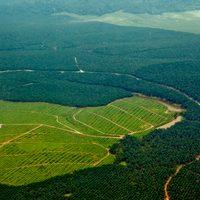
Deforestation Tied to Changes in Disease Dynamics
Katarina Zimmer | Jan 29, 2019 | 8 min read
Numerous studies link habitat destruction to malaria and other vector-borne diseases, but the relationship isn’t always clear.

No Ban on Gene Drives: UN Convention
Kerry Grens | Nov 30, 2018 | 1 min read
United Nations members agree to some restrictions on the technology, but not a total suspension of its use.

Study: Gene Drive Wipes Out Lab Mosquitoes
Ashley Yeager | Sep 24, 2018 | 2 min read
No females were produced after eight generations, causing the population to collapse.

Image of the Day: An Eyeful
The Scientist and The Scientist Staff | Apr 30, 2018 | 1 min read
The physiological changes that can occur in the retinas of patients with cerebral malaria may provide a useful approach to diagnosis.

Plant Engineered to Produce Higher Levels of Antimalarial Compound
Catherine Offord | Apr 25, 2018 | 2 min read
Researchers used the genome sequence of Artemisia annua to boost the plant’s production of artemisinin.

Children With Malaria Smell More Attractive to Mosquitoes
Shawna Williams | Apr 17, 2018 | 2 min read
The parasite changes people’s scent, primarily due to an increase in aldehydes.

Ruth Nussenzweig, Malaria Researcher, Dies
Jim Daley | Apr 5, 2018 | 1 min read
The microbiologist’s research led to the development of the first human malaria vaccine.

Image of the Day: Hungry Hookworms
The Scientist and The Scientist Staff | Mar 26, 2018 | 1 min read
Researchers discover anti-malarials called quinolones can halt the development of the parasites, offering a potential therapeutic avenue.

Image of the Day: Glowing Larva
The Scientist and The Scientist Staff | Mar 9, 2018 | 1 min read
Researchers identified a gene in mosquitoes that moderates their susceptibility to malaria parasite infection.

Parasitologist, Reprogrammed: A Profile of David Roos
Anna Azvolinsky | Mar 1, 2018 | 8 min read
After discovering a novel organelle found in protozoan parasites, the University of Pennsylvania’s Roos created a widely used eukaryotic pathogen database.