Clinical research monitors are the conductors that keep the clinical trial research trains on the tracks. They visit clinical trial sites as representatives of the company that’s sponsored the trial and coordinate with the trial’s onsite principal investigator to make sure the process runs smoothly.
“I used to be at a site. I kind of thought of him as a little policeman coming and making sure that I did everything right,” said Pamela Tenaerts, the chief medical officer at Medable, a health technology company that builds software to aid clinical trial administration.

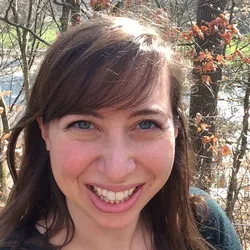
Pamela Tenaerts is the Chief Medical Officer at Medable.
Medable
Clinical research monitors evaluate how patient enrollment in the trial is going, whether the site has an adequate drug supply to keep up with that enrollment, whether patients have started or stopped any medications—which could indicate a serious adverse event—and much more. Since these monitors have so many aspects of the trial to keep track of, Tenaerts and her colleagues at Medable reasoned that an AI tool to assist them would be invaluable.
They created Medable’s Clinical Monitoring Agent, which can check documentation for missing fields, spot discrepancies in trial paperwork, and keep track of multiple variables across different clinical trial sites. The Medable team hopes that these functions save clinical research monitors time, allowing them to build stronger relationships with the onsite clinical trial team and setting the trial up for success. However, Medable didn’t know if this tool was actually helping, and if so, by how much.
“We always wanted to lead with evidence and to understand how are these things that we're using in clinical trials changing the trajectory, hopefully, for the better,” said Tenaerts. “It felt like it would make sense that that would be a benefit, but until you test it and run it, you don't know.”
So, Medable reached out to the Tufts Center for the Study of Drug Development (CSDD), and the researchers there performed an independent analysis of Medable’s Clinical Monitoring Agent using data from Medable on the tool and benchmarked recent real-world oncology drug development data. Although the analysis has not yet been peer-reviewed, the Tufts CSDD researchers’ modeling found that Medable’s tool not only helped clinical research monitors work more efficiently but could also save drug companies millions of dollars in development costs.
Modeling Benchmarked Clinical Trial Data and the AI Agent
To evaluate Medable’s AI agent, the team at Tufts assessed it against benchmarked oncology clinical trial data from the last five years. “We chose oncology because it's the most active area in drug development. And…it is in many ways reflective of the way the overall R&D pipeline has been shifting and changing,” said Ken Getz, the executive director of Tufts CSDD. Drug development programs in oncology, rare disease, and immunology “are really targeting ever more narrowly defined patient populations,” he explained.

Ken Getz is the Executive Director of the Tufts Center for the Study of Drug Development.
Tufts CSDD
However, he added that this same analysis could be performed for other disease areas such as metabolic or cardiovascular drug development. Researchers would just need to use benchmarked data from their target patient population in their models.
In their first analysis, Getz and his team looked at a basic return on investment for a single clinical trial. They found that Medable’s AI agent saved costs by decreasing the number of site visits clinical research monitors needed to take, which reduced travel-related costs.
When they analyzed the data separated by clinical trial phase, they saw that the savings from fewer clinical trial site visits were $4.4 million per Phase 2 trial and $5.6 million for each Phase 3 trial. There are more predicted savings for Phase 3 trials because there’s less risk of a drug failing in Phase 3 compared to Phase 2, Tenaerts explained. “There's still risk, but it's decreasing as you move through the funnel,” she said.
Financial Gains with the AI Clinical Monitoring Agent
The Tufts CSDD team also applied the Expected Net Present Value (eNPV) model to their analysis, which is a modern financial theory that considers multiple risk factors when determining something’s financial value. “We look at an entire development program, and we adjust for the risk associated with any technical challenges that are encountered, regulatory challenges, operating challenges, and we also look at the commercial performance. And we discount it back to present value terms,” explained Getz. “It's expressed in the form of a net present value creation, a financial value created when you compare a program that didn't have the benefit of an agentic AI monitoring tool by phase versus the program that had that benefit.”

Overall, the researchers found that Medable’s AI agent led to eNPV gains of $7.5 million for Phase 2, $11.3 million for Phase 2/3, and $21 million for Phase 3. The team also saw that the AI agent helped speed up trial enrollment time by 18 weeks, shortening the clinical development timeline.

Medable created an AI Clinical Monitoring Agent to assist clinical research monitors.
Medable
Getz added that there are certain aspects of drug development that he and his team cannot easily model that could affect a company’s financial return. “There's a lot of inherent intangible value that might be realized in subsequent development programs but not in the current program that we've modeled,” he explained. This could include a drug gaining additional indications or expanding into a new patient population. The researchers are preparing a manuscript that they hope to submit to a peer-reviewed journal by mid-October of this year.
For Tenaerts and Getz, the most rewarding aspect of this project has simply been to see independent evidence that this AI clinical monitoring agent is as useful in clinical trial administration as they had hoped it would be.
“For the first time there's actually an empirical study that shows this can help,” Tenaerts said. Getz agreed. “It took so much time to set up this model the right way and to really derive these conservative estimates, so that part has been really exciting for us,” he said. “We know that this is something that the industry has been waiting for.”