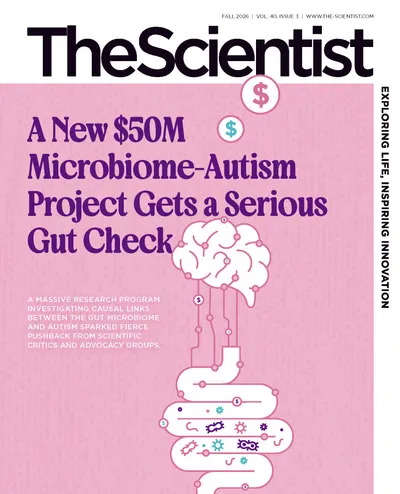
Early June this year, I faced the daunting task of updating our subscribers about the future of our print magazine. In a nutshell, the email stated: “The Summer 2026 issue will mark our final physical print edition. Following this release, The Scientist will transition to a digital-exclusive format for all individual subscribers.”
Even though this decision was long in the making—spanning months of stakeholder meetings—informing readers suddenly made it real. The finality of the end of an era hit me, and I could only imagine how decades-long loyal subscribers would take the news. I didn’t know what to expect, but I certainly did not anticipate being hit with a wave of overwhelming support! Several readers responded to the announcement with kind words about how much they loved the print magazine and noted that they would miss it. Subscribers, who strongly preferred physical copies but expressed willingness to adapt to the digital platform to keep up with our stories, truly touched our hearts. A big thanks to all our readers for your passion and commitment to science. It’s an honor to serve you, and both your compliments and complaints are always welcome; in the age of indifference, we value that you care.
I certainly did not anticipate being hit with a wave of overwhelming support! Several readers responded to the announcement with kind words about how much they loved the print magazine and noted that they would miss it.
——Meenakshi Prabhune, The Scientist
On a philosophical level, these delightful communications got me thinking about the allure of the printed word in general. These days, you only need to throw in your name in a search engine, and it will spit out all the pages—from social media profiles to old interviews—where you were ever mentioned. And yet, if your name once appeared in a printed paper or magazine, the tangible proof likely exists in its full glory or as a scrapbook clipping somewhere among your prized possessions. We have interviewed hundreds of researchers over the years for stories on the website, but when editors mentioned that the story will appear in print, more often than not, the researcher lit up and asked for a copy of the magazine.
What drives this allure of print? For generations, like my own, that have grown up reading books, perhaps it’s how we are hardwired to process information. I recall begrudgingly accepting the convenience of a Kindle and even buying one, but it never replaced the sensory experience of turning a page and smelling a physical book. More generally, perhaps it is the finality of print that appeals to people. Much to the chagrin of writers, there is no possibility of fixing typos, optimizing for search engines, or adding photos: What you see is the final version.
Whatever the reason, know that you, our readers, are not alone in mourning print. Even internally, the notion of potentially having to cease the print magazine, despite all the logical evidence supporting it, was met with collective heartbreak. While editors will not miss the neurosis that accompanies proofing print magazines, we will miss the rewarding feeling of holding the final magazine in our hands, proud of our own work.
If you still crave a physical magazine, you can convince your institution to sign up for our limited-edition print magazine moving forward. Otherwise, we look forward to delivering the same high-quality journalism that you love, just to your inbox instead of your mailbox, through our quarterly, digital magazine. Someday, perhaps the print medium will make a comeback, but until then, we hope you will digitally bookmark our magazine page.