


This webinar, brought to you by Unchained Labs, will be hosted live and available on-demand.
Wednesday, November 4th, 2026
11:00 AM - 12:00 PM ET
The Problem
Developability screens cut difficult molecules loose before they take up too much time and effort. As the number of new candidates keeps increasing, the material to test keeps shrinking, but critical measurements on yield, aggregation, and colloidal stability still need to be made. Every process step is another chance to lose protein to adsorption or precipitation, so candidates with poor yield and low concentration need to be caught early. Large aggregates at low concentrations disqualify candidates but they can hide in samples that still look pure on HPLC. Colloidal stability metrics like kD and B22 give early warning of self-association, but each candidate needs a full dilution series that can really add up to needing large sample volumes.
The Solution
Stunner delivers answers on yield, size/aggregation, and colloidal stability in one microvolume, 96-well plate. Full-spectrum UV/Vis measures concentration from just 2 µL with no standard curve, dyes or reagents. DLS runs on the same sample to report size and flag aggregation, with no extra sample needed. Run a dilution series and Stunner pairs UV/Vis concentrations with DLS and static light scattering to calculate kD and B22 to see if self-self interactions put candidates at risk.
The Proof
In this talk, we'll show how Stunner builds a developability profile from quantity, size and colloidal stability data. We'll look at how this information applies to antibodies and what can be seen from the same measurements in GLP-1 peptides. Finally, we'll show how to take a developability workflow hands-free on the AI Developability Workcell that can buffer exchange, concentrate, quantify, size, and check thermal and colloidal stability in one automated platform – all driven by natural-language prompts. You'll leave with practical guidance on designing faster, sample-sparing developability screens, from the first plate to closed-loop automation.
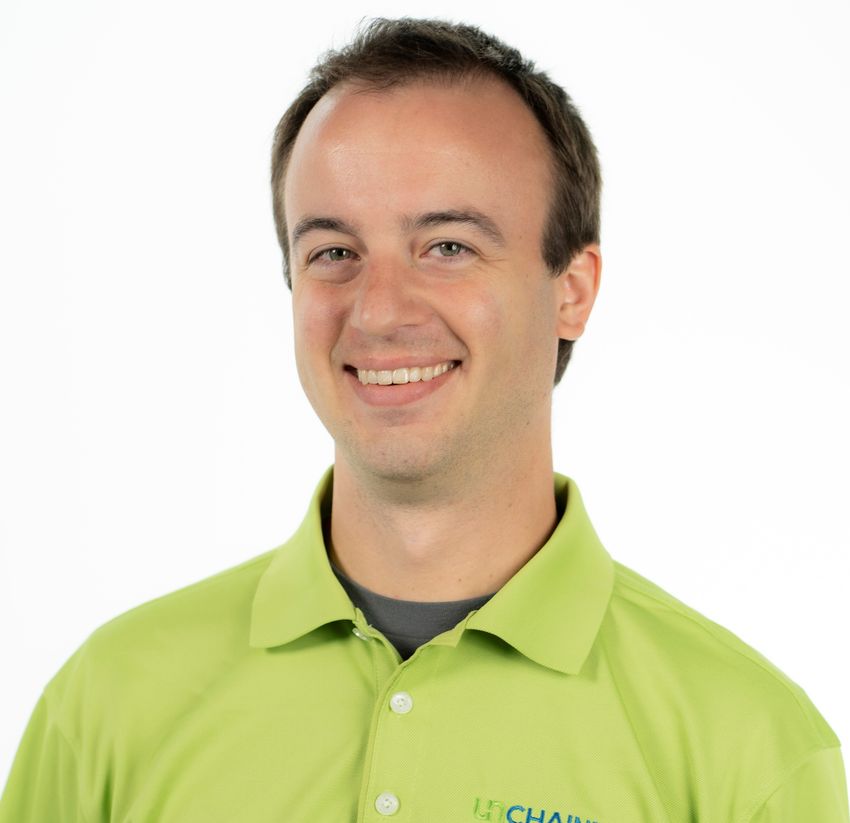 | Kevin Lance, PhD |














