


Many of the antibody clones that underpin cancer immunology have become trusted research standards through years of experimental validation. At the same time, cancer research continues to evolve, with growing interest in combination immunotherapies, tumor microenvironment biology, immune cell modulation, and translational models.

Cody Spencer, PhD
Director, Scientific Affairs
Bio X Cell
In this Innovation Spotlight, Cody Spencer, director of scientific affairs at Bio X Cell, explores how advances in recombinant antibody engineering and molecular design have expanded the experimental toolkit available to researchers while building on the foundation established by proven functional antibodies.
Why are functional antibodies so important for in vivo cancer immunology research?
In vivo cancer immunology is fundamentally different from in vitro work. When you're running studies in animal models, your antibody isn't just binding to antigen on a plate; it's entering a complex biological system where it needs to reach its target tissue, engage the immune system in the right way, and do so consistently across experiments. Any contamination, lot-to-lot variability, or mismatch between the antibody's effector function and the biology you're trying to study can confound results.
Immunotherapy has become one of the most important treatment modalities in oncology. Checkpoint inhibitors, T cell engagers, and other antibody-based therapies are now the standard of care across a range of tumor types. Preclinical researchers need reagents to accurately model those therapeutic mechanisms in vivo, specifically functional antibodies that have been validated for use in animal models. A reagent that works in a binding assay but hasn't been characterized for in vivo function isn't a useful tool for that kind of work.
The most critical quality criteria for in vivo use are the things that don't matter much in vitro: endotoxin content, the absence of carrier proteins and preservatives, and documented functional validation in the relevant application. These aren't just quality checkboxes; they're the difference between an experiment that produces interpretable data and one that produces noise. Choosing a reagent based on price or convenience rather than in vivo suitability can end up costing more time and resources than it saved.
How do you see recombinant engineering building upon these established tools rather than replacing them?
The well-characterized hybridoma-derived clones that the field has relied on for decades aren't going anywhere. They've earned their place in the literature, and researchers trust them for good reason. Recombinant production builds on that foundation in two important ways.
The first is consistency. A sequence-defined recombinant antibody is the same molecule every time it's produced. Hybridoma lines can drift, and a lot produced several years from now may not perform identically to one produced today. When you're working with a fixed sequence expressed in a defined system, that variability is eliminated. For researchers who need to reproduce results across time, labs, or institutions, that matters considerably.
The second is the ability to tailor the Fc region to match the experimental design. In vivo models often require precise control over effector function, whether you want to deplete a cell population, block a target without depleting it, or control for Fc-mediated effects entirely. An IgG2a backbone behaves very differently from an IgG1 in a C57BL/6 mouse. Fc silencing mutations, isotype switches, and other modifications allow researchers to dial in exactly the biology they need rather than working around the limitations of whatever isotype the original clone happened to be in.
These two things, sequence-based consistency and Fc-engineered formats, are what move the field from simply having access to an antibody to having access to the right antibody for the experiment.
Looking ahead, what trends in cancer research do you believe will continue to shape the development and application of recombinant and advanced antibody formats?
Fc engineering will continue to develop as a central tool. As models become more sophisticated and the biology becomes more nuanced, the demand for precise effector function control will only grow. That said, Fc engineering on its own is really just the foundation; the bigger shift is toward more complex antibody architectures.
Bispecific and multispecific antibodies are where a lot of the scientific interest is right now, and for good reason. The biology of the tumor microenvironment is complex, and single-target approaches have real limitations. Formats that simultaneously engage two checkpoints, redirect T cells to tumor antigens, or modulate multiple immunosuppressive axes give researchers tools that better reflect the biology they're trying to study.
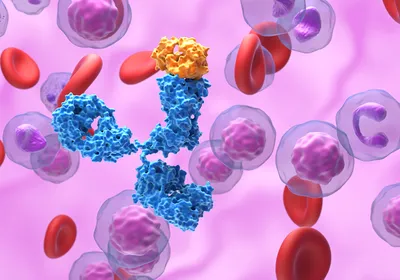
Antibody conjugates are an equally important growth area. Antibody–drug conjugates are well established clinically, and the research community is actively exploring antibody–oligonucleotide conjugates as a means of delivering oligonucleotide payloads to specific cell populations with antibody-mediated precision. The two modalities raise different questions about linker chemistry, payload biology, and target selection, but both depend critically on well-characterized antibody components.
Nanoparticle-based targeting is pushing this even further. Nanoparticles surface-coated with anti-CD3 and anti-CD8 Fab fragments can selectively bind T cells in vivo and deliver CAR-encoding DNA directly, generating functional CAR T cells without ex vivo manipulation. It's a compelling demonstration of how antibody-derived targeting components are being integrated into delivery systems.
How does Bio X Cell support researchers with custom antibody engineering and production?
Bio X Cell's custom services exist because researchers don't always work within catalog constraints, and neither do we. Our starting point is always the science: what does the experiment actually require, and what's the most rigorous way to get there?
A recent example that really captures this is a custom trispecific antibody project we took on for a research team advancing their own multispecific program. They came to us needing a construct that simultaneously engages three targets, built from sequences specific to their program. We produced the construct in two scFv orientation variants, heavy-light and light-heavy, so they could test both configurations in vivo and determine which performed better. Being able to integrate our validated reagents into a fully custom multispecific architecture, under one roof, with in vivo-grade quality standards throughout, that's not something you can do just anywhere.
Another example shows how far the technical support side can go. We recently had an inquiry from a researcher looking to conjugate our anti-Ly6C antibody to lipid nanoparticles for targeted mRNA delivery. Our technical team didn't just say yes or no, they cited a published Nature paper demonstrating exactly that application using an ASSET-based biological anchoring approach with our clone. Then, they walked through the mechanistic differences between that and covalent conjugation strategies, flagged the immunogenicity consideration around xenogeneic antibody responses in repeat dosing, and proactively suggested our F(ab')2 fragment production service to mitigate that concern. That's the difference between a supplier and a scientific partner.
More broadly, we support custom projects across the full spectrum: Fc backbone engineering including Fc-silenced formats, scaled production for preclinical programs, and multispecific formats for more complex in vivo tool requirements. Every custom project comes with the same quality standards as our catalog: mammalian expression, in vivo-grade purity, and lot-level quality control documentation.
















