


The Lasker Foundation awarded three researchers the 2026 Lasker–DeBakey Clinical Medical Research Award for their development of an antibody-based treatment for hemophilia A.
People with hemophilia A have a deficiency in factor VIII, a cofactor that normally interacts with two coagulation proteins to promote clotting. The lack of factor VIII creates a bottleneck in the normal coagulation pathway, leading to anemia and bleeding events in patients. In the early 2000s, the only treatment for this condition was supplemental factor VIII. However, some patients eventually developed antibodies against this protein. Additionally, the therapy must be administered intravenously multiple times a week, creating a challenge for caregivers of small children.
Researchers at Chugai Pharmaceuticals tackled these therapy hurdles with the help of a specialized antibody that could recognize two targets simultaneously, or a bispecific antibody. Kunihiro Hattori, Tomoyuki Igawa, and Takehisa Kitazawa worked for more than a decade to engineer and optimize a dual-targeting protein that could mimic the activity of factor VIII in people with hemophilia A.
Since its US Food and Drug Administration (FDA) approval in 2017, the therapy, emicizumab, has helped reduce bleeding events in more than 30,000 people worldwide. The award recognizes not only this impact on human health but also the ingenuity and perseverance of the researchers to bring this treatment to patients.
Failure Isn’t the End: The First Attempt at Mimicking Factor VIII
In 2000, Hattori was a biologist at Chugai Pharmaceuticals working on coagulation factors and antibodies against them. At the time, researchers knew that factor VIII interacted with activated factor IX and factor X to turn on the latter protein, promoting clot formation.1 However, the mechanism of factor VIII was still not fully understood, though scientists suspected that it helped bring the two other coagulation proteins closer together to catalyze the reaction.

Kunihiro Hattori thought that mimicking the activity of factor VIII in the coagulation cascade with a bispecific antibody could treat severe hemophilia A.
Courtesy of the Lasker Foundation
That same year, Hattori attended a conference on hemophilia and listened to a talk from a scientist studying a different protein involved in coagulation, protein C. In its activation cascade, protein C works with the help of a cofactor, protein S, that bends its catalytic domain to bring it closer to protein C’s target.2
Hattori thought that, if factor VIII functioned in a similar manner, mimicking the protein’s function could be a potential therapy for hemophilia A. “I came up with an idea to create an antibody that can replace the function of factor VIII,” he said.
Since factor VIII is bound to two other proteins in the coagulation cascade, the team would have to create a bispecific antibody for this type of therapy. Although these had been explored for targeting antigens in research settings, they had not been used as a drug platform at the time.
“Everyone thought, ‘This is a crazy idea,’” Igawa said. Nonetheless, the research team set out to design a bispecific antibody to mimic factor VIII.
The researchers immunized mice with either human factor IX or factor X so that they would produce antibodies against these proteins. The scientists isolated the genes for the heavy and light chains of each target from the antibody-producing cells and inserted these into a mammalian cell line. This resulted in 460 bispecific antibodies to test for factor VIII function. “Luckily, we were able to identify one that has activities very similar to factor VIII,” Kitazawa said.
When they treated plasma from people with hemophilia A with this candidate, it reduced the clotting time from 113 seconds on average to 60 seconds—only twice the time that healthy blood takes to clot. Kitazawa said that it was amazing, but the team pushed further to find variants that could work even better. Eventually, the researchers found a bispecific antibody that caused coagulation in 30 seconds, basically replicating the function of factor VIII. “That got me so excited,” Kitazawa said.
Unfortunately, the antibodies weren’t as effective in animals. More damaging to the project, though, was that toxicity studies in healthy animals showed that the antibody increased bleeding. “So, we failed,” Kitazawa said. “I was very disappointed because we had to stop. But at the same time, we learned so much from that failure.”
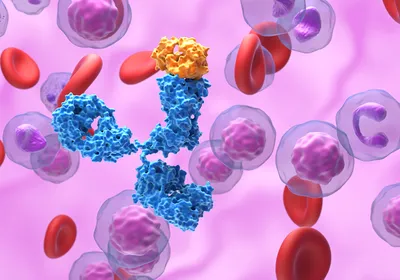
Lessons Learned: The Chugai Team Optimized Their Bispecific Antibody for Factor VIII Function
Though they had to abandon this first approach, the researchers didn’t give up. They took what they had learned about how the bispecific antibody performed in vivo and proposed a new strategy to their managers. Hattori and his team got approval to try their revised strategy, but they only had 18 months to produce a promising result.

Tomoyuki Igawa helped engineer the bispecific antibody to maintain its function and stability in vivo and aid its manufacturing for clinical scale.
Courtesy of the Lasker Foundation
Having realized the challenges in engineering a bispecific antibody with factor VIII function and optimizing a better safety profile, the team expanded their search to 40,000 candidates, immunizing rats and rabbits in addition to mice to acquire more diverse sequences. After many long days and late nights, the researchers zeroed in on 100 candidates within the last month of their timeline and identified bispecific antibodies that had sufficient factor VIII-like activity to convince their managers to extend the project.
In the process of pushing their first candidate to better mimic the bridging function of factor VIII, Igawa said that the team created a new problem: the antibody began to fall out of solution. Since the team wanted to be able to avoid intravenous delivery, their antibody had to be able to remain soluble and be absorbed by biological tissues. So, the researchers had to balance the bispecific antibody’s factor VIII activity with its physical properties.
In 2012, the team shared the initial findings of an early candidate that mimicked factor VIII activity in vitro with hemophilia A plasma as well as in a model of acquired hemophilia in nonhuman primates.3 Less than a year later, the team published another candidate that was even more optimized for clinical use.4 In addition to improved factor VIII function, the team changed hydrophobic amino acids in the variable region of the antibody to hydrophilic residues to keep the therapeutic more soluble. They also altered the charges of some amino acids in this same region to delay the antibody’s clearance from the body, meaning that they could extend the time between doses.
To make the bispecific antibody easier to manufacture, they identified a common light chain that both antigen-targeting regions could use. The researchers also introduced opposite charges on the two heavy chains to increase their likelihood of binding together as opposed to two identical heavy chains pairing during protein expression.
After 2,400 variants, the team finally had a product that was ready to go to the clinic. “We were very much excited,” Igawa said.
The Long Road to a New Hemophilia A Treatment Paid Off
People with severe hemophilia A have less than one percent of active factor VIII and, as a result, experience multiple bleeding events every month. Meanwhile, people with moderate hemophilia A have significantly fewer bleeding events despite only having between one and five percent of active factor VIII in their blood.

Takehisa Kitazawa led the project to generate and evaluate the bispecific antibody candidates for their factor VIII activity in vitro and in vivo.
Courtesy of the Lasker Foundation
With this in mind, Hattori said that he hoped that his team’s bispecific antibody therapy could provide patients with severe hemophilia A even one percent of factor VIII activity in the clinical trial. “The result was beyond my initial hope,” he said.
The phase 1 study only compared the number of bleeding events that patients experienced before and after treatment but still showed that the antibody therapy significantly reduced these instances.5 Later studies showed significant reductions in bleeding occurrences in larger groups and a positive safety profile over several years of treatment.6-8 Those kinds of changes, Kitazawa said, “actually changed dramatically the life of patients and their families.”
Igawa agreed, but he said that the happiest moment was months or even years after patients began taking the drug. “We started to receive a lot of letters from patients and their families, and in those letters, it is always described that ‘the emicizumab had changed my life,’” he said. “Reading those letters, I think everyone cried.”
After more than a decade of work, emicizumab was approved for hemophilia A treatment by the FDA in 2017. Igawa said that although the project was difficult at times, “We knew that we were doing something very, very new, that nobody else in the world would probably [be] working on it…so the concept was very exciting for us.”
Additionally, Igawa said that the need for better hemophilia A treatments was clear to all of the team and kept them motivated. “It was very enjoyable work,” he said.
So far, more than 30,000 patients have received emicizumab. However, the researchers realized that while this new therapy was life-changing for many patients, it didn’t completely replace factor VIII function and, in some patients, offered little benefit. So, the Chugai researchers, with the help of scientific advancements and new scientists with unique ideas, explored improving upon their first design.9 This next candidate, NXT007, is currently in phase 3 clinical studies.
“Once this becomes successful, we can actually provide an even better product for patients with hemophilia A and their families,” Kitazawa said.
Disclaimer: Quotes originally spoken in Japanese by Kunihiro Hattori and Takehisa Kitazawa were translated into English by professional translators.
- Mann KG, et al. Surface-dependent reactions of the vitamin K-dependent enzyme complexes. Blood. 1990;76(1):1-16.
- Yegneswaran S, et al. Protein S alters the active site location of activated protein C above the membrane surface. J Biol Chem. 1997;272(40):25013-25021.
- Kitazawa T, et al. A bispecific antibody to factors IXa and X restores factor VIII hemostatic activity in a hemophilia A model. Nat Med. 2012;18(10):1570-1574.
- Sampei Z, et al. Identification and multidimensional optimization of an asymmetric bispecific IgG antibody mimicking the function of factor VIII cofactor activity. PLoS ONE. 2013;8(2):e57479.
- Shima M, et al. Factor VIII–mimetic function of humanized bispecific antibody in hemophilia A. N Engl J Med. 2016;374(21):2044-2053.
- Mahlangu J, et al. Emicizumab prophylaxis in patients who have hemophilia A without inhibitors. N Engl J Med. 2018;379(9):811-822.
- Oldenburg J, et al. Emicizumab prophylaxis in hemophilia A with inhibitors. N Engl J Med. 2017;377(9):809-818.
- Mahlangu J, et al. Long-term outcomes with emicizumab in hemophilia A without inhibitors: Results from the HAVEN 3 and 4 studies. Res Pract Thromb Haem. 2024;8(2):102364.
- Teranishi-Ikawa Y, et al. A bispecific antibody NXT007 exerts a hemostatic activity in hemophilia A monkeys enough to keep a nonhemophilic state. J Thromb Haem. 2024;22(2):430-440.
















