As a person’s own cells that have gone rogue, cancers are as unique as the people they come from. This diversity makes a one-size-fits-all approach to cancer treatment next to impossible. Instead, patients need therapies that can go head-to-head with the exact cancer they’re facing. For years, precision medicine focused on developing therapies directed toward a cancer’s unique genetics, but the development of new cancer treatment strategies has widened its scope immensely.
“Precision medicine is no longer about matching a drug with a target. It’s about selecting the right therapeutic platform for the biology in front of us,” said Katy Rezvani, a cancer cell therapy researcher at the University of Texas MD Anderson Cancer Center and chair of the plenary session “Innovative Treatment Modalities: Shaping the Future of Oncology” at the American Association for Cancer Research (AACR) 2026 annual meeting.
In this session, scientists explored the latest innovations in precision oncology. These included new advances in targeted radiotherapy and imaging to find and diagnose cancer as early as possible and how fine-tuning the potency and stability of different antibody-drug conjugate (ADC) components leads to better clinical outcomes. They also presented new strategies to target T cell engagers to solid tumors, expanding their therapeutic reach, and the potential to predict which cancer-fighting cells are the most effective in tumor-infiltrating lymphocyte therapy.
Precision Radiotherapeutics Can Diagnose and Treat Cancer at the Same Time
The risk of cancer developing in a particular tissue comes down to three factors: genetic predisposition, the environment, and pure bad luck.
“No matter how much kale you eat and no matter how much time you spend on the elliptical, two thirds of the time cancer is bad luck,” said Martin Pomper, a diagnostic imaging researcher at the University of Texas Southwestern Medical Center. One way to combat this risk is to try to detect cancer as early as possible.
For that, Pomper relies on imaging using radiodiagnostics or radiotherapeutics—together called theranostics. These molecules contain three main parts: the affinity agent, which binds to the target on the cancer cell; a linker region; and a radionuclide—an atom that emits ionizing radiation—that acts as a diagnostic probe for imaging and/or as a therapeutic. The best theranostics go after a target on tumors that is both abundant and specific to that particular cancer, has a high affinity for that target, has good pharmacokinetics, spends a long time at that target or becomes internalized, and has low off-target effects.
“The target is the most important thing,” said Pomper. “Once you have the target, chances are you’re going to be able to figure out how to engage that target productively.”
The radionuclides used for imaging and therapy fall into two categories: alpha and beta emitters. Alpha emitters release alpha particles, which are nuclei consisting of two protons and two neutrons. Alpha particles have high energy, travel short distances, and lead to double-stranded breaks in DNA and high amounts of cell killing. Beta emitters, on the other hand, release high energy electrons, which have lower energy and reduced cell killing effects compared to alpha particles. At the moment, beta emitters dominate in the clinic, but alpha emitters are on their way up too.
In terms of the up-and-coming alpha emitters, Pomper was particularly excited about Astatine-211, which only releases one alpha particle compared to other alpha emitters that release more, potentially leading to off-target effects. Astatine is also a halogen, meaning that scientists can integrate it into small molecules easily without it affecting the molecule’s pharmacokinetics too much; this allows researchers to expand their pool of targets to intracellular molecules, Pomper said.
For currently available radiotherapies, specifically looking at the VISION trial of a radiotherapy for prostate cancer, they increase overall survival, but not by that much, according to Pomper.1 “If you take a look at what this does to the cancer itself, what this tells me is that we're leaving maybe one or two clones behind, and then it comes back,” he said. Now, researchers have tried adding steps to the cancer treatment plan, including neoadjuvant debulking with the radiotherapy and metastasis-directed therapy, which has increased overall survival of patients with prostate cancer.2
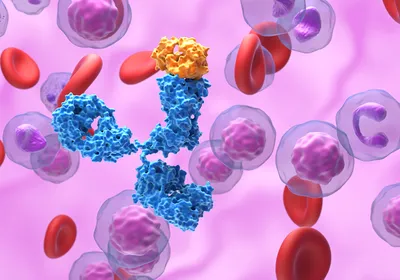
But challenges in the field remain, including increasing the number and kind of researchers developing new theranostics. Presently, nuclear medicine physicians are leading the field, Pomper said. Additionally, he worries about how federal funding cuts will affect the field’s ability to identify new and better targets for radiotherapies as most of that work takes place in academic labs.
Pomper ended his talk by saying that he hopes the field will go the way of cell phones and computers, where the inventions went on to exceed people’s initial expectations of the technology so that doctors can “manage patients with cancer with this new therapy, and it'll come in alongside surgery, radiation, chemotherapy, and immunotherapy,” he said.
Optimizing Antibody-Drug Conjugates for Stability and Potency
Like radiotherapies, ADCs are targeted therapies that use an antibody to bind to a marker on a cancer cell, which brings the attached cancer-killing drug to the tumor. With 14 ADCs already FDA approved and more than 300 in clinical development, the therapy has had a good amount of success already.
“But it's not always been easy. We have almost 200 that have been discontinued,” said Raffaele Colombo, the director of medicinal chemistry at Zymeworks, a biotechnology company focused on developing protein therapeutics.
One of the challenges in designing next-generation ADCs is that the number of therapeutic ADCs that actually reach their tumor target is less than one percent of the dosed ADCs. Healthy cells take up over 99 percent of them.
In an ideal world where all of the ADCs reach the tumor, researchers would want the payload drug to be the most potent possible with the most stable linker. However, Colombo said, since that is not the case, researchers have to consider what the other 99 percent of ADCs are doing in the body. It may be safer to have an ADC with moderate potency that’s not overly stabilized with an antibody that’s optimized to penetrate the tumor and deliver the drug payload.
Based on this logic, Colombo and his team developed a new ADC called ZW191 that has an antibody optimized for tumor internalization and deeper penetration, a cleavable linker, and a new payload with moderate potency.3 They found that with their optimized antibody, more of the ADC got internalized, and it penetrated deeper into tumor spheroids. The ADC has also entered a Phase 1 trial in which it led to a greater than 50 percent overall response rate and manageable toxicity in patients with ovarian cancer.
Colombo then presented how he and his team are developing an ADC using Ras inhibitors as a payload. Similar to ZW191, the Ras inhibitor payload had moderate potency, and it had good efficacy in a xenograft mouse model and good tolerability in a non-human primate model.4 In particular, they found that their ADC sustained Ras inhibition activity at the tumor for 14 days after dosing compared to its inhibition in normal tissues, while a small molecule Ras inhibitor reduced Ras in both normal and tumor tissues.
Looking to the future of ADCs, Colombo highlighted bispecific ADCs as exciting new therapies; more than 40 are in clinical development. These molecules bind two specific targets rather than one. Researchers can engineer them to bind to the first or second target, which broadens the potential patient population and may bypass tumors that have developed target-resistance, or they can engineer them as needing to bind to both of the first and second target, increasing the molecule’s specificity.
As linker stability affects the rate, the site, and how the payload is released in an ADC, Colombo also spotlighted new innovations that researchers are exploring in linker technology. These include making linkers more hydrophilic, trying out different cleavable moieties, and experimenting with sequential cleavage.
As Colombo concluded his talk, he highlighted multiple ADCs with different pharmacokinetic profiles that have been approved or are in late-stage clinical trials. He explained that even though each ADC differs significantly in its properties—some have moderate stability with a long half-life, while others have a short half-life but also have a very stable linker—they all have proved successful in treating different cancers. “There is a delicate balance between all these properties,” he said.
Expanding T Cell Engagers into Solid Tumors
While immunotherapy has proven revolutionary in the field of oncology, “Still, it remains true that most patients don't derive benefit from immunotherapy,” said Angela Coxon, the vice president of research and development at Amgen. “So, that's where T cell engagers step up.”
T cell engagers are bispecific antibodies that work by grabbing onto a T cell and bringing it to a tumor. One of the arms of the antibody binds to the cluster of differentiation 3 (CD3) surface protein on T cells, and the other binds to a specific antigen on the tumor. This binding brings the T cells close to the tumor, where they can kill it. This process also activates the T cells, which causes them to proliferate and kill more cancer cells.
“We found this to be one of the most potent mechanisms of cell killing that we looked at,” Coxon said.
While many T cell engagers have been approved to treat hematological cancers, only two have been approved for solid tumors so far. Some of the challenges facing T cell engagers in this context are the immunosuppressive microenvironment around the tumor, getting the therapy to penetrate the tumor, the heterogeneity of the T cell engager’s target, and the choice of target.
“What we've learned with T cell engagers is they're incredibly potent, so any normal tissue expression results in off-tumor activity, which can lead to toxicity and safety issues. So, the selection of the target is really paramount,” Coxon said.
As an example, Coxon highlighted tarlatamab, a T cell engager that targets Delta-like protein 3 (DLL3). DLL3 is an ideal target for a T cell engager because it is highly expressed on the surface of small cell lung cancer cells.5 Importantly, healthy tissues express very little DLL3, and in fact, researchers at Amgen found that healthy cells only expressed DLL3 intracellularly on the Golgi, so T cell engagers wouldn’t be able to reach it anyway. So, Coxon and her team developed domains that tightly bound both CD3 and DLL3, and they added a motif to extend the half-life of the T cell engager, allowing for a more convenient dosing schedule for patients. Phase 3 study results showed that tarlatamab improved the median overall survival in patients with small cell lung cancer from 8.3 months to 13.6 months, leading to the drug’s approval.6 Now, they’ve found that combining tarlatamab with an anti-PD-L1 antibody has increased the median overall survival to 25.3 months, and they are moving this combination therapy into Phase 3 clinical trials.7
“We think combination strategies are going to allow us to treat more patients and have more durable responses,” Coxon said.
While tarlatamab has a great target in DLL3, what can researchers do if they want to go after a target that doesn’t have such a clean expression profile? Coxon drew attention to xaluritamig, which targets Six-Transmembrane Epithelial Antigen of the Prostate 1 (STEAP1) expression. While STEAP1 is enriched on the surface of prostate tumors, it is also expressed on healthy tissues. To overcome this, Coxon and her team at Amgen created xaluritamig, which contains a CD3 binding domain and two binding domains to STEAP1 that rely on avidity—the overall stability of both antibodies binding—to drive its activity. This avidity-based approach meant that they could target cells that expressed more than 10,000 receptors per cell, which tumor cells did and normal cells did not. With promising preclinical efficacy and safety studies, xaluritamig is now in Phase 3 clinical trials for castrate-resistant prostate cancer.
To further expand the use of T cell engagers to reach more targets, Coxon and her team highlighted a dual-targeting approach, where the engager must bind to two targets on the tumor cell. While each target may be expressed individually on normal cells, if they are only expressed together on tumor cells, the T cell engager would just target the tumor. The team at Amgen has designed one of these dual-targeting T cell engagers called AMG 305, which is in a recently completed Phase 1 clinical study.
Coxon is eager to see how these engineering innovations will allow T cell engagers to treat more solid cancers and extend them to new patient populations.
“I've been at Amgen in a long time, and I've had the distinct pleasure of meeting some of the patients that have benefited from these therapies,” she said. “I can tell you, as a scientist, there is no greater reward than meeting a patient that has benefited.”
Predicting the Best Cancer Killing Cells in Tumor-Infiltrating Lymphocytes
Tumor-infiltrating lymphocyte (TIL) therapy uses the power of engineering to help a patient’s own cells fight back against their cancer. The process starts with the patient. Doctors surgically remove a tumor, digest it with enzymes, and then culture the fragmented pieces of tumor with high levels of interleukin-2 (IL-2). The cells are then expanded under different conditions to create the final therapeutic product: CD3 positive lymphocytes, the TIL therapy. The patient first undergoes chemotherapy to deplete their lymphocytes, and then they receive an infusion of the TIL therapy along with a high dose of IL-2.
Compared to genetically defined cell therapies like CAR T cells or T cell engagers, TIL therapy is more of a black box, said John Haanen, a cancer immunotherapy researcher at the Netherlands Cancer Institute.
“Every time we infuse the cells, we don't know what these cells recognize and what the number of cells is that are tumor reactive,” he said.
An open question in the field is, which TIL is actually leading to an anti-cancer response? To try to answer this question, Haanan and his team looked at T cell receptors as way to assess TIL activity. They built a large library of potential tumor antigens both from patient samples and from known tumor antigens. They then selected the top 100 T cell receptors from TILs from a patient’s tumor and from the TIL infusion product using predicted tumor reactivity metrics. They also included the top 10 percent of the most abundant T cell receptor clones from the infusion product.

The team then cultured healthy donor T cells expressing the different T cell receptors with B cells expressing the tumor antigens. If a T cell receptor recognized one of these B cell antigens, the T cell would destroy it, removing it from the population. Using deep sequencing, the team could see which sequences dropped out.
“When you do this for the whole population, and fortunately, we have done this now for 10 of the 13 patients, you start seeing a difference between patients that had a complete response and patients that had progressive disease,” said Haanen. Interestingly, in patients that did respond to the treatment, the researchers found that their T cells recognized higher numbers of antigens than non-responders did.
They then wondered, is it possible to predict the clinical outcome based on the TIL product that they manufactured? To address this question, Haanen and his team sequenced the baseline tumor and the resulting TIL infusion product for both responder and non-responder patients. They created a map of the different functions of the CD8 T cells sequenced and applied the same tumor reactivity prediction metric they had used before to it.9 They found that two of the non-responders had a high abundance of T cells with low tumor reactivity. To their surprise, they saw that four non-responders had a high abundance of T cells with high tumor reactivity, which was the same profile the responding patients had. They called these four individuals ‘non-responder high patients.’
To differentiate between these three groups, the researchers performed gene set enrichment analysis and found that in responders, the tumor reactive T cells were enriched for specific signaling programs that the non-responder high patients were not. In particular, they found that in responders, more T cells highly expressed CD25 compared to non-responder high patients. When they then profiled the T cells circulating in the blood, they saw that there were more tumor reactive T cells in responders than both non-responder groups.
“T cell features within tumor digests are predictive of clinical outcomes, and this knowledge should be utilized to improve next-generation TIL therapies,” Haanen said.
In all, the advances in the cancer treatment modalities presented in this session set the stage for the next generation of cancer therapeutics. From radiotherapies and ADCs to T cell engagers and TIL, the future of cancer drugs looks bright with possibilities.
- Sartor O, et al. Lutetium-177–PSMA-617 for metastatic castration-resistant prostate cancer. N Engl J Med. 2021;385:1091-1103.
- Kishan AU, et al. 177Lu-prostate-specific membrane antigen neoadjuvant to stereotactic ablative radiotherapy for oligorecurrent prostate cancer (LUNAR): An open-label, randomized, controlled, Phase II study. J Clin Oncol 2025;43(36):3812-3821.
- Petersen ME, et al. Design and evaluation of ZD06519, a novel camptothecin payload for antibody drug conjugates. Mol Cancer Ther. 2024;23(5):606-618.
- Garnett GA, et al. Abstract 1642: A pan-RASi antibody-drug conjugate platform with high activity in RAS-mutant cancers. Cancer Res. 2026;86(7_Supplement):1642.
- Giffin MJ, et al. AMG 757, a half-life extended, DLL3-targeted bispecific T-cell engager, shows high potency and sensitivity in preclinical models of small-cell lung cancer. Clin Cancer Res. 2021;27(5):1526-1537.
- Mountzios G, et al. Tarlatamab in small-cell lung cancer after platinum-based chemotherapy. N Engl J Med. 2025;393:349-361.
- Paulson KG, et al. Safety and activity of tarlatamab in combination with a PD-L1 inhibitor as first-line maintenance therapy after chemo-immunotherapy in patients with extensive-stage small-cell lung cancer (DeLLphi-303): A multicentre, non-randomised, phase 1b study. Lancet Oncol. 2025;26:1300-1311.
- Nolan-Stevaux O, et al. AMG 509 (Xaluritamig), an anti-STEAP1 XmAb 2+1 T-cell redirecting immune therapy with avidity-dependent activity against prostate cancer. Cancer Discov. 2024;14(1):90-103.
- Lowery FJ, et al. Molecular signatures of antitumor neoantigen-reactive T cells from metastatic human cancers. Science. 2022;375(6583):877-884.