


Malaria remains a major global health problem, with an estimated 600,000 people dying from the disease each year. Researchers have approached malaria from many different angles, from mosquito and vector control to vaccine development and new treatments. However, much like antibiotic resistance, drug resistance in malaria parasites, like Plasmodium falciparum, is an increasing concern.
The need for a new antimalarial approach sparked a collaboration between the pharmaceutical company Merck and the Walter and Eliza Hall Institute of Medical Research (WEHI) nearly a decade ago. The project began with an idea from Merck scientist David Olsen and parasitologist Alan Cowman from WEHI to explore whether newly developed protease inhibitor compounds could target malaria proteins such as plasmepsins—enzymes that Plasmodium parasites rely on for survival—to synergistically stop infection and promote parasite immunity.
In a recent study, published in Science, researchers exposed mice to malarial infection and then administered a late-liver-stage antimalarial to prevent disease and prime the immune system.1 This approach, called chemovaccination, is a promising candidate for both malaria treatment and prevention. John McCauley, a senior director of medicinal chemistry at Merck and study coauthor remarked, “It's pretty rare to be involved with target identification of a new target and then be able to bring a compound forward that actually proves the biology in humans. So, [it’s] a really unique experience.”

John McCauley, a medical chemist, has worked on numerous drug invention projects.
John McCauley
Once bitten by an infected mosquito, the early form of the malaria parasite, called sporozoites, enters the body and travels to the liver to multiply and mature into merozoites during an initial asymptomatic phase. Eventually, the liver-derived merozoites enter the bloodstream to infect red blood cells and cause symptoms. Current antimalarial drugs can target the liver stage of infection, but they need repeated rounds of delivery. Ideally though, a new drug would stop Plasmodium in the late-liver stage and also stimulate the immune system to protect the host from future infection.
So, the researchers first conducted a screen for protease inhibitor compounds and homed in on two key parasite enzymes, plasmepsin IX and X. These two enzymes are critical for the parasite’s egress from host cells and subsequent spread; additionally, the active sites of these enzymes are conserved across malaria species. The researchers hypothesized that targeting both enzymes simultaneously may also make it more difficult for parasites to develop resistance than therapies directed at a single target. So, the team developed a dual inhibitor of plasmepsin IX and X called WM382 to be used in preclinical studies.2 “WM382 is a really important tool-compound that’s allowed WEHI to uncover this complex and amazing biology of the plasmepsin IX and X enzymes,” said McCauley.
While WM382 effectively cleared mouse models of malaria, the team further optimized WM382 into a compound with more druglike properties fit for human use and generated MK-7602, which has been tested in clinical trials.3
In preclinical studies, the team tested both drugs. The researchers first exposed mice to Plasmodium berghei sporozoites, inducing liver-stage infection either through mosquito bites or intravenous injections. Then, they treated the mice with an oral dose of WM382 or MK-7602, which cleared the liver-stage infection.
The treatment resulted in defective and noninfectious liver-derived merozoites, so the researchers wanted to take a closer look at them and see whether these “chemo-attenuated liver merozoites,” or CALM, would elicit an immune response. Indeed, when the team rechallenged the mice with malaria six months later, those that had produced CALM were protected against the new infection.
The production of CALM led to a similar immune response compared with classical chemoprophylaxis vaccination treatment, wherein live, infectious sporozoites are introduced into a host along with an antimalarial drug like chloroquine which kills the blood-stage parasites. The mice exhibited a robust CD8+ T cell and antibody response during the late-liver stage. “That immunity lasts in these preclinical models for two years, which is about the lifespan of a mouse. So, that mouse has protective immunity basically for the rest of its life. It's a really stunning result for its magnitude and its long-lasting nature,” explained McCauley.
Because P. berghei infects mice rather than humans, the researchers also tested the WM382 in humanized mice containing human liver cells and infected with P. falciparum. Again, this treatment attenuated the liver-stage merozoites and limited progression of the parasite from the liver to the blood compared with untreated controls.
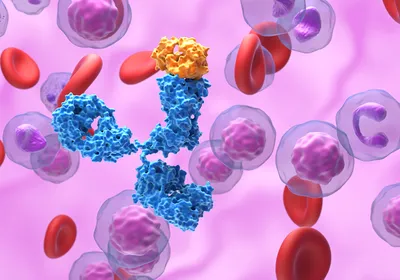
Overall, the findings demonstrate the potential of chemovaccination as a two-pronged strategy: first arresting the parasite’s life cycle to prevent disease, while simultaneously allowing the immune system to respond to an attenuated form of the parasite.
“It’s a good reflection of the synergy that [the malaria field] can achieve with public-private partnerships,” said David Fidock, a microbiologist at Columbia University who was not involved in the study. Brandon Wilder, an immunologist at Oregon Health and Science University, was also not involved in the study, expressed similar enthusiasm, describing the work as another useful tool in the toolkit against malaria.
McCauley and his collaborators are excited by the encouraging results in treating and preventing malaria in the form of a long-acting injectable version of the plasmepsin IX and X dual inhibitors. “[While] we’re most interested in treating patients and people in high-risk endemic areas, there are many [other] use cases for a product like a long-acting injectable, say, for travelers or protecting soldiers.”
- Steel RWJ, et al. Chemovaccination with a late-liver-stage antimalarial induces durable immunity against malaria. Science. 2026;393(6812):eaea7605.
- Favuzza P, et al. Dual plasmepsin-targeting antimalarial agents disrupt multiple stages of the malaria parasite life cycle. Cell Host Microbe. 2020;27(4):642-658.e12.
- Favuzza P, et al. MK-7602: A potent multi-stage dual-targeting antimalarial. EBioMedicine. 2026;123:106061.
















