Researchers Reflect on the Lasting Impact of Science’s Landmark Discoveries
From PCR and CRISPR to autophagy and targeted cancer therapies, scientists share the discoveries that shaped their work and continue to influence the future of research.
Science is a series of milestones, from fundamental discoveries to innovative technologies. Each one acts like a building block, supporting the next breakthrough and paving the way for future generations of researchers. To explore the personal impact of these milestones, we asked our readers: Which landmark scientific discovery or invention do you find most inspiring, and why?
Cell Biology: From Autophagy to Immortal Cells
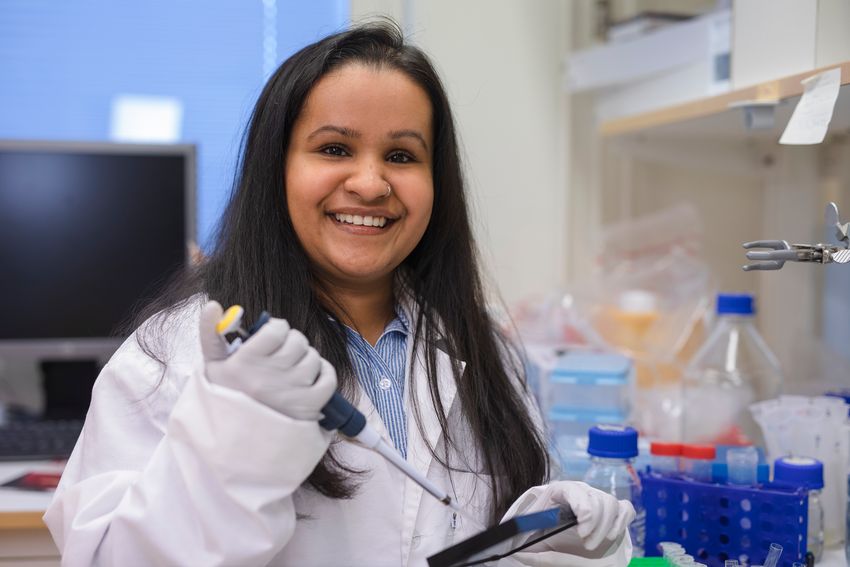
Kaamini Dhanabalan is a bioengineer and molecular imaging scientist.
Kaamini Dhanabalan
Kaamini Dhanabalan, a postdoctoral researcher at the University of California, Santa Barbara
I find the discovery of autophagy deeply inspiring. The idea that cells have an internal recycling system, one that breaks down damaged components and repurposes them for survival, completely changed how we think about health and aging. It shifted the narrative from cells passively accumulating damage to cells actively maintaining themselves. The significance of this work was recognized globally when the 2016 Nobel Prize in Physiology or Medicine was awarded for uncovering the mechanisms of autophagy, which underscored how a fundamental cellular process can reshape medicine. What fascinates me most is how central autophagy is across biological processes and diseases like neurodegeneration, cancer, immunity, metabolism, and aging. During my PhD, studying autophagy closely showed me how tightly regulated and context-dependent it is. Now seeing intermittent fasting enter mainstream conversations as a way to stimulate autophagy is striking. A molecular pathway once limited to research labs is now influencing everyday health decisions and remains my exact motivation to bridge benches and beds.
Continue reading below...
Like this story? Sign up for FREEMicrobiology updates:
Latest science news storiesTopic-tailored resources and eventsCustomized newsletter content
Khyati Raina’s work combines stem cell biology and organoid technology.
Khyati Raina
Khyati Raina, a postdoctoral fellow at Albert Einstein College of Medicine
Two discoveries have really shaped how I think about science: the development of induced pluripotent stem cells (iPSCs) and CRISPR-Cas9 gene editing. The idea behind iPSCs is fascinating. It’s almost like reversing time at the cellular level. Scientists can take a fully developed cell, like a skin fibroblast, and reprogram it back into a pluripotent state by changing the set of proteins it expresses. From there, it has the potential to become almost any cell type in the body. The fact that you can generate cells so closely related to an individual, starting from their own tissue, completely changed how we study development and disease. CRISPR-Cas9, on the other hand, feels like having a highly precise molecular tool. It allows us to target and edit specific regions of DNA with remarkable accuracy. Together, these technologies have transformed research across many fields and continue to open up possibilities that once seemed out of reach.
Molecular Biology: Amplifying and Silencing Genes
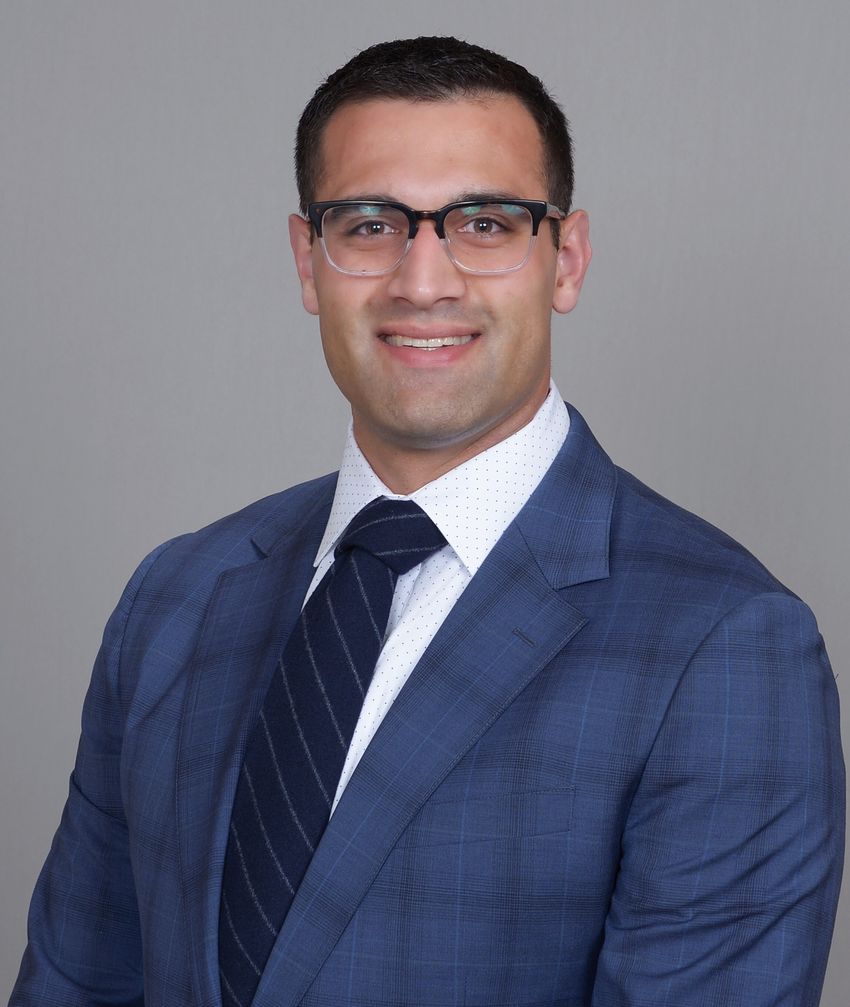
Aditya Gupta is a parasitologist at USDA-ARS.
Aditya Gupta
Aditya Gupta, a postdoctoral fellow at the US Department of Agriculture-Agricultural Research Service (USDA-ARS)
The invention of the polymerase chain reaction (PCR) by Kary Mullis is particularly inspiring to me. I read this story during my doctoral research, and I still remember how he ran back to his lab to check the PCR results. PCR transformed biology by allowing researchers to amplify tiny amounts of DNA and detect organisms that would otherwise remain hidden. In my work, PCR-based methods are essential for identifying parasites in meat samples and studying their genetic diversity. This technology illustrates how a single innovation can revolutionize multiple fields, from diagnostics to evolutionary biology, and enable discoveries that directly impact public health and disease surveillance.
Kasturika Shankar is a biochemist and biophysicist who studies host-pathogen interactions.
Kasturika Shankar
Kasturika Shankar,a postdoctoral researcher at the University of Buffalo
The discovery of RNA interference, the finding that cells have a built-in system for silencing specific genes using small RNA molecules. Researchers stumbled upon it almost by accident, and yet it revolutionized both our understanding of gene regulation and gave scientists a powerful tool with which to study and potentially treat disease. It's a reminder that curiosity-driven, fundamental research can lead somewhere transformative in ways nobody initially anticipated.
Health Science: From Precision Oncology to Harm Reduction
Neil Carleton studies the tumor biology of age-related breast cancers.
Neil Carleton
Neil Carleton, a postdoctoral researcher at the University of Pittsburgh
The field of breast cancer research has been particularly inspiring to follow, both historically and in the modern era of precision oncology. The discovery of the estrogen receptor and the development of tamoxifen were among the earliest and most influential examples of targeted cancer therapy. These advances laid the groundwork for an entire field focused on endocrine-targeted treatments. Similarly, the identification of the human epidermal growth factor receptor 2 (HER2) and the development of trastuzumab dramatically transformed outcomes for patients with HER2-positive breast cancer. Looking back at these milestones has been especially exciting, and they continue to inform how we think about precision medicine today.
Mia Rough is a behavioral neuropharmacologist at Wake Forest University School of Medicine.
Mia Rough
Mia Rough, a postdoctoral fellow at Wake Forest University School of Medicine
One of the developments I find most inspiring is the emergence of harm reduction tools such as naloxone (Narcan) and fentanyl test strips. What inspires me about these advances is that they reflect a public health approach grounded in compassion and evidence, where the immediate goal is to save lives. Harm reduction recognizes that people deserve care and protection regardless of where they are in recovery. To me, some of the most important advances in substance use science are the ones that reduce suffering in the present while also creating opportunities for better long-term outcomes.
Responses have been edited for length and clarity.
Add The Scientist as a preferred Google source to see more of our trusted coverage.
Miles away from the closest ocean, marine microbes thrive in the red ice and mud around Blood Falls, offering clues to microbial adaptation and past climate events.
Explore how blood-based biomarkers perform across Alzheimer’s disease stages, including AIBL Study findings comparing p-Tau217 and other markers against amyloid-beta and tau PET reference standards.
Explore how super-resolution microscopy enables particle-level characterization of lipid nanoparticle composition, cargo loading, heterogeneity, and stability, providing complementary insights for formulation development and optimization.
The placements follow the commercial launch of Pyxa at the Advances in Genome Biology and Technology (AGBT) meeting in February 2026 and mark the company's transition from Early Access into global commercial availability.
The CellRaft AIR streamlines antibody discovery with imaging, functional screening, and gentle isolation of viable single B cells and hybridomas, helping verify monoclonality and identify high producing clones faster.
Load plasma directly into prefilled cartridges, no pretreatment, no ethanol. Under 30 minutes of instrument run time, up to 48 samples in parallel, with a high-throughput format also available.
Two Paige tools, powered by the Virchow pathology foundation model, are now available within a single image management workspace for oncology research.