Two decades ago, stem cell researcher Shinya Yamanaka, then at Kyoto University, identified a way to transform adult mouse skin cells into induced pluripotent stem cells (iPSCs), paving the path to converting one mammalian cell type into another.1
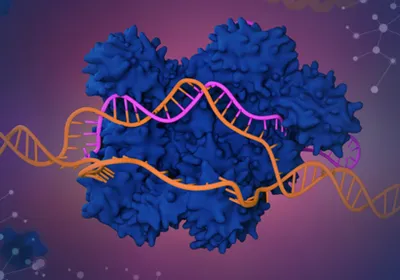
While he used viral vectors for delivering genes for iPSC formation, over time, other researchers figured out how to use CRISPR-Cas9-based activation (CRISPRa) to switch on specific genes and coax one cell type into another.2 However, the efficiency of this approach remains low, with only a fraction of cells getting converted. This is in part because the editing machinery cannot easily access the target sites, which are buried deep within the tightly packed DNA in cells’ nuclei.
Now, researchers led by University of California, Los Angeles bioengineer Song Li mechanically squeezed mouse fibroblasts, which temporarily loosened compactly folded DNA, allowing CRISPRa tools to access reprogramming genes and transform fibroblasts into neuronal cells efficiently.3 Their findings, published in Matter, establish a mechanically enhanced CRISPR-mediated activation (MECA) strategy to boost cell fate conversion, opening new avenues for regenerative medicine.

Combining CRISPRa with a mechanical squeeze (right) improved cell reprogramming efficiency, transforming more fibroblasts into neurons (green) compared to CRISPRa alone (left). Nuclei shown in blue.
Yang Song/Song Li Lab
“We call this the last mile problem [wherein the] CRISPR complex…needs to dock at specific sites so that it can activate genes, but the problem is if this site is not accessible, then these CRISPR complex components are just hanging around doing nothing,” explained Li. “What we do is physically make those places open so the CRISPR complex can bind to the right site and activate genes.”
Xiaoyun Ding, a bioengineer at University of Colorado Boulder, who uses microfluidics for cell manipulation and was not involved in the study, said, “This work is amazing.” Using mechanical stimuli for activating genes is “very smart,” he added.
Squeezing Cells to Unlock Hidden Genes
For the study, Li and his team built on their previous work showing that mechanical stimulation—even applied for just milliseconds—can influence gene expression by reorganizing chromatin structure.4 “It’s just compressing [cells],” said Li. “It's like massaging cells, or you can say cell exercise.”
In the present work, the researchers sought to dig deeper and investigate exactly which parts of the chromatin get remodeled due to mechanical stimulation. They passed mouse fibroblasts through a high-throughput microfluidic device that transiently deforms and compresses the nucleus. “[We] run the cells through microchannels [that] are about a few microns—a little bit smaller—than cells,” said Li, which squeezes the cells.
Mapping the chromatin landscape of control and compressed cells revealed which regions opened up after cellular deformation. These open regions contained binding sites of cell lineage-determining transcription factors such as the genes for Achaete-scute family bHLH transcription factor 1 (Ascl1), which promotes neuronal lineage, and Octamer-binding transcription factor 4 (Oct4), a driver of pluripotency.
Figuring out the genomic regions that become accessible upon mechanical stimulation-induced loosening of the chromatin is a novelty of the paper, said Ding. “This will tell people which gene sites can be reached by this method,” he explained.
Equipped with this information, the researchers designed guide RNAs that would direct CRISPRa tools to these newly accessible regions.
From Fibroblasts to Neurons with a Little Pressure
Through this strategy, Li and his team delivered the gene editing machinery to mouse fibroblasts that had not been squeezed. Then, they passed these cells through the microfluidic chip to compress them. “If you give cells some exercise, [if] you compress the cells and nucleus, you enhance opening of the chromatin and suddenly all of these [CRISPR] factors find binding places,” said Li.
Employing this MECA strategy significantly enhanced the efficiency with which fibroblasts transformed into neurons: While CRISPRa alone nudged about 10 percent of the fibroblasts to reprogram into neurons, the MECA approach resulted in 40 percent of the cells getting reprogrammed. “It [was] unexpected at the beginning how efficient it could be,” Li admitted.
Such significant enhancement in CRISPR efficiency is surprising, agreed Ding. “I never expected that but…it's very promising.”
Beyond reprogramming fibroblasts to neurons, Li and his team also explored using the MECA strategy to rejuvenate cells. To this end, they activated the pluripotency driver Oct4 using CRISPRa and mechanical stimulation.
Analyzing epigenetic clocks revealed that the activation of Oct4 in fibroblasts from aged mice made them appear biologically younger. “This has a lot of applications for cell reprogramming to engineer the cell fate and to engineer the cell age,” explained Li. For instance, the researchers are now exploring whether they can reduce the biological age of cells like those from the bone marrow for transplantation.
Putting Mechanical Forces to Therapeutic Use
The potential to enhance CRISPR-mediated cellular reprogramming using mechanical stimulation has applications in regenerative medicine and precision therapeutics. For example, this method could improve engineering cell fate ex vivo or in vitro for disease modeling, drug screening, cell therapy, and transplantation.
Li also noted that compressing cells could enhance drug delivery. For instance, mechanical stimulation using ultrasound in combination with CRISPR could potentially boost the efficiency of treatment in vivo by making target sites more accessible to the editing machinery. The researchers are now exploring this strategy, said Li.
“This significant increase [in] efficiency will significantly push anything that needs gene editing,” said Ding. For instance, he noted that this method could help reprogram T cells for immunotherapy convert various cell types into iPSCs. “It will generate a very broad impact.”
While the technology has “great potential,” Ding noted that, because the cells must be in suspension to pass through the microfluidic device, the approach may be limited to cell types like immune cells or other cells that can be suspended into single pellets, and less applicable for cells from solid tissues.
Overall, Li noted that their findings add to a growing body of literature indicating that mechanical factors regulate key biological functions in the body. This field of mechanomedicine could help develop strategies for disease diagnosis, monitoring, and therapy, he said.
- Takahashi K, Yamanaka S. Induction of pluripotent stem cells from mouse embryonic and adult fibroblast cultures by defined factors. Cell. 2006;126(4):663-676.
- Weltner J, et al. Human pluripotent reprogramming with CRISPR activators. Nat Commun. 2018;9(1):2643.
- Song Y, et al. Mechano-epigenetic enhancement of CRISPR activation of target genes for cell reprogramming. Matter. 2026.
- Song Y, et al. Transient nuclear deformation primes epigenetic state and promotes cell reprogramming. Nat Mater. 2022;21(10):1191-1199.