In 2012, biologist Kartik Chandran was five years into the role as group leader at the Albert Einstein College of Medicine. Like most young investigators, he stuck with a topic he worked on in his postdoctoral research—the Ebola virus—and continued to explore how the highly virulent pathogen accesses cells. By screening human cells to identify factors that contribute to the virus entry, his team, along with collaborators from other institutions, showed that the endosomal membrane protein cholesterol transporter Niemann-Pick C1 (NPC1) is key for that process.1
This discovery caught The Scientist’s attention, and Chandran’s work and early investigator trajectory were featured in the magazine 14 years ago. To honor The Scientist’s 40th anniversary, we caught up with Chandran to learn about his work over the past years. Since our first conversation, he expanded his approach to science to include other emerging viruses and efforts to establish and maintain collaborations to translate some of these discoveries into treatments.
How the Ebola Virus Secures the Keys to Enter Cells
After studying viruses for more than 30 years, Chandran has developed a deep admiration for these infectious agents, which, according to him, are very simple when compared to cells, yet extremely complicated at the molecular level.
To safely work with highly pathogenic viruses without the need for a high-biocontainment laboratory, Chandran’s team selects specific parts of these infectious agents and stitches them into surrogate viruses, which are safer to work with in the lab. “You've basically got a sheep in wolf's clothing,” Chandran said.
Chandran’s team has used this surrogate system strategy to uncover the role of the NPC1 molecule on Ebola’s entry into cells and also applied that approach to identify the entry mechanisms of other highly virulent pathogens. In 2018, they showed that surface glycoproteins of two New World hantaviruses recognized the protocadherin-1 protein of pulmonary endothelial cells and exploit this molecule for entry.2 Last year, his team identified that the envelope glycoprotein of the Tickborne Encephalitis virus—a pathogen that infects ticks and can jump to humans potentially causing life-threatening disease—binds to the cell-surface low-density lipoprotein receptor-related protein-8 to invade host cells.3
“To understand how these high-consequence pathogens interact with their host cells and use that as a way to find treatments has been a continuing theme of my work since 2012,” Chandran added.
Taking Ebola Studies From the Bench to the Clinic
Over the last decade, Chandran started to envision translating his discoveries into potential treatments for the Ebola virus. He finally got the chance with his work on an antibody-based treatment. This effort was primarily motivated by the 2014-2016 Ebola outbreak in West Africa—the largest outbreak to date since the virus was first identified in 1976.
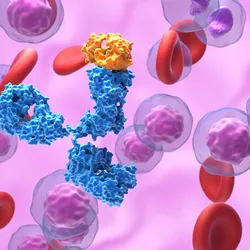
After the outbreak, Chandran partnered with Mapp biopharmaceutical and other research teams to develop an antibody cocktail dubbed MBP134. For this work, he built on his team’s previous research on how the virus interacts with host cells to identify surface molecules that could be blocked with antibodies. Then, the scientists searched for antibodies in Ebola disease survivors and used these molecules to create the cocktail: Their tests showed that this concoction protected mice, guinea pigs, ferrets, and non-human primates against three members of the Ebolavirus genus.4,5 This antibody-based therapy is currently being tested on patients to assess its effectiveness against the Bundibugyo virus, which is fueling the current Ebola outbreak in the Democratic Republic of the Congo.
The development of the Ebola treatment is an example of how large scientific teams are key to moving preclinical findings closer to the clinic, said Chandran. He emphasized that establishing these partnerships has been indispensable to pushing his work in that direction. “I'm very proud of being part of these efforts to develop therapeutic antibodies that are now being tested in people during this Ebola outbreak,” Chandran said. “When I started my lab, I never thought about [that] being something that I would get involved in. It's been very gratifying and exciting to actually contribute to taking things into the clinic.”

Scientific Collaborations: Combined Expertise to Further Research
For the past 14 years, Chandran has played an active role in major, multi-institutional projects aimed at tackling deadly viruses by developing therapies against them. One of such projects was the Prometheus project, which sought to develop antibody-based therapies against tickborne Crimean-Congo hemorrhagic fever virus (CCHFV) and three hantaviruses.
The work and network built from the Prometheus project allowed Chandran and his colleagues to undertake another large, collaborative research effort, named PROVIDENT project, which Chandran has led since 2025. Part of the National Institutes of Health (NIH) funded ReVAMPP Network, the PROVIDENT project aims to advance research in three family of viruses, which include highly virulent pathogens such as hantaviruses and CCHFV, and develop antibody- and vaccine-based approaches as countermeasures. Recently, work led by Chandran and other members of the PROVIDENT consortium described how targeting a CCHFV-secreted glycoprotein that disrupts the endothelial barrier with antibodies reduces both vascular leakage and viral load in mice challenged with the virus.6
“We can't always predict exactly which virus is going to cause an outbreak, but it's not unreasonable to guess that it might be related to viruses that we're already studying,” Chandran said. “What we can do [is] to build prototype systems for each of these virus families that we think are likely to cause outbreaks, and position things ahead of time, so that when the outbreak does happen, we're ready to respond much more quickly.”
As he reflects on his career and looks to the future, Chandran is excited to keep building and maintaining partnerships that make more difficult scientific enterprises achievable and enable “bigger lifts that one lab can’t do,” he explained.
Establishing these collaborative networks outside, but also inside his lab, has been one of Chandran’s goals as a mentor. “[One] of the most unexpected things for me is just how much I enjoy being a mentor, helping to create and maintain a nice lab environment where people really enjoy working, getting trained, and go on and do great things,” he said. “If [the people who I’ve trained] remember their time in the lab fondly and as a positive formative thing for them in their careers, I feel that's probably the greatest accomplishment you could have.”
- Carette JE, et al. Ebola virus entry requires the cholesterol transporter Niemann-Pick C1. Nature. 2011;477(7364):340-343.
- Jangra RK, et al. Protocadherin-1 is essential for cell entry by New World hantaviruses. Nature. 2018;563(7732):559-563.
- Mittler E, et al. LRP8 is a receptor for tick-borne encephalitis virus. Nature. 2025;646(8086):945-952.
- Wec AZ, et al. Development of a Human Antibody Cocktail that Deploys Multiple Functions to Confer Pan-Ebolavirus Protection. Cell Host Microbe. 2019;25(1):39-48.e5.
- Bornholdt ZA, et al. A Two-Antibody Pan-Ebolavirus Cocktail Confers Broad Therapeutic Protection in Ferrets and Nonhuman Primates. Cell Host Microbe. 2019;25(1):49-58.e5.
- Pahmeier F, et al. Antibodies targeting Crimean-Congo hemorrhagic fever virus GP38 limit vascular leak and viral spread. Sci Transl Med. 2025;17(786):eadq5928.