


Determined to optimize his physique, a dedicated gym-goer was intrigued when a bodybuilder friend suggested he try a substance called retatrutide. If he injected 50 units of the peptide, he would start losing weight, the bodybuilder said. After doing so, the man ended up in the hospital due to one of the nasty side effects of this category of weight-loss drugs. “His gut basically stopped moving,” said Karthik Achari, a clinician and family friend of the man.
This story is just one of many caused by the rapid rise in popularity of unapproved and unregulated peptide drugs amongst the public. In response to growing concerns about the trend, an FDA advisory panel recently met to provide recommendations on whether to allow compounding pharmacies to produce these drugs for human use, despite fragmented evidence for their safety and efficacy.
“People tend to just think, ‘Hey, [peptides] are natural. These products are made up of amino acids,” said Achari, whose concerns about this trend prompted him to create PepMD, an independent standards body developing infrastructure for peptide medicines. “It sounds great, but not when you don't have a clinician reviewing what you're doing and prescribing a specific dose.”
Restrictions Create a Regulatory Vacuum for Gray-Market Peptides
Many popular medicines are peptides that are supported by robust clinical trial data, have manufacturing standards and adverse event reporting, and are approved for widespread use. These include insulin and, more recently, glucagon-like peptides (GLP-1s), including blockbuster drug semaglutide (Ozempic).
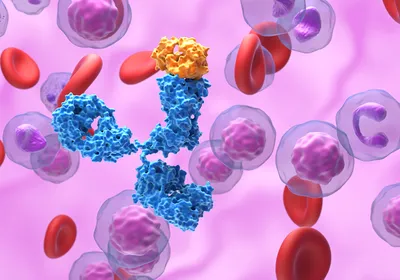
However, other peptide products are less supported by clinical evidence. Retatrutide, for example, is currently in clinical development but has not been approved by any regulator for use in humans. Produced by pharmaceutical giant Eli Lilly, the drug, which aims to treat obesity, is a polypeptide containing GLP-1, glucose-dependent insulinotropic polypeptide, and glucagon.1
According to Achari, early reporting on trial data meant that retatrutide, referred to as ‘reta’ by influencers, became widely known on social media as a muscle-sparing version of semaglutide. “The Phase 2 trial data got repurposed as marketing copy, and that 24 percent weight loss figure became something that influencers could monetize,” he said. Demand for the as-yet unapproved drug skyrocketed, and the market became flooded with knock-off versions.

Concerned by the lack of infrastructure and frequent adverse events experienced by users of unapproved peptides, clinician Karthik Achari launched PepMD, which provides safety testing, credentialing of providers, and research site authorization for peptide drugs.
Karthik Achari, PepMD
In 2023, not long after the retatrutide data were published, the FDA unwittingly created a regulatory vacuum when it introduced restrictions on the production of around 20 popular but unapproved peptide medicines, Achari explained. Under section 503A of the Federal Food, Drug, and Cosmetic Act, drugs produced by FDA-registered compounding pharmacies are exempt from premarket approval if they have a patient-specific prescription and meet certain strict limits. Ingredients in compounded drugs must i) be part of a drug that has already been approved, ii) comply with a relevant United States Pharmacopeia or National Formulary monograph, or iii) be listed on the FDA’s 503A bulk substances list.
By removing the 20 peptides from the 503A bulk substances list, the FDA stopped their legal production by compounding pharmacies overnight. The decision intended to address safety risks, such as immunogenicity, toxicity, and chemical impurities, and a lack of robust clinical evidence for their efficacy. However, with demand for these peptides on the uptick, the move backfired, removing a safe and legitimate supply and acting as an accelerant for the marketing of research-use-only peptide products that should not be available for human consumption.
“When the government took many of these peptides off of a certain compounding list, it opened the door for the gray market for a lot of these supplement manufacturers and importers of other pharmaceutical or nutraceutical materials to start importing these products from overseas and distributing them as finished goods [in the United States],” Achari said. Often cheaper than approved drugs, gray-market products containing research-use-only components and sold without regulation, monitoring, or supply chain integrity, typically come with labels stating that they are ‘not for human consumption’.2
It created fertile ground for influencers and so-called ‘biohackers,’ who had already been promoting peptides in droves. Unsuspecting consumers, wanting to maximize their health, longevity, or looks, were ordering the substances online and injecting them, often with little idea of what they were taking, the potential side effects, or where and how they were produced.
“Licensed pharmacies, prescriptions, sterility standards—all of that went away without touching demand,” Achari said. The demand continued to grow, with influencers and others riding the peptide bandwagon pushing discount codes for the products on social media. “It became a market that just exploded,” Achari added.
‘No Accountability’: Unregulated Peptides are Plagued by Dose and Toxicity Issues
Some of the issues with unregulated peptide products are straightforward; without licensed medical practitioners prescribing the dosage, consumers often don’t understand how much to take. In the case of Achari’s family friend who took retatrutide, he didn’t know what 50 units actually meant and took far too much. “[Dosage] should be in terms of milligrams, not units,” said Achari. “And how does one make sense of units when the product itself is lyophilized? There's a lot of misinformation.”
Other concerns range from obvious grifting on the part of producers to serious dosage and toxicity issues; when tested independently, some of the unregulated products have been found to contain none of the actual peptide consumers have paid for, while others contain a much higher concentration of the product than the label states. Some are contaminated by heavy metals or bacterial endotoxins.
People taking these products are doing so at great risk. “It could be in the name of research, but if there's no real research framework for somebody to fit into, there's no point to doing any of it because no outcomes data is being collected, and it's just self-experimentation at the end of the day,” said Achari. Unlike approved drugs, no one can be held responsible when things go wrong, either.
Inside the FDA Advisory Committee Meeting on Peptide Medicines
The FDA held a meeting of the Pharmacy Compounding Advisory Committee (PCAC) in July to discuss controversial peptide medicines. At the meeting, which Achari attended, the committee fielded recommendations from experts, drug compounders, and other industry stakeholders, and voted on the possibility of adding seven popular but unapproved peptide products to the 503A compounding list for safer, regulated manufacturing. While it was largely prompted by growing concerns among scientists and healthcare providers like Achari regarding unregulated peptides, many of the committee members appointed by the FDA have vested interests in peptide medicines, and Secretary of the US Department of Health and Human Services Robert F. Kennedy Jr. has publicly stated that he is a user of peptides.
The peptides tabled for consideration included BPC-157, KPV, TB-500, MOTs-C, emideltide, semax, and epitalon. “[For] most of these products, they have animal data, [but] minimal to no controlled human trials,” Achari said. BPC-157, for example, is a synthetic peptide originally isolated from human gastric juice and showed potential for musculoskeletal regeneration in preclinical animal models.3 However, despite the popularity of gray-market BPC-157 among athletes for injury recovery, only small pilot studies have been conducted in human patients, and it remains unapproved.
The committee voted to add six out of the seven peptides, including BPC-157, to the 503A list but excluded emideltide—investigated for its potential in insomnia, narcolepsy, and opioid withdrawal—because of its potentially dangerous effects and addiction risk.
The concerns of Achari and other experts about unregulated peptides draw a parallel to the pill-testing debate of the late 2010s, in which proponents argued that testing recreational drugs for chemical composition, strength, and contamination would make potential users safer and prevent harm. In the case of peptides, Achari said, the gray market is already here, and people are taking these products regardless of potential adverse outcomes; if popular peptides were added back to the compounding list, they would at least be produced by legitimate pharmacies with transparent supply chains, making them safer. For drugs like retatrutide, clinical trials were well underway when influencers began promoting gray-market versions. But for others like BPC-157, Achari said, what could incentivize a sponsor to spend millions of dollars on a clinical trial when a cheaper, unregulated product has already flooded the market? “So the real question is, ‘How do we make sure that we're actually collecting outcomes data so the FDA and other regulatory bodies actually have real data to go off?’” Achari said.
In response to the arguments by Achari and others about adding the peptides back to the 503A list to reduce harm to consumers, FDA scientists again highlighted the lack of clinical evidence. However, Achari was quick to point out that the evidence is not entirely absent, but simply fragmented; some of the compounds have been tested in humans, just not in a US clinical trial. “What doesn't exist is the controlled, systematic data that regulatory decisions usually rest on, and nothing in the current system converts all that real-world use into it,” he explained. “That's the actual gap: Both sides are arguing over a body of evidence that nobody built the machinery to collect properly.”
The meeting was touted as a major step in the right direction by the industry as a whole, Achari said. Legally, though, absolutely nothing has changed. “Those votes were simply advisory recommendations on six of the seven peptides, so no action has actually taken place,” Achari explained. “Not one of these peptides has been moved onto the 503A Bulks List. Compounding of all of the peptides that were discussed—all seven—still remains prohibited.”
After considering comments from the meeting and publishing a proposed rule on the products, FDA officials will take another round of public comments before making a final decision, a process that could take more than a year. In the meantime, more PCAC meetings have been proposed to discuss a range of other peptide products.
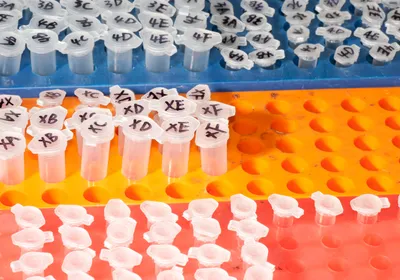
Achari wants to see real, measurable progress toward making the industry safer—the core of his work at PepMD, which has no commercial interests in any peptide products. In the absence of an official board for peptide medicine, he and his team aim to assess and credential manufacturers and providers of peptide medicines. They also plan to provide research site authorization so that the data on peptide use and adverse event reporting can be used in more legitimate ways. “Right now, the bodybuilding industry, these biohacking circles, [and] the gray market, they're running the largest research study in the history of medicine, without really knowing it,” Achari said.
- Jastreboff AM, et al. Triple–hormone-receptor agonist retatrutide for obesity — a phase 2 trial.N Engl J Med. 2023;389(6):514-526.
- Hailu KT, et al. Unregulated peptide use in the age of biohacking: digital promotion, gray-market access, and emerging public health risks.Cureus. 2026;18(6):e110657.
- McGuire FP, et al. Regeneration or risk? A narrative review of BPC-157 for musculoskeletal healing. Curr Rev Musculoskelet Med. 2025;18(12):611-619.
















