Using Spatial Biology to Guide Safer CAR T Cell Design
Webinar

Using Spatial Biology to Guide Safer CAR T Cell Design

Explore how integrating functional screening with spatial biology and tissue cross-reactivity analysis can help researchers identify CAR T cell candidates with strong antitumor activity, high target specificity, and reduced off-tumor risk.

Brought to you byThe Scientist Creative Services Team

This webinar, brought to you by Miltenyi Biotec, will be hosted live and available on-demand.

Tuesday, November 3rd, 2026
11:00 AM - 12:00 PM ET 

Chimeric antigen receptor (CAR) T cell therapies have transformed the treatment of hematological malignancies, but expanding their success to solid tumors requires researchers to address challenges including immunogenicity and on-target, off-tumor toxicity. Identifying candidates that combine strong antitumor activity with high target specificity therefore requires careful evaluation throughout early CAR development.

In this webinar, brought to you by Miltenyi Biotec, Christoph Herbel, PhD, will discuss a novel and stringent multistep workflow for identifying and characterizing fully human CAR T cell candidates targeting folate receptor 1 (FOLR1) in ovarian cancer. He will explore how phage display, high-throughput functional screening, flow cytometry, advanced co-culture assays, and multiplexed tissue imaging can work together to evaluate candidate functionality and tissue cross-reactivity. Herbel will discuss how incorporating spatial biology early in CAR T cell development can reveal on-target, off-tumor binding profiles to de-risk candidate selection and accelerate the path toward safer, more effective cell therapies.

Attendees will:

  •  Explore strategies for generating fully human single-chain variable fragments (scFvs) while minimizing potential immunogenicity in CAR T cell development
  • Learn how high-throughput functional screening assays can distinguish promising CAR candidates early in development
  • Discover how spatial biology and multiplexed immunofluorescence can reveal tissue cross-reactivity and on-target, off-tumor binding to enable safer CAR candidate selection
  • Examine how complementary functional and spatial assays can be integrated to select CAR candidates for improved efficacy, specificity, and safety
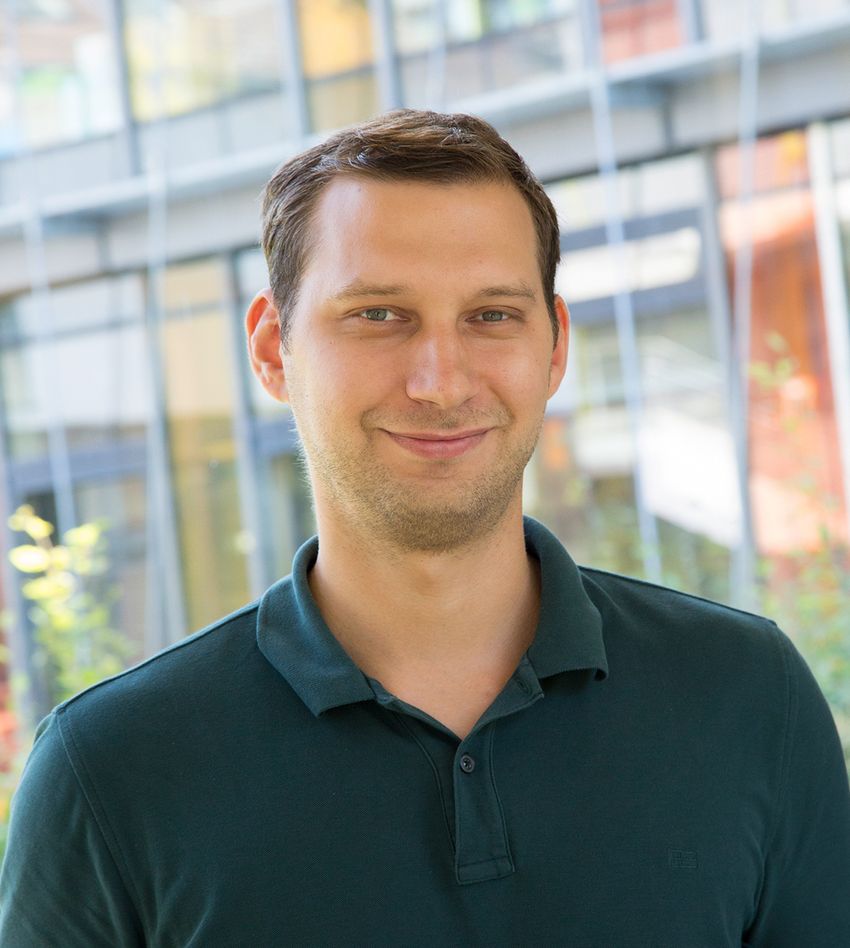
Christoph Herbel, PhD

Christoph Herbel, PhD
Manager R&D
Director Translational Cell and Gene Therapy Research & Biomarkers
Miltenyi Biotec


Sponsored by

  • Miltenyi
The Scientist October Digest cover
October 2026

Antarctica’s Blood Falls Teems With Mysterious Microbial Life

Miles away from the closest ocean, marine microbes thrive in the red ice and mud around Blood Falls, offering clues to microbial adaptation and past climate events.

View this Issue
Find better biologics faster with Stunner and the AI Developability Workcell

Find better biologics faster with Stunner and the AI Developability Workcell

Unchained Labs
An image of microcentrifuge tubes arranged within colorful laboratory racks.

Choose clarity. Choose speed. Choose MyMass™

Refeyn
Characterizing LNP Heterogeneity With Super-Resolution Imaging

Characterizing LNP Heterogeneity With Super-Resolution Imaging

Oni
Conceptual multicolored image of DNA helices.

Exploring the Most Impactful CRISPR Stories

Promega

Products

A monoclonal antibody surrounded by immune cells and red blood cells

CellRaft AIR: Find the Right Antibody-Producing Cells Faster

Cell Microsystems
Maxwell® Rapid ccfDNA Kit

Maxwell® Rapid ccfDNA Kit: Automated Purification of ccfDNA in Under 30 Minutes

Promega
Leica Biosystems, Tempus, and Paige logos side by side, marking the addition of Paige digital pathology AI tools to the Aperio AI Store.

Oncology Researchers Gain AI Cancer Tools in One Platform

Beckman Coulter Life Sciences Logo

Beckman Coulter Life Sciences Launches Vi-CELL BLU 2.0 Software to Advance Data Integrity and GMP Readiness in Cell Analysis