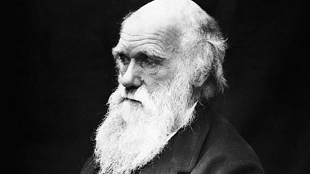
Charles Darwin for Congress

Nominated as a write-in candidate as a protest against the anti-science incumbent, famed naturalist Charles Darwin won 4,000 congressional votes in a Georgia county.

Written byDan Cossins
| 1 min read

Register for free to listen to this article
Listen with Speechify
0:00
1:00

Wikimedia, TrachemysHe died more than a century ago but Charles Darwin still managed to garner the support of more than 4,000 voters in the congressional race in Athens-Clarke county, Georgia, last week after a local scientist organized a Facebook campaign in protest against the incumbent Republican representative.

James Leebens-Mack, a plant biologist at the University of Georgia in Athens was horrified when he heard that Congressman Paul Broun (R), himself a medical doctor, had delivered a speech in a local church denouncing evolutionary theory, embryology, and the big bang theory as “lies straight from the pit of hell”—especially since Broun sits on the US House of Representatives Committee on Science, Space and Technology, and chairs its Subcommittee on Innovations and Insight.

To register his disgust, Leebens-Mack set up a Facebook page called “Darwin for Congress,” inviting people to vote for the great British naturalist as a write-in candidate against Broun, who ran unopposed for re-election.

Broun comfortably defeated his long-deceased rival, receiving 16,980 votes in Athens-Clarke county. But Darwin tallied 4,000 votes, ...

Interested in reading more?

Become a Member of

The Scientist Logo
Receive full access to more than 35 years of archives, as well as TS Digest, digital editions of The Scientist, feature stories, and much more!
Already a member?
Add The Scientist as a preferred source on Google

Add The Scientist as a preferred Google source to see more of our trusted coverage.

Meet the Author

Related Topics

The Scientist Digest cover September 2026
September 2026

Multiplex Microscopy Becomes Easier with Encoded Antibodies

A new system that enables researchers to uniquely tag monoclonal antibodies for use in microscopy could help simplify complex imaging studies.

View this Issue
Essential Genes Are Dominantly Activated by Single Transcription Factors

Essential Genes Are Dominantly Activated by Single Transcription Factors

EpiCypher Logo
Rethinking ALS Biomarkers: From Discovery to Clinical Impact

Rethinking ALS Biomarkers: From Discovery to Clinical Impact

Alamar Biosciences logo
Engineering CAR-Neutrophils In Vivo to Target Glioblastoma

Engineering CAR-Neutrophils In Vivo to Target Glioblastoma

Miltenyi
Best Practices for qPCR Assay Design and Optimization

Best Practices for qPCR Assay Design and Optimization

Bio-Rad

Products

Closeup image of a multi channel pipette dispensing pink liquid into a 96-well plate.

The ASSIST PLUS pipetting robot for affordable workflow automation

Integra Logo
Single cells in suspension

Rapidly isolate primary cells and make uniform single-cell suspensions with Corning® Cell Strainers

Corning logo
Abstract image representing cell membranes linked together.

CellBrite® Steady Membrane Stain: Cell surface staining built for real-time imaging

Biotium
sino biological logo

Monod Bio Licenses AI-designed Protein Technologies to SignalChem Biotech for Custom Discovery Assays










