

Webinars
Upcoming Webinars

Human iPSC-Derived Models for Neurodegenerative and Heart Disease Research
In this webinar, Jesús Tintos-Hernandez, Setsu Endoh-Yamagami, and Amaris Castañon will discuss the latest advances and innovations in disease cell models with iPSC's.

Research Roundtable: Rethinking the Role of Animals in Molecular Biology
In our next roundtable webinar, scientists will highlight the drawbacks of animal models and how alternatives are advancing molecular biology research.
Skip the Wait for Protein Stability Data with Aunty
In this webinar, Andre Mueller will discuss how scientists characterize therapeutic proteins in different formulations and spot the effects of excipients on protein stability.
Targeting RGS14 with AI-Guided Docking and Biochemical Assays
In this webinar, Robert Lowrey and David Siderovski will discuss novel AI-driven drug discovery approaches targeting difficult proteins.
Advancing Biomarker Discovery for Disease Insights
In this webinar, experts discuss new approaches to biomarker discovery and share the research avenues that elucidate the inner workings of different pathologies.Ensuring Regulatory Compliance in AAV Manufacturing with Analytical Ultracentrifugation
In this webinar, Magdalena Pacewicz will highlight how to use AUC to characterize AAVs as part of ensuring regulatory compliance.
On Demand Webinars

Exploring Cellular Organization with Spatial Proteomics
In this webinar, learn how scientists are using cutting-edge spatial proteomics technologies to advance their understanding of cellular organization in healthy and diseased tissues.
Advancing Alzheimer’s Disease Detection with Brain-Derived pTau217 Assays
In this webinar, Jonathan Schott and Alex Forrest-Hay will showcase how new biomarker assays for brain-derived pTau217 capture disease-relevant changes earlier and with greater resolution.

Long-Read RNA Sequencing Reveals a Regulatory Role for Splicing in Immunotherapy Responses
Olga Anczukow and Ryan Englander discuss how transcriptome splicing affects immune system function in lung cancer.

Research Roundtable: The Evolving World of Spatial Biology
In our next roundtable webinar, learn how scientists leverage spatial biology to map tissues, uncover cellular interactions, and advance disease research.
Exploring Organoids for Neurological Disease Modeling
In this webinar, Janaina Sena and Debra Silver will discuss how organoids and other 3D cell culture methods give scientists a new view into the brain.
Tracking Early Gut Development One Metabolite at a Time
In this webinar, Alex Dickens will discuss approaches for mapping microbiome-metabolome interactions to understand early-life gut physiology.

Hunt Down Lentivirus Titer and Structure with Leprechaun
In this webinar, Brian Haldeman will discuss how Leprechaun enables complete biophysical characterization of in-process or purified lentivirus.
How Multiplex Detection Unlocks Deeper Insights
In this webinar, experts discuss the latest multiplex tools for IHC and ISH and explore how to streamline workflows and find deeper translational insights.
Spatial Proteomics for All: Insights from the VIB Core Facility
In this webinar, Evelien Van Hamme and Elina Kuznecova will discuss core facility perspectives and their experiences with the MACSima spatial proteomics platform at the Flemish Institute for Biotechnology.

Capturing 3D Cell Biology in Its Natural Environment
In this webinar, Lindy O’Clair will share how live cell imaging and analysis in physiologically relevant systems advance discovery.

Advancing Drug Discovery with Artificial Intelligence
In this webinar, Jae Chang Lim and Hyun Joon Chang will discuss how a cutting-edge artificial intelligence platform is transforming early-stage drug discovery.

Decoding the Metabolome with Mass Spectrometry
In this webinar, Gary Patti and Arash Zarrine-Afsar will highlight advances in mass spectrometry that accelerate metabolic research and clinical discovery.Trending

Universe 25 Experiment
A series of rodent experiments showed that even with abundant food and water, personal space is essential to prevent societal collapse, but Universe 25's relevance to humans remains disputed.

The Federal Government’s Research Innovation Lifeline Has Gone Dark
Congressional inaction has led to the expiration of the federal government’s SBIR/STTR program, cutting off a biotechnology lifeline.
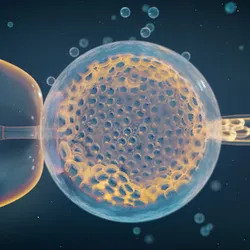
Genetic Basis of Aneuploidy, Which Often Causes Pregnancy Loss, Revealed
Studying over 100,000 embryos revealed genetic factors behind chromosome segregation issues that lead to aneuploidy, informing future risk screening and intervention.

How Fat Type Shapes Hypertension Risk
Promoting brown fat activity could counteract hypertension by reshaping the molecular signals that govern vascular stiffness.
Multimedia

Advancing Drug Discovery with Complex Human In Vitro Models
In this half-day virtual summit, a series of presentations will explore the scientific, regulatory, and operational factors impacting the use of in vitro NAMs in drug discovery.


Redefining Immunology Through Advanced Technologies
In this webinar, scientists will discuss innovations that are unlocking new insights into immunity.






