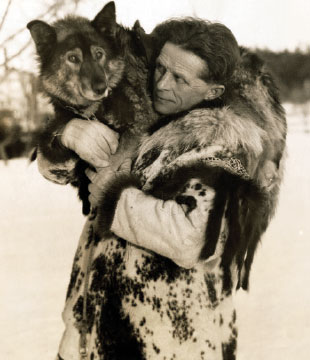
 DOG DAYS: Famed sled-dog racer Leonhard Seppala holds his lead dog, Togo. During the 1925 serum run to deliver diphtheria antitoxin to Nome, Alaska, Togo led his pack on a long, harrowing journey across buckling sea ice. To Seppala’s deep ire, another dog, Balto, received glory after the race.PHOTO BY GEORGE RINHART/CORBIS VIA GETTY IMAGESOn a dawnless morning in the winter of 1925, a sled dog named Balto became an American hero. Nome, an Alaskan mining town past its heyday, teetered on the brink of a diphtheria outbreak. Children had begun to succumb to the disease, a bacterial infection that coats the esophagus in a suffocating layer of necrotic tissue. The city’s meager supply of antitoxin serum had passed its expiration date. Desperate, the only doctor in town placed sick children into quarantine and radioed for help.
Boats, impeded by sea ice, did not visit Nome in winter, and bush planes were not safe in the cold due to their open cockpits and water-cooled engines. Public health officials agreed that dog sleds were their only hope to save Nome’s children. On January 27, a relay of 20 dog teams and drivers set out to haul serum from Nenana, 674 miles away, to Nome, through foul storms over the course of a week.
Exhausted dogs died on the snow while their drivers lost fingers and toes to temperatures that sank below –60 °F. Telegrams from rendezvous points along the way kept the American public riveted to this days-long ordeal. Leonhard Seppala, considered one of the greatest mushers and dog breeders in Alaska, drove ...