NIH deputy director leaving

Deputy Director Raynard Kington is leaving the National Institutes of Health (NIH) this summer after 10 years with the agency to take a position as president of Grinnell College in Iowa. Raynard KingtonImage: Wikimedia commons, NIH"I have a lump in my throat imagining Raynard leaving the NIH, where he has made so many outstanding and long-lasting contributions," Collins wrote in linkurl:a statement announcing Kington's resignation;http://www.nih.gov/about/director/02172010_statement_kington.ht

Written byJef Akst
| 1 min read

Register for free to listen to this article
Listen with Speechify
0:00
1:00
Share
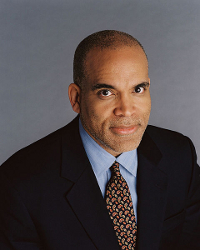
Deputy Director Raynard Kington is leaving the National Institutes of Health (NIH) this summer after 10 years with the agency to take a position as president of Grinnell College in Iowa.
Raynard Kington
Image: Wikimedia commons,
NIH
"I have a lump in my throat imagining Raynard leaving the NIH, where he has made so many outstanding and long-lasting contributions," Collins wrote in linkurl:a statement announcing Kington's resignation;http://www.nih.gov/about/director/02172010_statement_kington.htm yesterday. "Personally, I could not ask for a better Deputy Director, who has guided me on so many critical issues since last August. His counsel has been invaluable." Kingston is a PhD physician who served as the NIH's director of the Office of Behavioral and Social Sciences Research, acting director of the National Institute on Alcohol Abuse and Alcoholism, and the principal deputy director of the NIH. In addition, he took the role of acting director between Elias Zerhouni's resignation in October 2008 and Francis Collins' appointment last August, during which time he participated in distributing the $10.4 million increase in the NIH's budget as part of the economic stimulus package and implementing the regulatory changes issued by President Obama's Executive Order regarding human embryonic stem cell research. "He performed each of these roles splendidly, always going far beyond the call of duty," Collins said in the statement. Collins called Kington an "unsung hero" of the agency. "Many aren't even aware of the innumerable battles he fought on behalf of our agency, on behalf of our staff, and in defense of science," Collins wrote. "Raynard's modest and self-effacing manner belies a lion-hearted champion of the NIH mission."
**__Related stories:__***linkurl:NIH loosens stem cell consent rules;http://www.the-scientist.com/blog/display/55814/
[6th July 2009]*linkurl:New NIH head talks budget, priorities;http://www.the-scientist.com/blog/display/55179/
[10th November 2008]*linkurl:New NIH deputy;http://www.the-scientist.com/article/display/21033/
[21st January 2003]
Interested in reading more?

Become a Member of

The Scientist Logo
Receive full access to more than 35 years of archives, as well as TS Digest, digital editions of The Scientist, feature stories, and much more!
Already a member? Login Here

Meet the Author

  • Jef (an unusual nickname for Jennifer) got her master’s degree from Indiana University in April 2009 studying the mating behavior of seahorses. After four years of diving off the Gulf Coast of Tampa and performing behavioral experiments at the Tennessee Aquarium in Chattanooga, she left research to pursue a career in science writing. As The Scientist's managing editor, Jef edited features and oversaw the production of the TS Digest and quarterly print magazine. In 2022, her feature on uterus transplantation earned first place in the trade category of the Awards for Excellence in Health Care Journalism. She is a member of the National Association of Science Writers.

    View Full Profile
Share
December digest cover image of a wooden sculpture comprised of multiple wooden neurons that form a seahorse.
December 2025, Issue 1

Wooden Neurons: An Artistic Vision of the Brain

A neurobiologist, who loves the morphology of cells, turns these shapes into works of art made from wood.

View this Issue
Stacks of cell culture dishes, plates, and flasks with pink cell culture medium on a white background.

Driving Innovation with Cell Culture Essentials

Merck
Stacks of cell culture dishes, plates, and flasks with pink cell culture medium on a white background.

Driving Innovation with Cell Culture Essentials

MilliporeSigma purple logo
Human iPSC-derived Models for Brain Disease Research

Human iPSC-derived Models for Neurodegenerative Disease Research

Fujifilm
Abstract wireframe sphere with colorful dots and connecting lines representing the complex cellular and molecular interactions within the tumor microenvironment.

Exploring the Inflammatory Tumor Microenvironment 

Cellecta logo

Products

brandtech logo

BRANDTECH® Scientific Announces Strategic Partnership with Copia Scientific to Strengthen Sales and Service of the BRAND® Liquid Handling Station (LHS) 

Top Innovations 2026 Contest Image

Enter Our 2026 Top Innovations Contest

Biotium Logo

Biotium Expands Tyramide Signal Amplification Portfolio with Brighter and More Stable Dyes for Enhanced Spatial Imaging

Labvantage Logo

LabVantage Solutions Awarded $22.3 Million U.S Customs and Border Protection Contract to Deliver Next-Generation Forensic LIMS