The Scientist - Home

| 3 min read
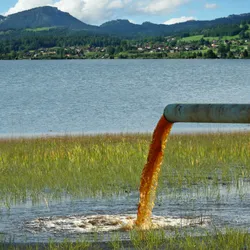
A new analysis method to measure PFAS chemicals suggests while older PFAS are declining, newer PFAS chemicals may be accumulating in the environment in unexpected ways.

|3 min read
Postdoc Portrait: Abhinav Bagchi
Latest

Insurance Pool Formed
Susan Walton | | 2 min read
WASHINGTON-A group of biotechnology companies have agreed to form a captive insurance plan to help them cope with the rising cost of liability insurance. The captive plan will give participating companies both product liability and directors and officers' coverage, explained Jeffrey Gibbs, associate general counsel for the 175-member Association of Bio technology Companies. It will provide the 24 companies now interested in the plan with an aggregate limit of $2.5 million in liability coverage,
Welch Prize
| 1 min read
HOUSTON-George Pimentel of the University of California at Berkeley has received the Robert A. Welch Award from the Welch Foundation for his work on the chemical laser. The award, which carries with it a prize of $150,000, recognizes extraordinary achievement in chemistry.
UNESCO Makes Do With Less
Jacques Richardson | | 2 min read
PARIS-The corridors and elevators were visibly less crowded than in past years this fail at UNESCO headquarters here. But the shrinking staff is only one sign of the withdrawal of the United States, the United Kingdom and Singapore from the United Nations' principal educational and scientific agency. The agency's science and engineering programs have been cut by 37 percent, and its staff reduced from 167 to 126 professionals. Its $16 million budget, rather less than that available to the science
Model to Measure Impact of Technology
Amy Mcdonald | | 1 min read
The new gallium arsenide computer chips, with processing speeds nearly 10 times faster than silicon, provide plenty of food for thought to an electronics industry hungry for success. But observers still have little to chew on when they try to measure the chips' impact. The American Society of Mechanical Engineers wants to enrich the meal. It has joined with Nobel laureate Wassily Leontief of New York University's Institute for Economic Analysis on a model to help people evaluate the economic imp
Lab Facilities Gap Widens
Tabitha Powledge | | 2 min read
WASHINGTON-The 50 U.S. universities that spend the most on R&D already average more than three times the research space available at less affluent institutions, according to a new survey re leased late last month by the National Science Foundation. In addition, plans for expanding and refurbishing research space at these institutions in the next five years outstrip by 25 percent similar construction plans at the other 115 schools. What NSF calls the "top 50" schools expect to have 12.3 milli
Animals An Issue In Japan
Fumihiro Tsubura | | 1 min read
TOKYO-Tucked away in the back yard of most animal research institutes is a humble pagoda. Armed with a bunch of flowers, some food and water, scientists visit this memorial several times each year to join a Buddhist priest in offering comfort to the souls of their laboratory animals. That ceremony represents the traditional Japanese attitude toward the welfare of animals. But the protests in Other countries against the use of laboratory animals have begun to raise consciousness and generate pres
Release Study Lacks Funding
| 1 min read
WASHINGTON-The National Research Council wants to lend an in-dependent voice to the current stalemate on the release into the environment of genetically engineered organisms-but it lacks the cash. Its Board on Basic Biology concluded a two-day meeting last month with a resolution stressing "the scientific and economic urgency" of conducting such a study that would seek a scientific consensus on definitions and on classifications of risk. Last year four federal agencies rejected separate requests
Graham Faces Tough Agenda In Science Post
| 3 min read
WASHINGTON-William Graham, confirmed Oct. 1 as presidential science adviser and director of the White House Office of Science and Technology Policy, faces a scientific community skeptical of his ability to affect science policy but hopeful he can represent their interests before the administration. He assumed office in the White House the following day shortly after 3 p.m. The voice vote in the Senate ended a nine-month search for a successor to George Keyworth II, who left the administration J
Firms Forge Black Links
Susan Walton | | 3 min read
WASHINGTON-Looking for something new after 23 years at Bell Laboratories, Elliott Slutsky became a visiting professor in electrical engineering at Tennessee State University. This fall, three years later, he began his second year of teaching at Howard University. The work is hard, the hours long, and the problems are many. But he is no longer bored. "We're solving problems," he explained. "Besides teaching, I'm working to improve the curriculum. Industry people really can make a difference, be
Congress Hikes NIH Budget
Bob Westgate | | 2 min read
WASHINGTON-The National Institutes of Health will receive an additional $910 million this year in a budget that provides for more than 6,200 new and competing grants, 21 new research centers, no lid on the total number of projects to be funded and no provision to lower the reimbursement rate for administrative indirect costs paid to universities. This good news for scientists comes as part of an agreement between House and Senate conferees on the Institutes' budget for the fiscal year that bega
Working with Bohr
Nevill Mott | | 4 min read
Almost since I can remember, my ambition was to be a physicist. My parents had both studied physics and worked for a short time in the Cavendish Laboratory, and, although neither made a career in science, I was brought up knowing about physics. At both preparatory and secondary schools, however, my most inspiring teachers taught mathematics, and I left school with a maths scholarship to Cambridge and the ambition to work on quantum theory. That was in 1923, when Sommerfeld and others were still
Press on 'Pork' and NRC Reports
Tabitha Powledge | | 10+ min read
It has been just over five years since Frank Press, a geophysicist of international renown and former science adviser to President Jimmy Carter, was installed as 19th president of the National Academy of Sciences. Press came to the presidency of the 1,800-member Academy with an imposing agenda: to revamp the report-writing process of the National Research Council, to cut personnel and overhead costs, to raise private capital for both the Academy endowment and for special projects, and to dissemi