Antifungal Permits Flu?

A common fungus-fighting drug increases the susceptibility of mice to influenza infections.

Written byJef Akst
| 1 min read

Register for free to listen to this article
Listen with Speechify
0:00
1:00
Share

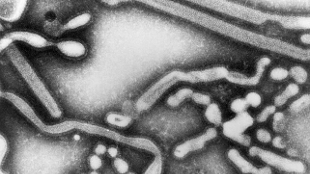
Transmission electron micrograph of influenza A virusWIKIMEDIA, CDC/ERSKINE PALMERAmphotericin B (AmphoB), an antifungal compound often given to chemotherapy or bone-marrow transplant patients, neutralizes an antiviral immune protein in mice, rendering the animals more susceptible to influenza A infection, according to a study published today (November 21) in Cell Reports.

“Sometimes a very useful drug can also have unforeseen effects,” lead author Abraham Brass, from the University of Massachusetts Medical School, said in a press release. “We now see that a major part of the body’s natural defenses to influenza virus is rendered inactive by Amphotericin B.”

Specifically, Brass and his colleagues found that AmphoB inhibits the mouse interferon IFITM3, which typically keeps influenza replication in check. As a result, mice treated with the drug “succumbed to a normally mild IAV infection,” the authors wrote.

“When we treated lung cancer cells with the antifungal drug, we saw the antiviral protection from IFITM3 pretty much disappear,” coauthor Christopher Chin, a research associate in Brass’s lab, said in the press release.

Though the results must be replicated ...

Interested in reading more?

Become a Member of

The Scientist Logo
Receive full access to more than 35 years of archives, as well as TS Digest, digital editions of The Scientist, feature stories, and much more!
Already a member? Login Here

Related Topics

Meet the Author

  • Jef (an unusual nickname for Jennifer) got her master’s degree from Indiana University in April 2009 studying the mating behavior of seahorses. After four years of diving off the Gulf Coast of Tampa and performing behavioral experiments at the Tennessee Aquarium in Chattanooga, she left research to pursue a career in science writing. As The Scientist's managing editor, Jef edited features and oversaw the production of the TS Digest and quarterly print magazine. In 2022, her feature on uterus transplantation earned first place in the trade category of the Awards for Excellence in Health Care Journalism. She is a member of the National Association of Science Writers.

    View Full Profile
Share
Illustration of a developing fetus surrounded by a clear fluid with a subtle yellow tinge, representing amniotic fluid.
January 2026, Issue 1

What Is the Amniotic Fluid Composed of?

The liquid world of fetal development provides a rich source of nutrition and protection tailored to meet the needs of the growing fetus.

View this Issue
Skip the Wait for Protein Stability Data with Aunty

Skip the Wait for Protein Stability Data with Aunty

Unchained Labs
Graphic of three DNA helices in various colors

An Automated DNA-to-Data Framework for Production-Scale Sequencing

illumina
Exploring Cellular Organization with Spatial Proteomics

Exploring Cellular Organization with Spatial Proteomics

Abstract illustration of spheres with multiple layers, representing endoderm, ectoderm, and mesoderm derived organoids

Organoid Origins and How to Grow Them

Thermo Fisher Logo

Products

Brandtech Logo

BRANDTECH Scientific Introduces the Transferpette® pro Micropipette: A New Twist on Comfort and Control

Biotium Logo

Biotium Launches GlycoLiner™ Cell Surface Glycoprotein Labeling Kits for Rapid and Selective Cell Surface Imaging

Colorful abstract spiral dot pattern on a black background

Thermo Scientific X and S Series General Purpose Centrifuges

Thermo Fisher Logo
Abstract background with red and blue laser lights

VANTAstar Flexible microplate reader with simplified workflows

BMG LABTECH