


When ex-tropical cyclone Alfred crossed the coast of Queensland, Australia, in early March, residents expected the usual damaging winds, power outages, extensive flooding, and a corresponding boom in mosquito numbers. Along with these issues, scientists have flagged a potentially deadly threat: Japanese encephalitis virus (JEV).
With stagnant floodwaters providing the perfect breeding grounds, the rise in mosquito populations after tropical cyclones is associated with a raft of mosquito-borne viruses, such as Ross River, Barmah Forest, and Dengue viruses. Unlike these well-established arboviruses, however, experts have warned that JEV poses a more serious health threat.
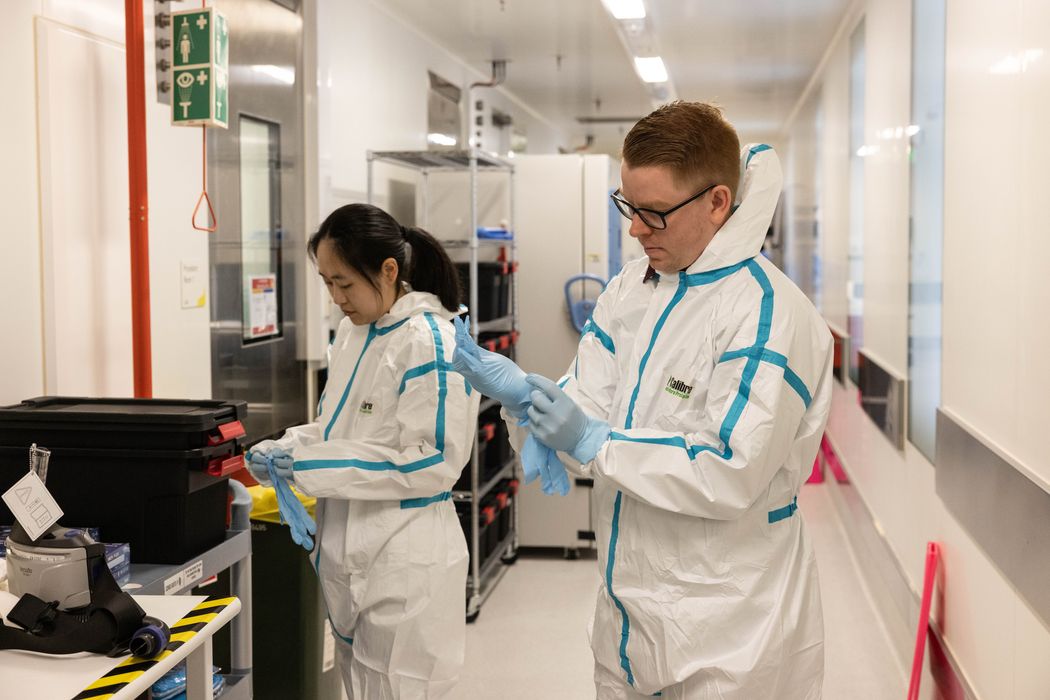
Virologist Daniel Rawle (foreground) works in QIMR Berghofer’s Emerging Viral Disease Laboratory, where he studies the Japanese encephalitis virus.
QIMR Berghofer
“The reason we're particularly worried about Japanese encephalitis is because it's a virus that we're not used to in Australia,” said Daniel Rawle, a virologist at the QIMR Berghofer’s Emerging Viral Diseases Laboratory in Brisbane, Queensland. “Herd immunity is not there for JEV, and we know it can be lethal.”
A common cause of viral encephalitis in many Asian countries, JEV has slowly but surely made its way into northern Australia. It is a zoonotic single-stranded RNA virus transmitted by mosquitos between its amplifying hosts—pigs and waterbirds—and humans.1 Until recently, outbreaks of the virus in Australia had been small, and limited to fairly isolated rural towns. But last week, workers from the government agency Queensland Health isolated the virus from mosquitos in Brisbane, the state’s densely populated capital city, presenting the risk for large outbreaks.
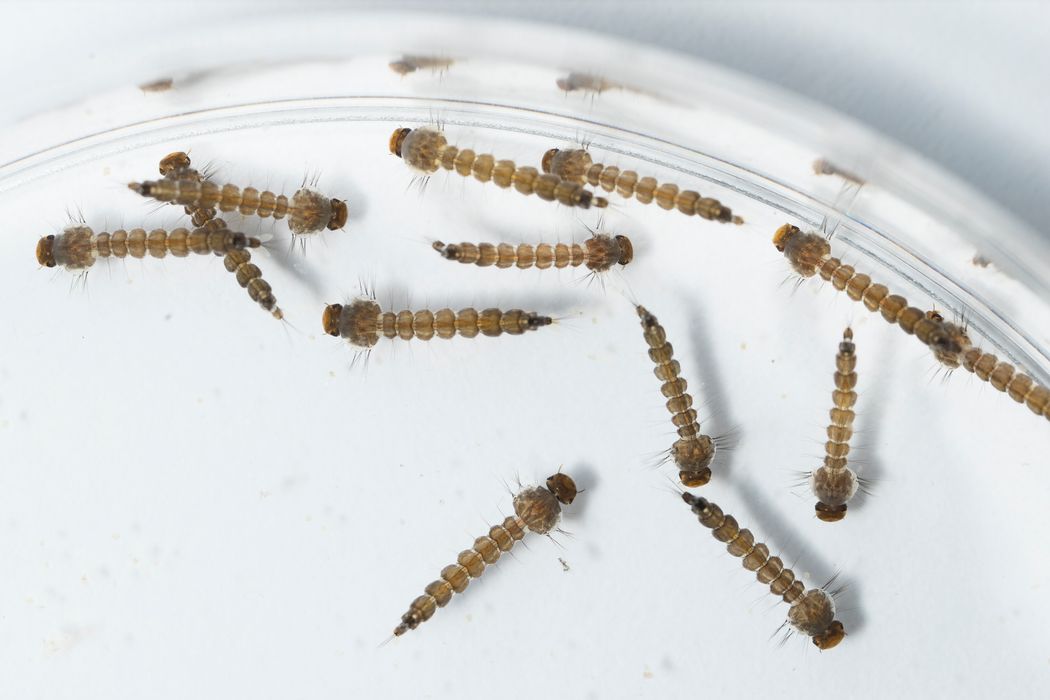
Post-cyclone, stagnant floodwaters provide the perfect breeding ground for disease-carrying mosquitos.
QIMR Berghofer
While only one in 250 people infected with JEV will develop symptoms, those who do are at risk of severe disease. One-third of symptomatic cases are severe, resulting in lifelong neurological disability. Another third are fatal.2 Australia’s first outbreak was in early 2022. “That outbreak was still fairly small, about 45 cases, but unfortunately, about seven of those cases resulted in death,” explained Brian Johnson, a medical entomologist at QIMR Berghofer’s Mosquito Control Laboratory.
According to Rawle, severe symptoms occur when the virus breaches the blood-brain barrier and can infect neurons, causing inflammation in the brain. “What we don't fully understand yet is, once the virus has infected the brain, why some people die and others don't,” Rawle continued. “That's part of what my lab is working on.”

Brian Johnson, of QIMR Berghofer’s Mosquito Control Laboratory, is a medical entomologist, or in his own words, someone who studies ‘bugs that bite people’.
QIMR Berghofer
During the current peak in mosquito numbers, experts like Rawle and Johnson are urging residents of the affected areas to take simple personal measures to reduce their chances of being bitten by Culex annulirostris, the main vector of the virus in Australia. Unfortunately, the threat from JEV in Australia won’t be eliminated once floodwaters recede. While cases dwindled after the 2022 outbreak and seemed to almost disappear the following year, the same genotype of JEV isolated during the original outbreak is back this summer. “That seems to indicate that it's become endemic, and it's maintained itself in the environment for a number of years now,” explained Rawle. “So the expectation is that [the threat from the virus] will likely continue.”
Now that the virus is here to stay, Rawle and Johnson are hard at work studying it, attempting to provide answers to the many unknowns associated with JEV in Australia. Part of Rawle’s current research is developing several new JEV vaccine candidates, including an mRNA vaccine, and establishing sovereign capacity to produce them at scale in Australia. “So when we have these outbreaks in the future of JEV or anything else, we don't have to rely on overseas manufacturers who are servicing a global market.”
Johnson’s group now majorly focuses on using next-generation sequencing technology to develop an all-in-one surveillance platform for arboviruses like JEV. By extracting the DNA and RNA of a collection of mosquitos, they can perform sequencing to identify what mosquito species are present, what viruses they're infected with, and what vertebrates they've fed on, then use that data to build ecological transmission pathway maps. “I'm also trying to mimic climate change impacts on transmission dynamics,” Johnson added. “So that'll be a fairly intensive, long-term project for us.”

- Mackenzie JS, et al. Japanese encephalitis virus: The emergence of genotype IV in Australia and its potential endemicity. Viruses. 2022;14(11):2480.
- Allen S, et al. Japanese encephalitis virus: Changing the clinical landscape of encephalitis in Australia. Med J Aust. 2023;218(8):344-347.











