Bt toxins kill worms too

crystal proteins.

Written byTudor Toma
| 1 min read

Register for free to listen to this article
Listen with Speechify
0:00
1:00
Share

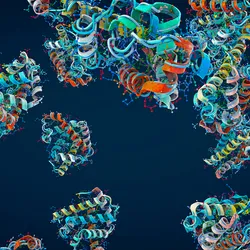
Crystal proteins from the Gram-positive soil bacterium, Bacillus thuringiensis (Bt), are pore-forming toxins used extensively to control insect pests, but their effect on the invertebrate phylum Nematoda — which includes many soil dwelling species — has been under-investigated. In the February 18 Early Edition of Proceedings of the National Academy of Sciences, Jun-zhi Wei and colleagues at the University of California, San Diego, US, show that Bt crystal proteins are also toxic to nematodes (PNAS, DOI:10.1073/pnas.0538072100, February 18, 2003).

Wei et al. expressed seven different crystal toxin proteins from two largely unstudied Bt protein subfamilies and measured their toxicity on diverse free-living nematode species. They observed that four of these crystal proteins are active against multiple nematode species, including a rat intestinal nematode. Toxicity in nematodes correlated with damage to the intestine — consistent with the mechanism of crystal toxin action in insects. In addition, they showed that one novel ...

Interested in reading more?

Become a Member of

The Scientist Logo
Receive full access to more than 35 years of archives, as well as TS Digest, digital editions of The Scientist, feature stories, and much more!
Already a member? Login Here

Meet the Author

Share
Illustration of a developing fetus surrounded by a clear fluid with a subtle yellow tinge, representing amniotic fluid.
January 2026, Issue 1

What Is the Amniotic Fluid Composed of?

The liquid world of fetal development provides a rich source of nutrition and protection tailored to meet the needs of the growing fetus.

View this Issue
Skip the Wait for Protein Stability Data with Aunty

Skip the Wait for Protein Stability Data with Aunty

Unchained Labs
Graphic of three DNA helices in various colors

An Automated DNA-to-Data Framework for Production-Scale Sequencing

illumina
Exploring Cellular Organization with Spatial Proteomics

Exploring Cellular Organization with Spatial Proteomics

Abstract illustration of spheres with multiple layers, representing endoderm, ectoderm, and mesoderm derived organoids

Organoid Origins and How to Grow Them

Thermo Fisher Logo

Products

Brandtech Logo

BRANDTECH Scientific Introduces the Transferpette® pro Micropipette: A New Twist on Comfort and Control

Biotium Logo

Biotium Launches GlycoLiner™ Cell Surface Glycoprotein Labeling Kits for Rapid and Selective Cell Surface Imaging

Colorful abstract spiral dot pattern on a black background

Thermo Scientific X and S Series General Purpose Centrifuges

Thermo Fisher Logo
Abstract background with red and blue laser lights

VANTAstar Flexible microplate reader with simplified workflows

BMG LABTECH