


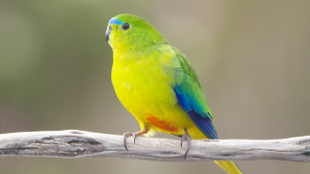
 The orange-bellied parrot (Neophema chrysogaster) is critically endangered. Wikimedia Commons,, JJ HarrisonWe can now put a price on nature. Protecting the world’s most endangered species from extinction and conserving their habitats will cost $76.1 billion per year, according to estimates published today (October 11) in Science. Though the figure may seem daunting, researchers say it’s a small price to pay for biodiversity.
This amount is "a fraction of what we as consumers spend on soft drinks each year, which is almost half a trillion dollars,” Donal McCarthy, an environmental economist at BirdLife International in Cambridge, UK, and co-author of the study, told BBC News. “The total required for species and sites is less than half of what is paid out in bonuses to bankers on Wall Street's biggest investment banks.”
Moreover, such costs are a fraction of the value of the “ecosystem services” provided by nature, including carbon sinks and crop pollination, estimated to be worth between $2 trillion and $6 trillion. “These sums are not bills, they’re investments in natural capital,” Stuart Butchart, also at BirdLife International and a study co-author, told Nature. “They’re dwarfed by ...













