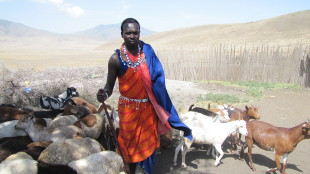
 Maasai man, who took part in the study, with goats in TanzaniaUNIVERSITY OF PENNSYLVANIAA study of lactase persistence in African populations led by researchers at the University of Pennsylvania bolsters geneticists’ knowledge of variants influencing the human ability to break down lactose, a disaccharide and the primary carbohydrate found in milk, into the monosaccharides glucose and galactose. The team’s work, published today (March 13) in The American Journal of Human Genetics, includes analyses of the genetic backgrounds of the variants as well as their geographical distribution to suggest potential pathways by which lactase persistence-associated single-nucleotide polymorphisms (SNPs) might have arisen in Africa.
“This is the largest study to date of the genetic basis of lactose tolerance across Africa,” said Penn’s Sarah Tishkoff, who led the study.
“The work is interesting as many ethnic groups from Africa were studied and haplotypes were constructed that gave data about the migrations of the LP [lactase persistence] alleles,” Irma Järvelä of the University of Helsinki, who was not involved in the work, told The Scientist in an e-mail.
Tishkoff and her colleagues identified three known variants—C-14010, G-13907, and G-13915—in people from diverse populations throughout Africa, which they confirmed were significantly associated with lactase persistence. They also suggested two new SNPs associated with lactase persistence, but because the potential SNPs are closely linked to the known lactase persistence-associated variants, the team has ...