Early fish had live birth

Giving birth to live young is thought to mainly occur in mammals and sharks, but a new study suggests that it was once a common mechanism for reproduction. A large group of ancient fish carried its embryos internally and bore live offspring, says a study published in Nature this week. Reconstructed Arhtrodira anatomy Image: Peter Trusler A team led by John Long, a paleontologist at the Museum Victoria in Melbourne, Australia, identified embryos in extinct, jawed fish from a group called Arthro

Written byTia Ghose
| 2 min read

Register for free to listen to this article
Listen with Speechify
0:00
2:00
Share
Giving birth to live young is thought to mainly occur in mammals and sharks, but a new study suggests that it was once a common mechanism for reproduction. A large group of ancient fish carried its embryos internally and bore live offspring, says a study published in Nature this week.
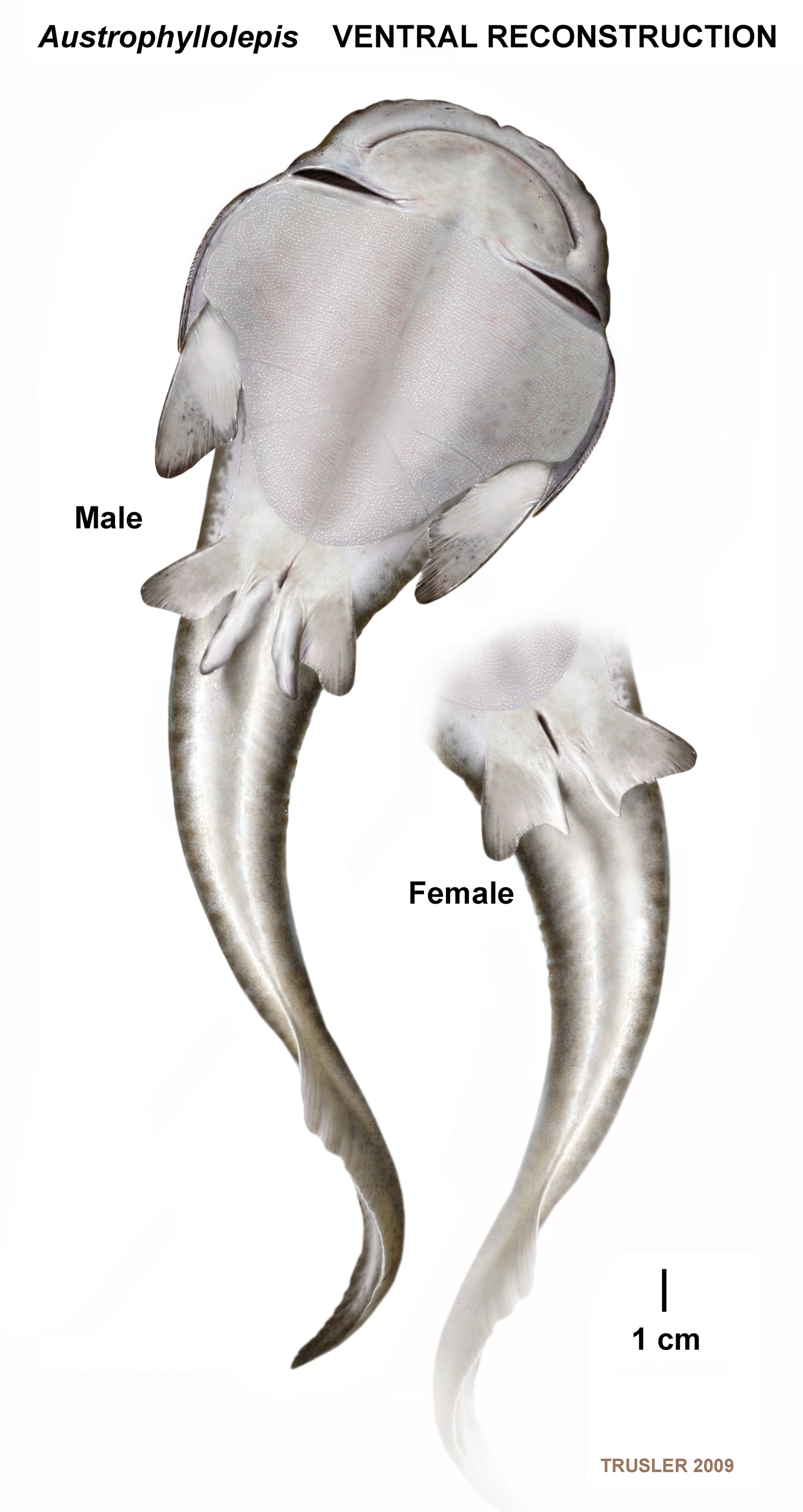
Reconstructed Arhtrodira anatomy
Image: Peter Trusler
A team led by John Long, a paleontologist at the Museum Victoria in Melbourne, Australia, identified embryos in extinct, jawed fish from a group called Arthrodira, the predominant members of the class Placodermi. Placoderms were bony, heavily armored fish that lived about 380 million years ago, and were "the dominant form of vertebrate life on the planet for 70 million years," Long said. The findings paint "a very complex picture of reproductive physiology in the deepest parts of the jawed vertebrate tree," said Martin Brazeau, a paleontologist at the Humboldt Museum in Berlin. In 2008, Long's group identified embryos in a pair of fish fossils from a deposit in the Gogo formation in Kimberley, Australia. Those fish were part of a group called ptyctodontids, which made up only a tiny portion of the Placodermi class. The discovery pushed back the origin of internal fertilization by 200 million years. The findings prompted the group to look for signs of internal fertilization in other Placoderm fossils from hundreds of samples in collections around the world. They reexamined Gogo fossils from the Arthrodira group. In two of the fossils' body cavities were smaller fish, originally presumed to be a well-preserved meal. But based on the position of the tiny fish and the similarity to the ptyctondontid finds, the group concluded that the tiny arthrodire fish were actually embryos. "Finding that first embryo was the key, the Rosetta stone for knowing what to look for," Long said. Next, the group wanted to understand how exactly the ancient fish mated. They inspected the pelvic fins of other specimens of arthrodires and found evidence of "extra large bony elements coming off the fin" in about two dozen different specimens, Long said. These protrusions were similar to the claspers that males sharks insert into females to fertilize eggs, he explained. The structures give insight into Placoderms' reproductive behaviors, Long said. In sharks, the biggest group of fish that use internal fertilization, males have "to bite the pectoral fin and hold onto the pectoral fin while they mate," said Long. The new study suggests that the ancient fish may have similar mating habits to sharks, said Brazeau. Animated reconstruction of Arthrodire mating. Video: Nature, Museum Victoria
**__Related stories:__***linkurl:Presenting her majesty;http://www.the-scientist.com/article/display/54850/
[1st August 2008]*linkurl:Ancient fingers and toes;http://www.the-scientist.com/blog/display/55022/
[21st September 2008]*linkurl:Walking from water;http://www.the-scientist.com/blog/display/55022/
[4th July 2002]
Interested in reading more?

Become a Member of

The Scientist Logo
Receive full access to more than 35 years of archives, as well as TS Digest, digital editions of The Scientist, feature stories, and much more!
Already a member? Login Here

Meet the Author

Share
Image of a man in a laboratory looking frustrated with his failed experiment.
February 2026

A Stubborn Gene, a Failed Experiment, and a New Path

When experiments refuse to cooperate, you try again and again. For Rafael Najmanovich, the setbacks ultimately pushed him in a new direction.

View this Issue
Human-Relevant In Vitro Models Enable Predictive Drug Discovery

Advancing Drug Discovery with Complex Human In Vitro Models

Stemcell Technologies
Redefining Immunology Through Advanced Technologies

Redefining Immunology Through Advanced Technologies

Ensuring Regulatory Compliance in AAV Manufacturing with Analytical Ultracentrifugation

Ensuring Regulatory Compliance in AAV Manufacturing with Analytical Ultracentrifugation

Beckman Coulter logo
Conceptual multicolored vector image of cancer research, depicting various biomedical approaches to cancer therapy

Maximizing Cancer Research Model Systems

bioxcell

Products

Sino Biological Logo

Sino Biological Pioneers Life Sciences Innovation with High-Quality Bioreagents on Inside Business Today with Bill and Guiliana Rancic

Sino Biological Logo

Sino Biological Expands Research Reagent Portfolio to Support Global Nipah Virus Vaccine and Diagnostic Development

Beckman Coulter

Beckman Coulter Life Sciences Partners with Automata to Accelerate AI-Ready Laboratory Automation

Refeyn logo

Refeyn named in the Sunday Times 100 Tech list of the UK’s fastest-growing technology companies











