FDA OKs Clinical Trials of Ecstasy for PTSD

The illicit drug has shown promise in helping people with debilitating post-traumatic stress disorder.

Written byJoshua A. Krisch
| 2 min read

Register for free to listen to this article
Listen with Speechify
0:00
2:00

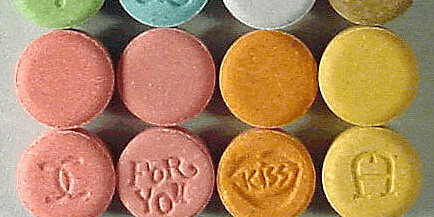
MDMAWIKIMEDIA, USDOJThe US Food and Drug Administration (FDA) has given the green light for Phase 3 clinical trials to test whether MDMA, an illegal drug also known as Ecstasy, can help treat post-traumatic stress disorder in a trial with at least 230 participants. This large-scale study comes on the heels of six promising Phase 2 trials of MDMA.

“I’m cautious but hopeful,” Charles Marmar, a psychiatrist at New York University’s Langone School of Medicine who was not involved in the study, told The New York Times. “If they can keep getting good results, it will be of great use. PTSD can be very hard to treat. Our best therapies right now don’t help 30 to 40 percent of people.”

Psychiatrists have been interested in exploiting the euphoric effects of MDMA in the clinic since the 1970s, but once Ecstasy was swept up in the Drug Enforcement Act’s crackdown on illegal substances, its Schedule 1 status prevented most research. In recent years, restrictions have loosened, and at least one promising study has shown that just three doses of MDMA administered by a psychiatrist ...

Interested in reading more?

Become a Member of

The Scientist Logo
Receive full access to more than 35 years of archives, as well as TS Digest, digital editions of The Scientist, feature stories, and much more!
Already a member?
Add The Scientist as a preferred source on Google

Add The Scientist as a preferred Google source to see more of our trusted coverage.

Meet the Author

Related Topics

Related articles background image
The Scientist Digest cover September 2026
September 2026

Multiplex Microscopy Becomes Easier with Encoded Antibodies

A new system that enables researchers to uniquely tag monoclonal antibodies for use in microscopy could help simplify complex imaging studies.

View this Issue
Essential Genes Are Dominantly Activated by Single Transcription Factors

Essential Genes Are Dominantly Activated by Single Transcription Factors

EpiCypher Logo
Rethinking ALS Biomarkers: From Discovery to Clinical Impact

Rethinking ALS Biomarkers: From Discovery to Clinical Impact

Alamar Biosciences logo
Engineering CAR-Neutrophils In Vivo to Target Glioblastoma

Engineering CAR-Neutrophils In Vivo to Target Glioblastoma

Miltenyi
Best Practices for qPCR Assay Design and Optimization

Best Practices for qPCR Assay Design and Optimization

Bio-Rad

Products

Closeup image of a multi channel pipette dispensing pink liquid into a 96-well plate.

The ASSIST PLUS pipetting robot for affordable workflow automation

Integra Logo
Single cells in suspension

Rapidly isolate primary cells and make uniform single-cell suspensions with Corning® Cell Strainers

Corning logo
Abstract image representing cell membranes linked together.

CellBrite® Steady Membrane Stain: Cell surface staining built for real-time imaging

Biotium
sino biological logo

Monod Bio Licenses AI-designed Protein Technologies to SignalChem Biotech for Custom Discovery Assays










