


This webinar will be hosted live and available on-demand
Tuesday, September 23rd, 2025
11:00 AM - 12:00 PM ET
When confirming antibody concentrations, sizing up proteins, or seeking the perfect formulation for a next-gen biologic, traditional approaches leave researchers tied to the lab bench for way too long. One-by-one quantification and sizing methods suck up time and just aren’t set up for accurate high-throughput or low-volume analysis. As the number of samples goes up and the volume available for characterization drops, high-throughput and low-volume analytical tools are essential to get the answers you need.
Stunner is the only tool that pairs up high-throughput and low-volume analysis of protein quantification and sizing from UV/Vis and dynamic light scattering (DLS) on the same 2μL sample. In a 96-well plate format that lets you load-up and walk-away, Stunner delivers protein concentration, size, polydispersity, and aggregation. Quantification is done with full-spectrum UV/Vis absorbance, so contaminants can’t sneak by and throw off the reads. Stunner is smart enough to level-up antibody-drug conjugates (ADCs) and antibody-oligo conjugates by breaking down the total spectra into individual components. Nothing gets sizing work done faster and with less sample - while quantifying samples at the same time.
In this webinar brought to you by Unchained Labs, learn how Stunner accelerates measuring the concentration of proteins, ADCs, and other conjugates. We’ll showcase the power of detecting size and checking for aggregation at the same time. From quick sample checks to high-throughput automation screens to full-on QC, Stunner’s unique combo of UV/Vis and DLS puts you on the fast track to ultimate low-volume protein sample characterization.
Topics to be covered
- How Stunner combines DLS with UV/Vis protein quant to give researchers a complete picture of protein quality from just 2μL
- How to interpret DLS results to read protein sizing and spot aggregates hiding in plain sight
- How Stunner can handle complicated reads on multi-component samples such as ADCs and protein-oligo conjugates in a matter of minutes.
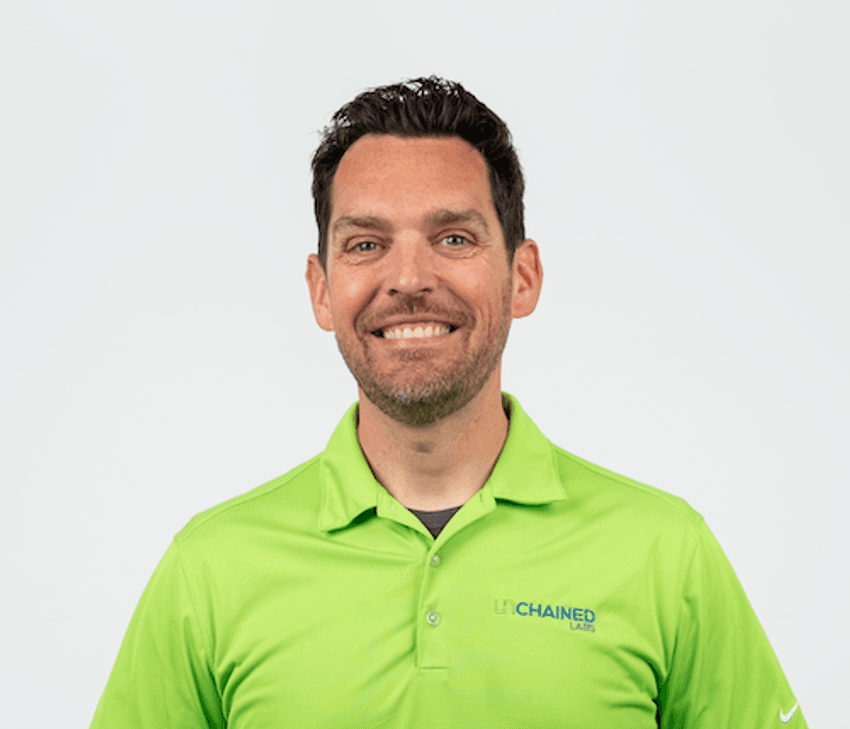 | Brian Haldeman, PhD |












