


CND Life Sciences
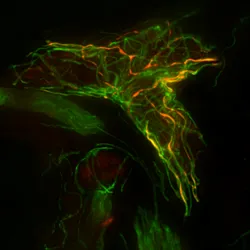
CND Life Sciences supports the care of patients facing the potential diagnosis of neurodegenerative disease and other neurological conditions. Operating a CLIA-certified and CAP-accredited laboratory in Scottsdale, Arizona, CND developed the Syn-One Test to help clinicians diagnose synucleinopathies that include Parkinson’s disease, dementia with Lewy bodies, multiple system atrophy, pure autonomic failure, and REM sleep behavior disorder. Syn-One uses proprietary immunofluorescence techniques to detect, visualize, and quantify phosphorylated alpha-synuclein in cutaneous nerves. Results of a prospective, multicenter, NIH-sponsored study of the Syn-One Test were published in the Journal of the American Medical Association (JAMA) in 2024 demonstrating >95 percent sensitivity overall in patients with a clinically determined synucleinopathy. The test analyzes three small skin biopsy samples collected in a clinician’s office through an in-office patient procedure and includes an assessment of intraepidermal nerve fiber density and other important pathologic markers. More than 3,000 neurologists and other clinicians in 50 states have used the Syn-One Test to support their diagnostic evaluation of patients. The company also collaborates with biopharmaceutical companies on clinical trials for investigational therapies targeting neurodegenerative diseases and is conducting studies assessing the test’s ability to provide early disease detection and prognostic insights. For more information, visit cndlifesciences.com or connect with us on LinkedIn.Gibbons CH, Levine T, Adler C, et al. Skin biopsy detection of phosphorylated α-Synuclein in patients with synucleinopathies. JAMA. 2024;331(15):1298–1306. doi:10.1001/jama.2024.0792.
Content by CND Life Sciences
Page 1 of 1 - 1 Total Items










