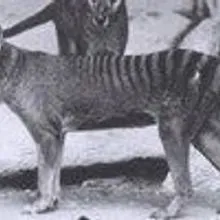
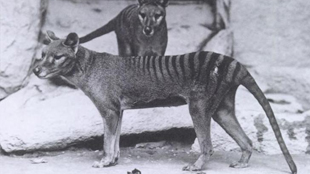
 Thylacines in the National Zoo in Washington, D.C., 1906WIKIMEDIA, SMITHSONIAN INSTITUTION ARCHIVESThe only ever successful de-extinction was the birth of a baby bucardo (Capra pyrenaica pyrenaica)—a type of ibex specifically adapted to the Pyrenees Mountains in Europe—in 2003, though the young animal died soon after birth because its lungs did not function properly, according to BBC News. The clone was generated using frozen cells harvested in 1999 from the last bucardo, an old female that died in 2000. Now, the BBC reports that the Centre for Research and Food Technology of Aragon (CITA) in Zaragoza, Spain, will begin a new project to examine the burcado frozen cells to determine whether de-extinction efforts ought to be resurrected.
“At this moment, we are not initiating a bucardo recovery plan,” Alberto Fernandez-Arias, the head of the Service of Hunting, Fishing and Wetlands in the Aragon government, told the BBC. “We only want to know if Celia’s cells are still alive after having been maintained frozen during 14 years in liquid nitrogen.” Fernandez-Arias told the story of the 2003 bucardo de-extinction experiment in one of 25 talks at the TEDxDeExtinction meeting held this spring (March 15) in Washington, D.C.
The meeting—organized by a group called Revive and Restore, part of the Long Now Foundation in Santa Cruz, California—brought together researchers planning or executing projects to genetically rescue endangered and extinct species, from the woolly mammoth to the passenger pigeon. In October, researcher Ben Novak announced ...