A black and white headshot

Natalia Mesa, PhD

Articles by Natalia Mesa, PhD

A pair of prairie voles (Microtus ochrogaster)

Monogamous Rodents Don’t Need “Love Molecule” To Pair Up

An artist’s rendering of a DNA-based virus trap, represented as gray rods in a short cone-shaped arrangement. One is coated with blue molecules, likely antibodies, that adhere to a virus target. Another image shows to traps coming together to capture a red coronavirus.

“Origami” DNA Traps Could Keep Large Viruses From Infecting Cells

A green and white fish swimming underwater

Rockfish Genes Hold Clues to Human Longevity

A colored microscopy image of a dividing breast cancer cell

Transfer RNAs Have a Surprising Role in Breast Cancer Growth

Artist’s rendering of a reflective metallic DNA double helix.

Humans Are Still Evolving Thanks to Microgenes

Rendered image of <em>Chlamydia</em>

How Chlamydia Guards Itself Against the Immune System

<em>Chlamydia</em> invades a host cell, forms a membrane-bound vacuole, or inclusion, and then modifies the protein composition of the structure&rsquo;s membrane. If immune cells detect <em>Chlamydia</em> before it forms the inclusion, they trigger T cells to produce interferon-&gamma; (IFN-&gamma;), a powerful cytokine. IFN-&gamma; activates the protein mysterin (also called RFN213), which attaches ubiquitin to the inclusion membrane, signaling the cell to destroy the inclusion&rsquo;s contents by dumping them into a lysosome (left). C. trachomatis produces GarD, a protein that integrates into the inclusion membrane itself and somehow prevents mysterin from attaching ubiquitin, allowing the bacterium to evade immune destruction while continuing to multiply and eventually bursting from the cell (right).

Infographic: How Chlamydia Evades Immune Detection

illustration of T cell attached to protein

“Smarter” CAR T Cells Target Tumors with Precision

A grayscale tomography image of snake tissue

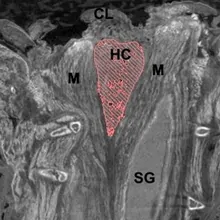
Snakes Have Clitorises After All, Study Finds

Illustration of HIV virus

Viral Protein Behind Chronic Inflammation in People with HIV: Study

Lock and key illustration

Novel Yeast-Assembly Technique Yields Living Materials

Orange and blue spring with steam rising&nbsp;

Archaea Sport Structures that Shuttle Genes Among Microbes

Illustration of a developing fetus surrounded by a clear fluid with a subtle yellow tinge, representing amniotic fluid.
January 2026

What Is the Amniotic Fluid Composed of?

The liquid world of fetal development provides a rich source of nutrition and protection tailored to meet the needs of the growing fetus.

View this Issue
Human-Relevant In Vitro Models Enable Predictive Drug Discovery

Advancing Drug Discovery with Complex Human In Vitro Models

Stemcell Technologies
Redefining Immunology Through Advanced Technologies

Redefining Immunology Through Advanced Technologies

Ensuring Regulatory Compliance in AAV Manufacturing with Analytical Ultracentrifugation

Ensuring Regulatory Compliance in AAV Manufacturing with Analytical Ultracentrifugation

Beckman Coulter Logo
Conceptual multicolored vector image of cancer research, depicting various biomedical approaches to cancer therapy

Maximizing Cancer Research Model Systems

bioxcell

Products

Refeyn logo

Refeyn named in the Sunday Times 100 Tech list of the UK’s fastest-growing technology companies

Parse Logo

Parse Biosciences and Graph Therapeutics Partner to Build Large Functional Immune Perturbation Atlas

Sino Biological Logo

Sino Biological's Launch of SwiftFluo® TR-FRET Kits Pioneers a New Era in High-Throughout Kinase Inhibitor Screening

SPT Labtech Logo

SPT Labtech enables automated Twist Bioscience NGS library preparation workflows on SPT's firefly platform