Ebola Risk in Liberia?

Authorities report three cases of Ebola in Liberia, which was declared free of the virus in May.

Written byJef Akst
| 1 min read

Register for free to listen to this article
Listen with Speechify
0:00
1:00
Share

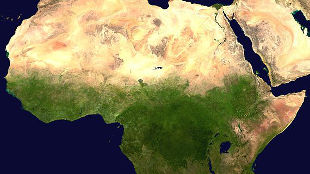
WIKIMEDIA, NASAJust two months ago, the World Health Organization (WHO) declared Liberia Ebola-free after more than a year of suffering from the ongoing outbreak in West Africa. But last week (June 28), a 17-year-old male died of an illness that had been managed as if it were malaria, and the following day a post-mortem swab test showed he had Ebola, according to a WHO statement. Such post-mortem testing is standard practice in the country, as Liberia—which remains at risk of importing the virus from the neighboring countries of Guinea and Sierra Leone—is under a 90-day period of vigilance that started in early May.

A follow-up inquiry found that the young man had been in contact with nearly 200 people while he was infected, two of which have tested positive for Ebola. These patients are now being treated and all 200 contacts are being closely monitored. Some households are under quarantine, and United Nations (UN) agencies such as UNICEF and the World Food Programme are providing food, bedding, and tents. The UN and nongovernmental organizations have also sent monitoring equipment to Liberia, and the WHO is sending experts in epidemiology and social mobilization in an effort to prevent further spread of the virus.

Interested in reading more?

Become a Member of

The Scientist Logo
Receive full access to more than 35 years of archives, as well as TS Digest, digital editions of The Scientist, feature stories, and much more!
Already a member? Login Here

Related Topics

Meet the Author

  • Jef (an unusual nickname for Jennifer) got her master’s degree from Indiana University in April 2009 studying the mating behavior of seahorses. After four years of diving off the Gulf Coast of Tampa and performing behavioral experiments at the Tennessee Aquarium in Chattanooga, she left research to pursue a career in science writing. As The Scientist's managing editor, Jef edited features and oversaw the production of the TS Digest and quarterly print magazine. In 2022, her feature on uterus transplantation earned first place in the trade category of the Awards for Excellence in Health Care Journalism. She is a member of the National Association of Science Writers.

    View Full Profile
Share
Illustration of a developing fetus surrounded by a clear fluid with a subtle yellow tinge, representing amniotic fluid.
January 2026

What Is the Amniotic Fluid Composed of?

The liquid world of fetal development provides a rich source of nutrition and protection tailored to meet the needs of the growing fetus.

View this Issue
Human-Relevant In Vitro Models Enable Predictive Drug Discovery

Advancing Drug Discovery with Complex Human In Vitro Models

Stemcell Technologies
Redefining Immunology Through Advanced Technologies

Redefining Immunology Through Advanced Technologies

Ensuring Regulatory Compliance in AAV Manufacturing with Analytical Ultracentrifugation

Ensuring Regulatory Compliance in AAV Manufacturing with Analytical Ultracentrifugation

Beckman Coulter Logo
Conceptual multicolored vector image of cancer research, depicting various biomedical approaches to cancer therapy

Maximizing Cancer Research Model Systems

bioxcell

Products

Sino Biological Logo

Sino Biological Expands Research Reagent Portfolio to Support Global Nipah Virus Vaccine and Diagnostic Development

Beckman Coulter

Beckman Coulter Life Sciences Partners with Automata to Accelerate AI-Ready Laboratory Automation

Refeyn logo

Refeyn named in the Sunday Times 100 Tech list of the UK’s fastest-growing technology companies

Parse Logo

Parse Biosciences and Graph Therapeutics Partner to Build Large Functional Immune Perturbation Atlas