Fighting Chytrid Fungus

Researchers eliminated chytrid fungus from a Mediterranean island toad population using antifungals and disinfectants.

Written byKaren Zusi
| 2 min read

Register for free to listen to this article
Listen with Speechify
0:00
2:00

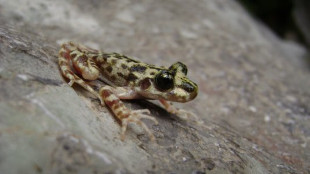
WIKIMEDIA, TUURIO AND WALLIEChytridiomycosis, a disease caused by the chytrid fungus Batrachochytrium dendrobatidis, threatens amphibian species the world over. But a team of researchers from Spain and the U.K. has successfully cured a wild population of Mallorcan midwife toads (Alytes muletensis), the group reported yesterday (November 18) in Biology Letters.

“This is the first time that chytrid has ever been successfully eliminated from a wild population,” said study coauthor Jaime Bosch of Madrid’s National Museum of Natural Science in a press release.

The Mallorcan midwife toad is endemic to the island of Mallorca, where chytrid fungus was accidentally introduced in the 1990s. Bosch’s team began trying to eliminate the disease in 2009, but while tadpoles treated with itraconazole in the lab were cured, the amphibians were reinfected once returned to their environment—even after their seasonal ponds had dried and refilled with autumn rains.

In 2013, the team removed tadpoles for lab treatments again, but also treated the seasonal pond locations with an industrial disinfectant called Virkon S. “The disinfectant was liberally applied to all rock, ...

Interested in reading more?

Become a Member of

The Scientist Logo
Receive full access to more than 35 years of archives, as well as TS Digest, digital editions of The Scientist, feature stories, and much more!
Already a member?
Add The Scientist as a preferred source on Google

Add The Scientist as a preferred Google source to see more of our trusted coverage.

Meet the Author

Related Topics

Related articles background image
The Scientist Digest cover September 2026
September 2026

Multiplex Microscopy Becomes Easier with Encoded Antibodies

A new system that enables researchers to uniquely tag monoclonal antibodies for use in microscopy could help simplify complex imaging studies.

View this Issue
Rethinking ALS Biomarkers: From Discovery to Clinical Impact

Rethinking ALS Biomarkers: From Discovery to Clinical Impact

Alamar Biosciences logo
Engineering CAR-Neutrophils In Vivo to Target Glioblastoma

Engineering CAR-Neutrophils In Vivo to Target Glioblastoma

Miltenyi
Best Practices for qPCR Assay Design and Optimization

Best Practices for qPCR Assay Design and Optimization

Bio-Rad
Beyond the Basics: Strategies for Single-Cell and Spatial Transcriptomics Analysis

Beyond the Basics: Strategies for Single-Cell and Spatial Transcriptomics Analysis

bioxcell

Products

Closeup image of a multi channel pipette dispensing pink liquid into a 96-well plate.

The ASSIST PLUS pipetting robot for affordable workflow automation

Integra Logo
Single cells in suspension

Rapidly isolate primary cells and make uniform single-cell suspensions with Corning® Cell Strainers

Corning logo
Abstract image representing cell membranes linked together.

CellBrite® Steady Membrane Stain: Cell surface staining built for real-time imaging

Biotium
sino biological logo

Monod Bio Licenses AI-designed Protein Technologies to SignalChem Biotech for Custom Discovery Assays










