House Passes Watered-Down Zika Aid Bill

The legislation allocates only $622 million to the effort to help the country respond to the impending spread of the mosquito-borne disease.

Written byBob Grant
| 1 min read

Register for free to listen to this article
Listen with Speechify
0:00
1:00
Share

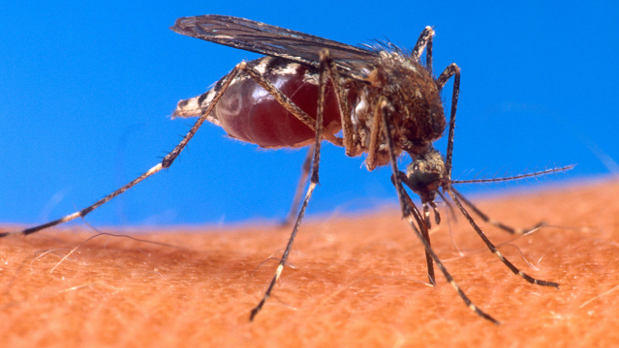
WIKIMEDIA, US DEPARTMENT OF AGRICULTUREThe White House and Democrats in the US Congress railed against a defanged version of a Zika funding bill passed Wednesday (May 18) by the US House. The bill, which passed on a 241-184 vote along party lines, allocates only $622 million to help officials that will be faced with the spread of the Zika virus to the U.S. as temperatures start to warm and mosquitoes breed. The Obama administration had asked for $1.9 billion to fight Zika—which is expected to reach as far north as New Jersey and Ohio and as far west as California this summer—and the Senate has approved $1.1 billion in spending.

The White House has threatened to veto the scaled-back bill, calling it “woefully inadequate.”

The House bill would provide funding through the end of September to state and local health departments, Zika vaccine research, and mosquito control. The heftier Senate bill would aid the fight against Zika through September 2017. The main sticking points between the Congressional bodies are where the money would come from, with House Republicans insisting on budgetary cuts elsewhere to offset the Zika funds.

Interested in reading more?

Become a Member of

The Scientist Logo
Receive full access to more than 35 years of archives, as well as TS Digest, digital editions of The Scientist, feature stories, and much more!
Already a member? Login Here

Related Topics

Meet the Author

  • From 2017 to 2022, Bob Grant was Editor in Chief of The Scientist, where he started in 2007 as a Staff Writer. Before joining the team, he worked as a reporter at Audubon and earned a master’s degree in science journalism from New York University. In his previous life, he pursued a career in science, getting a bachelor’s degree in wildlife biology from Montana State University and a master’s degree in marine biology from the College of Charleston in South Carolina. Bob edited Reading Frames and other sections of the magazine.

    View Full Profile
Share
Illustration of a developing fetus surrounded by a clear fluid with a subtle yellow tinge, representing amniotic fluid.
January 2026, Issue 1

What Is the Amniotic Fluid Composed of?

The liquid world of fetal development provides a rich source of nutrition and protection tailored to meet the needs of the growing fetus.

View this Issue
Skip the Wait for Protein Stability Data with Aunty

Skip the Wait for Protein Stability Data with Aunty

Unchained Labs
Graphic of three DNA helices in various colors

An Automated DNA-to-Data Framework for Production-Scale Sequencing

illumina
Exploring Cellular Organization with Spatial Proteomics

Exploring Cellular Organization with Spatial Proteomics

Abstract illustration of spheres with multiple layers, representing endoderm, ectoderm, and mesoderm derived organoids

Organoid Origins and How to Grow Them

Thermo Fisher Logo

Products

Brandtech Logo

BRANDTECH Scientific Introduces the Transferpette® pro Micropipette: A New Twist on Comfort and Control

Biotium Logo

Biotium Launches GlycoLiner™ Cell Surface Glycoprotein Labeling Kits for Rapid and Selective Cell Surface Imaging

Colorful abstract spiral dot pattern on a black background

Thermo Scientific X and S Series General Purpose Centrifuges

Thermo Fisher Logo
Abstract background with red and blue laser lights

VANTAstar Flexible microplate reader with simplified workflows

BMG LABTECH










