Missing CDC Researcher Found Dead

The body of Timothy Cunningham, who disappeared in February, was recovered from the Chattahoochee River earlier this week.

Written byCatherine Offord
| 2 min read

Register for free to listen to this article
Listen with Speechify
0:00
2:00
Share

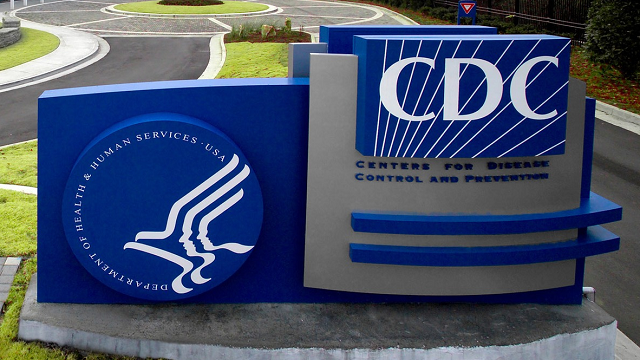
CDC, JAMES GATHANYA Centers for Disease Control and Prevention (CDC) researcher who vanished after leaving the agency’s headquarters in February was found dead late on Tuesday (March 3), according to officials in Atlanta. Timothy Cunningham’s body was recovered from the Chattahoochee River and identified by dental records, authorities told reporters yesterday (March 5). The probable cause of death was drowning.

Much about the situation surrounding Cunningham’s death remains unclear. “Barring some new information coming forward . . . we may never be able to tell you how he got into the river,” Major Michael O’Connor of the Atlanta Police told reporters (via The Washington Post).

The 35-year-old epidemiologist’s disappearance on the afternoon of February 12 made headlines, and led to a massive police search and a $15,000 reward for information on his whereabouts. It was reported that he had left work early that day, after telling colleagues he felt unwell.

Police noted after their preliminary searches that Cunningham appeared to have left all his belongings at home. “His keys, his cell phone, credit cards, debit cards, wallet, all his identification, passport—everything you can think of, ...

Interested in reading more?

Become a Member of

The Scientist Logo
Receive full access to more than 35 years of archives, as well as TS Digest, digital editions of The Scientist, feature stories, and much more!
Already a member? Login Here

Related Topics

Meet the Author

  • After undergraduate research with spiders at the University of Oxford and graduate research with ants at Princeton University, Catherine left arthropods and academia to become a science journalist. She has worked in various guises at The Scientist since 2016. As Senior Editor, she wrote articles for the online and print publications, and edited the magazine’s Notebook, Careers, and Bio Business sections. She reports on subjects ranging from cellular and molecular biology to research misconduct and science policy. Find more of her work at her website.

    View Full Profile
Share
Image of a woman with her hands across her stomach. She has a look of discomfort on her face. There is a blown up image of her stomach next to her and it has colorful butterflies and gut bacteria all swarming within the gut.
November 2025, Issue 1

Why Do We Feel Butterflies in the Stomach?

These fluttering sensations are the brain’s reaction to certain emotions, which can be amplified or soothed by the gut’s own “bugs".

View this Issue
Olga Anczukow and Ryan Englander discuss how transcriptome splicing affects immune system function in lung cancer.

Long-Read RNA Sequencing Reveals a Regulatory Role for Splicing in Immunotherapy Responses

Pacific Biosciences logo
Research Roundtable: The Evolving World of Spatial Biology

Research Roundtable: The Evolving World of Spatial Biology

Conceptual cartoon image of gene editing technology

Exploring the State of the Art in Gene Editing Techniques

Bio-Rad
Conceptual image of a doctor holding a brain puzzle, representing Alzheimer's disease diagnosis.

Simplifying Early Alzheimer’s Disease Diagnosis with Blood Testing

fujirebio logo

Products

Eppendorf Logo

Research on rewiring neural circuit in fruit flies wins 2025 Eppendorf & Science Prize

Evident Logo

EVIDENT's New FLUOVIEW FV5000 Redefines the Boundaries of Confocal and Multiphoton Imaging

Evident Logo

EVIDENT Launches Sixth Annual Image of the Year Contest

10x Genomics Logo

10x Genomics Launches the Next Generation of Chromium Flex to Empower Scientists to Massively Scale Single Cell Research







