The morning of Oct 6, 2025, I fumbled groggily for my phone as soon as I woke up. The Nobel Prize in Physiology or Medicine had just been announced, and I was extremely curious to see which scientists had received the coveted call this year. Soon, I was deep down the rabbit hole reading about how regulatory T cells (Tregs) were discovered. For those who haven’t had a chance to catch up on the details, here’s the story in a nutshell: Japanese immunologist Shimon Sakaguchi was intrigued by his colleagues’ findings that removal of the thymus, a T-cell producing organ, from newborn mice resulted in more (rather than fewer) autoimmune disorders. Later, Sakaguchi injected T cells into such thymus-free mice, which seemed to protect them from autoimmune issues. He concluded that there must be a class of regulatory T cells that stops the immune system from attacking the body’s own tissues, and peripheral immunity research snowballed thereafter.
While cell type discoveries seem commonplace in science today, I find these milestones a reminder that today’s biology landscape was built with countless bricks of scientific curiosity. Even back in 1665, when Robert Hooke first peered through his microscope into a cork slice and described a square structure that reminded him of prison cell (so he called this unit a “cell”), he simply did it out of curiosity.1 Buried in the avalanche of cellular studies thereafter lie similar motivational backstories.
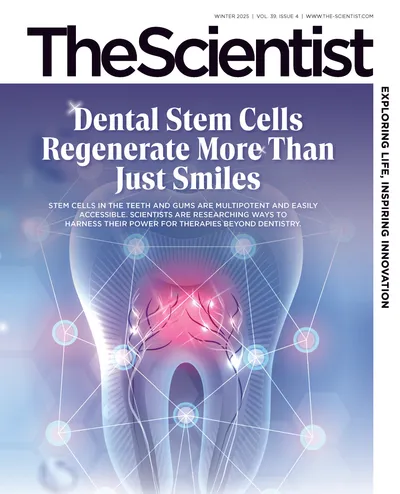
For instance, in the early 2000s, when Songtao Shi, a dental clinician and researcher at the University of Pennsylvania back then, noticed pulp-like tissue in his daughter’s shed tooth, he took it to the lab to learn more about it—that’s how he discovered multipotent dental stem cells in baby teeth for the first time. Today, there’s a whole field of dental experts working on different types of stem cells from teeth and gums to find novel ways to improve more than just oral health. If you wish to get to the root of the history and applications of dental stem cells, check out the feature story in this issue.
Even though there are countless discoveries resulting from cell studies, the list of what we do not know seems to be ever growing. I do think that the nature of questions is evolving with time. One of my favorite unique stories in cell biology is covered in another feature story in this issue: the role of cells in human space exploration. As space scientists set their eyes on Mars and the Moon, researchers must first assess the impact of long-term space travel on the human body to determine the feasibility of a crewed mission. So, scientists are sending human cells and organoids into space as the closest models to test the effects of extended radiation exposure for developing space medicines, in preparation for future missions. That's one small experiment for cells, one giant leap for mankind.
- Hooke R. Micrographia: or, Some Physiological Descriptions of Minute Bodies Made by Magnifying Glasses with Observations and Inquiries Thereupon. London: J. Martyn and J. Allestry; 1665.