The Scientist - Home

| 2 min read
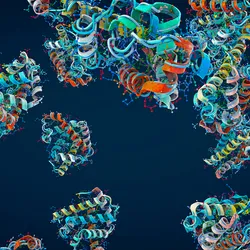
Mapping diverse mutations within a cancer hotspot revealed that distinct variants drive tumor growth to different extents, which could guide anticancer therapies.

Latest

National Lab Briefs
| 2 min read
Eager to encourage government-industry collaboration on the potential uses of high-temperature superconducting materials, the Reagan administration has rushed to announce an initiative that may be more snap than substance. The April 21 designation of Los Alamos, Argonne, and Oak Ridge national laboratories as superconductivity pilot centers went unaccompanied by additional funding or staff. Furthermore, acknowledged an Energy Department press spokesman, the department has no current plans to e
Government Briefs
| 2 min read
The rancor of the White House cost David T. Kingsbury, National Science Foundation assistant director for behavioral and biological sciences, a trip to Paris last month. It seems that officials of the Administrations’s Office of Science and Technology Policy are trying to punish him because of allegations that he advised a California biotechnology firm while a government official (see The Scientist, November 2, 1987, p. 3). So they forced Kingsbury’s superiors at NSF to withdraw hi
Proton Decay Experiment On The Brink Of Extinction
Robert Crease | | 6 min read
The Proton Refuses To Decay, But Physicists’Funds Are Fading Fast Two thousand feet under the shores of Lake Erie, in a six-story salt cavern, one of the most sophisticated light detectors ever constructed is waiting. Every second, several particles speed through the instrument’s enormous pool of water and collide with atoms in it, setting off flashes of light to be detected and recorded. But these events are merely physics’ flotsam and jetsam—things to be identified, c
University Briefs
| 2 min read
Hewlett-Packard Co. founder David Packard has just given $2 billion to the trust he and his late wife established in 1964 and young researchers will be among the beneficiaries. The David and Lucile Packard Foundation plans to dole out 20 $500,000 awards this year and has already asked 50 top research universities to nominate two junior professors each. But only natural scientists and engineers need apply; research projects in medicine, space activity, and high-energy physics are ineligible. Th
Independent Lab Briefs
| 2 min read
If Georgia were a sovereign nation, it would rank sixth in the world in pulp and paper production. Now, fittingly, the state is also the future home of the Institute of Paper Chemistry, an independent research facility and graduate school currently located in Appleton, Wis. The institute has trained more than 25% of the engineers and scientists in the paper and pulp industry. And the move, scheduled to be completed in 1990 and backed by $15 million from the Georgia legislature, will permit Geo
U. K. Scientists Fear Government Will Muzzle Research Reports
Richard Smith | | 3 min read
New Rules Seen As Serious Threats To Academic Freedom LONDON--Gerald Draper is a worried man. Head of the Childhood Cancer Research Group at Oxford University, he often speaks at meetings of parents who live near nuclear installations, helping them understand why the risk of radiation-induced leukemia in their children is small. It is a daunting task, because the question of whether leukemia rates rise around nuclear power plants is one of the most contentious scientific issues in Britain.
Entrepreneur Briefs
| 3 min read
Going it alone may seem appealing, but it isn't always possible. Take BioPolymers, a Farmington, Conn., start-up that employs 18 scientists. Its three founders, marine biologist J. Herbert Waite, microbiologist Christine V. Benedict, and businessman Thomas M. Benedict, had an idea that venture capitalists couldn’t resist: to synthesize the potent protein that mussels use to cling to rocks. The sticky substance, would be invaluable for medical applications such as eye surgery where suture
Industry Briefs
| 2 min read
The Du Pont Co. may be its own best client for its own new venture: an innovative enterprise dedicated to cleaning contaminated groundwater and soil. Allies in the endeavor are two smaller companies: Biosystems, a Chester, Pa., firm specializing in groundwater clean-up and Dallas-based Halliburton Co., an engineering consulting firm to the petroleum industry. The three will operate jointly as DuPont Biosystems, employing microbiologists, chemists, environmental engineers, and geologists—
Low Profile for SDI Work on Campus
Daniel Charles | | 5 min read
WASHINGTON--For J.R. Shealy, an electrical engineer at Cornell University, the Strategic Defense Initiative (SDI) isn’t about shooting down missiles. Instead, it’s a way to fund his pioneering research on growing semiconductor crystals. WASHINGTON--James A. Ionson’s four-year tenure as director of SDI’s Innovative Science and Technology (IST) program was punctuated by controversy over the idea of a strategic defense and the role of the academic community in SDI resea
FASEB Offers Four Themes at Annual Meeting
| 2 min read
The Federation of American Societies for Experimental Biology (FASEB) is holding its 72nd annual meeting this week in Las Vegas. The meeting, one of the world’s largest scientific gatherings, features more than 9,000 scientific papers and nearly 1,000 scientific, technical and educational exhibits. FASEB officials expect more than 20,000 individuals, including 16,000 scientists, to attend the meeting. In addition to sitting in on conventional scientific sessions, attendees have the opp
Internal Strains Block Joint Biotech Research
Stephen Greene | | 4 min read
WASHINGTON--Don’t add biomedical companies to the short list of U.S. industries that have agreed to form national research consortia to compete in world markets. The strain of mixing scientific cooperation with financial competition ap- pears to be too great. Although drug companies have yet to form a consortium to do basic research in biotechnology, their scientists can watch how one variant of the concept is playing in Peoria. Seven companies with interests in agricultural biote
Some LEAP at Chance to Forge Teams
Louis Weisberg | | 4 min read
SANTA FE, N.M--Jumping from a 165-foot cliff wasn’t in their job descriptions. So there was some grumbling when Hewlett-Packard lab director Frank Carrubba asked 20 of his scientists to attend an “adventure-learning” program in the wilds of New Mexico. One year later, the Palo Alto, Calif., researchers talk fondly about their four days at LEAP (Leaders Experiential Adventure Program). The experience brought people from different areas together "in a bonding way,"Carrubba sa