Cellular Workout

Autophagy, the cell’s recycling system, may be responsible for the health benefits of exercise.

Written byMegan Scudellari
| 3 min read

Register for free to listen to this article
Listen with Speechify
0:00
3:00

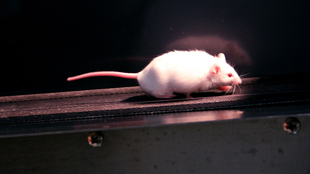
Mouse on a treadmill

It’s indisputable—exercise is good for you. But on a molecular level, scientists don’t really know why. Published online today in Nature, researchers show for the first time that a cellular housekeeping mechanism, called autophagy, could be the source of the beneficial effects of exercise, including protection against diabetes. Targeting the pathway could mimic the health effects of exercise—all the perks with none of the sweat—and help treat type II diabetes, the authors suggest.

“It’s really a new idea,” said Marc Francaux, who studies the biochemistry of exercise at the Université catholique de Louvain and was not involved in the research. “They use three different transgenic mouse models. It’s really convincing.”

“It provides a fresh look into how exercise produces its benefits,” said Gökhan Hotamisligil, who ...

Interested in reading more?

Become a Member of

The Scientist Logo
Receive full access to more than 35 years of archives, as well as TS Digest, digital editions of The Scientist, feature stories, and much more!
Already a member?
Add The Scientist as a preferred source on Google

Add The Scientist as a preferred Google source to see more of our trusted coverage.

Meet the Author

Related Topics

Related articles background image
The Scientist Digest cover September 2026
September 2026

Multiplex Microscopy Becomes Easier with Encoded Antibodies

A new system that enables researchers to uniquely tag monoclonal antibodies for use in microscopy could help simplify complex imaging studies.

View this Issue
Essential Genes Are Dominantly Activated by Single Transcription Factors

Essential Genes Are Dominantly Activated by Single Transcription Factors

EpiCypher Logo
Rethinking ALS Biomarkers: From Discovery to Clinical Impact

Rethinking ALS Biomarkers: From Discovery to Clinical Impact

Alamar Biosciences logo
Engineering CAR-Neutrophils In Vivo to Target Glioblastoma

Engineering CAR-Neutrophils In Vivo to Target Glioblastoma

Miltenyi
Best Practices for qPCR Assay Design and Optimization

Best Practices for qPCR Assay Design and Optimization

Bio-Rad

Products

Closeup image of a multi channel pipette dispensing pink liquid into a 96-well plate.

The ASSIST PLUS pipetting robot for affordable workflow automation

Integra Logo
Single cells in suspension

Rapidly isolate primary cells and make uniform single-cell suspensions with Corning® Cell Strainers

Corning logo
Abstract image representing cell membranes linked together.

CellBrite® Steady Membrane Stain: Cell surface staining built for real-time imaging

Biotium
sino biological logo

Monod Bio Licenses AI-designed Protein Technologies to SignalChem Biotech for Custom Discovery Assays










