Opinion: Stop Ignoring This Filament Crucial to Muscle Function

Titin was discovered four decades ago, but some physiology textbooks fail to recognize the important role it plays in muscle contraction.

Written byJulio M. Fernández
| 5 min read

Register for free to listen to this article
Listen with Speechify
0:00
5:00
Share

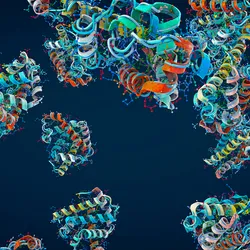
ABOVE: © SHUTTERSTOCK.COM, JOSE LUIS CALVO

Watching the elaborate motion of a pitcher throwing a baseball at more than 100 miles an hour illustrates the essential role of stretching prior to delivering large amounts of mechanical power. Similarly, practitioners of the millennia-old practice of yoga often seem to defy gravity with impressive feats of muscle stretching. By contrast, astronauts returning to Earth from long voyages display a significant loss of muscle tone, as if the prolonged absence of gravitational loading had robbed them of some essential source of mechanical power. Yet much of the biomechanics at the foundation of these familiar phenomena remains beyond the reach of modern scientific inquiry. Perhaps these gaps will be filled in when we develop a better understanding of how muscle tissue works.

According to most physiology textbooks, we already fully understand muscle contraction at the molecular level, and any further knowledge would only deal ...

Interested in reading more?

Become a Member of

The Scientist Logo
Receive full access to digital editions of The Scientist, as well as TS Digest, feature stories, more than 35 years of archives, and much more!
Already a member? Login Here

Related Topics

Meet the Author

Published In

September 2018

The Muscle Issue

The dynamic tissue reveals its secrets

Share
Illustration of a developing fetus surrounded by a clear fluid with a subtle yellow tinge, representing amniotic fluid.
January 2026, Issue 1

What Is the Amniotic Fluid Composed of?

The liquid world of fetal development provides a rich source of nutrition and protection tailored to meet the needs of the growing fetus.

View this Issue
Skip the Wait for Protein Stability Data with Aunty

Skip the Wait for Protein Stability Data with Aunty

Unchained Labs
Graphic of three DNA helices in various colors

An Automated DNA-to-Data Framework for Production-Scale Sequencing

illumina
Exploring Cellular Organization with Spatial Proteomics

Exploring Cellular Organization with Spatial Proteomics

Abstract illustration of spheres with multiple layers, representing endoderm, ectoderm, and mesoderm derived organoids

Organoid Origins and How to Grow Them

Thermo Fisher Logo

Products

nuclera logo

Nuclera eProtein Discovery System installed at leading Universities in Taiwan

Brandtech Logo

BRANDTECH Scientific Introduces the Transferpette® pro Micropipette: A New Twist on Comfort and Control

Biotium Logo

Biotium Launches GlycoLiner™ Cell Surface Glycoprotein Labeling Kits for Rapid and Selective Cell Surface Imaging

Colorful abstract spiral dot pattern on a black background

Thermo Scientific X and S Series General Purpose Centrifuges

Thermo Fisher Logo