Dengue-resistance Spreads in Mosquitoes

Researchers engineer a bacterium that can arm the majority of the insect population with dengue resistance, and stop the virus’s spread to humans.

Written byEdyta Zielinska
| 2 min read

Register for free to listen to this article
Listen with Speechify
0:00
2:00
Share

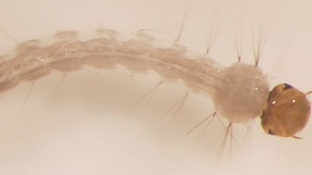
Larva of Aedes aegyptiWIKIMEDIA COMMONS, ECONT

Australian researchers have added an additional tweak to the strain of bacteria they used to infect mosquitoes carrying the dengue virus, and shown that it can spread effectively throughout a local population of mosquitoes in the wild, according to Nature.

The lab’s earlier work had demonstrated that a strain of Wolbachia pipientis, a bacterium that infects insects, could halt the reproduction cycle of the dengue virus. While the exact mechanism is unknown, the bacteria likely "compete for limited sub-cellular resources required by the virus for replication," lead author Scott O'Neill from Monash University in Melbourne, Australia told Nature.

But the first strain O’Neill’s group used killed not only the virus, but also about half of the mosquito hosts before they could reproduce and pass the ...

Interested in reading more?

Become a Member of

The Scientist Logo
Receive full access to more than 35 years of archives, as well as TS Digest, digital editions of The Scientist, feature stories, and much more!
Already a member? Login Here

Related Topics

Meet the Author

Share
Illustration of a developing fetus surrounded by a clear fluid with a subtle yellow tinge, representing amniotic fluid.
January 2026, Issue 1

What Is the Amniotic Fluid Composed of?

The liquid world of fetal development provides a rich source of nutrition and protection tailored to meet the needs of the growing fetus.

View this Issue
Skip the Wait for Protein Stability Data with Aunty

Skip the Wait for Protein Stability Data with Aunty

Unchained Labs
Graphic of three DNA helices in various colors

An Automated DNA-to-Data Framework for Production-Scale Sequencing

illumina
Exploring Cellular Organization with Spatial Proteomics

Exploring Cellular Organization with Spatial Proteomics

Abstract illustration of spheres with multiple layers, representing endoderm, ectoderm, and mesoderm derived organoids

Organoid Origins and How to Grow Them

Thermo Fisher Logo

Products

Brandtech Logo

BRANDTECH Scientific Introduces the Transferpette® pro Micropipette: A New Twist on Comfort and Control

Biotium Logo

Biotium Launches GlycoLiner™ Cell Surface Glycoprotein Labeling Kits for Rapid and Selective Cell Surface Imaging

Colorful abstract spiral dot pattern on a black background

Thermo Scientific X and S Series General Purpose Centrifuges

Thermo Fisher Logo
Abstract background with red and blue laser lights

VANTAstar Flexible microplate reader with simplified workflows

BMG LABTECH







