Judge Decides on GM Rice Retraction

Ethical breaches in a study on the benefits of so-called “golden rice” lead to the paper being pulled from the literature.

Written byKerry Grens
| 2 min read

Register for free to listen to this article
Listen with Speechify
0:00
2:00
Share

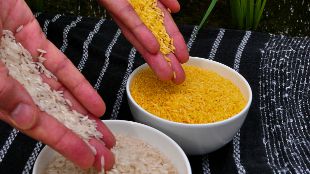
WIKIMEDIA, INTERNATIONAL RICE RESEARCH INSTITUTEA Massachusetts judge has ruled in favor of a journal’s decision to retract a paper on a type of genetically modified rice. The study’s lead author, Guangwen Tang of Tufts University, previously asked for an injuction against the publisher, who yanked the study from the American Journal of Clinical Nutrition because the researchers did not comply with certain ethical guidelines.

According to the retraction notice, posted online July 29, “The authors are unable to provide sufficient evidence that the study had been reviewed and approved by a local ethics committee in China in a manner fully consistent with NIH [National Institutes of Health] guidelines.”

Tang and her colleagues tested how well a genetically modified rice, called golden rice, could provide children with β-carotene. They found that the rice was just as good as a β-carotene supplement and better than spinach.

According to a Tufts spokesperson who spoke with Retraction Watch, no one is questioning the validity of the data. The problem instead lies in how the study was conducted—in particular, a lack evidence that all participants gave full consent. Tufts investigated the situation in 2012. ...

Interested in reading more?

Become a Member of

The Scientist Logo
Receive full access to more than 35 years of archives, as well as TS Digest, digital editions of The Scientist, feature stories, and much more!
Already a member? Login Here

Related Topics

Meet the Author

  • kerry grens

    Kerry served as The Scientist’s news director until 2021. Before joining The Scientist in 2013, she was a stringer for Reuters Health, the senior health and science reporter at WHYY in Philadelphia, and the health and science reporter at New Hampshire Public Radio. Kerry got her start in journalism as a AAAS Mass Media fellow at KUNC in Colorado. She has a master’s in biological sciences from Stanford University and a biology degree from Loyola University Chicago.

    View Full Profile
Share
Illustration of a developing fetus surrounded by a clear fluid with a subtle yellow tinge, representing amniotic fluid.
January 2026, Issue 1

What Is the Amniotic Fluid Composed of?

The liquid world of fetal development provides a rich source of nutrition and protection tailored to meet the needs of the growing fetus.

View this Issue
Skip the Wait for Protein Stability Data with Aunty

Skip the Wait for Protein Stability Data with Aunty

Unchained Labs
Graphic of three DNA helices in various colors

An Automated DNA-to-Data Framework for Production-Scale Sequencing

illumina
Exploring Cellular Organization with Spatial Proteomics

Exploring Cellular Organization with Spatial Proteomics

Abstract illustration of spheres with multiple layers, representing endoderm, ectoderm, and mesoderm derived organoids

Organoid Origins and How to Grow Them

Thermo Fisher Logo

Products

Brandtech Logo

BRANDTECH Scientific Introduces the Transferpette® pro Micropipette: A New Twist on Comfort and Control

Biotium Logo

Biotium Launches GlycoLiner™ Cell Surface Glycoprotein Labeling Kits for Rapid and Selective Cell Surface Imaging

Colorful abstract spiral dot pattern on a black background

Thermo Scientific X and S Series General Purpose Centrifuges

Thermo Fisher Logo
Abstract background with red and blue laser lights

VANTAstar Flexible microplate reader with simplified workflows

BMG LABTECH










