Popular Tumor Cell Line Contaminated

A commercially available glioblastoma cell line appears to be from a different source than its stated origins.

Written byKerry Grens
| 3 min read

Register for free to listen to this article
Listen with Speechify
0:00
3:00
Share

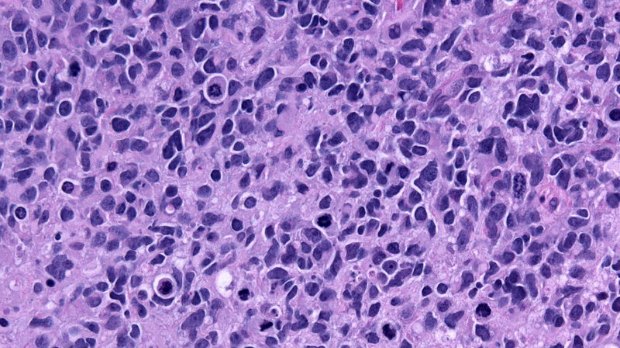
WIKIMEDIA, JENSFLORIANA widely used human cancer cell line, U87MG, was first established at Uppsala University in Sweden in 1966. But a new validation study from Bengt Westermark, who was part of the team that first created U87MG and several other glioblastoma multiforme cell lines, and colleagues finds the U87MG cells available from the cell repository ATCC are not the same as the original U87MG cells from Uppsala.

The Scientist spoke with Westermark about his team’s latest analysis of U87MG, which was published in Science Translational Medicine today (August 31).

The Scientist: What led you to question the purity of the cell line?

Westermark: Out of the cell lines I studied in my thesis, U87 was the worst. It was really very difficult to handle. It grew very slowly—large, flat cells that had a long doubling time. They were always lagging behind in my studies. [Years later] I noticed that people loved this cell line. There came many publications on this cell line. I started to question why, because I hated this cell line. Very slowly, the suspicion came that maybe it is not U87. Maybe it is something else. At last, we ...

Interested in reading more?

Become a Member of

The Scientist Logo
Receive full access to more than 35 years of archives, as well as TS Digest, digital editions of The Scientist, feature stories, and much more!
Already a member? Login Here

Related Topics

Meet the Author

  • kerry grens

    Kerry served as The Scientist’s news director until 2021. Before joining The Scientist in 2013, she was a stringer for Reuters Health, the senior health and science reporter at WHYY in Philadelphia, and the health and science reporter at New Hampshire Public Radio. Kerry got her start in journalism as a AAAS Mass Media fellow at KUNC in Colorado. She has a master’s in biological sciences from Stanford University and a biology degree from Loyola University Chicago.

    View Full Profile
Share
Illustration of a developing fetus surrounded by a clear fluid with a subtle yellow tinge, representing amniotic fluid.
January 2026

What Is the Amniotic Fluid Composed of?

The liquid world of fetal development provides a rich source of nutrition and protection tailored to meet the needs of the growing fetus.

View this Issue
Human-Relevant In Vitro Models Enable Predictive Drug Discovery

Advancing Drug Discovery with Complex Human In Vitro Models

Stemcell Technologies
Redefining Immunology Through Advanced Technologies

Redefining Immunology Through Advanced Technologies

Ensuring Regulatory Compliance in AAV Manufacturing with Analytical Ultracentrifugation

Ensuring Regulatory Compliance in AAV Manufacturing with Analytical Ultracentrifugation

Beckman Coulter Logo
Conceptual multicolored vector image of cancer research, depicting various biomedical approaches to cancer therapy

Maximizing Cancer Research Model Systems

bioxcell

Products

Refeyn logo

Refeyn named in the Sunday Times 100 Tech list of the UK’s fastest-growing technology companies

Parse Logo

Parse Biosciences and Graph Therapeutics Partner to Build Large Functional Immune Perturbation Atlas

Sino Biological Logo

Sino Biological's Launch of SwiftFluo® TR-FRET Kits Pioneers a New Era in High-Throughout Kinase Inhibitor Screening

SPT Labtech Logo

SPT Labtech enables automated Twist Bioscience NGS library preparation workflows on SPT's firefly platform