Science Envoy Resigns from US State Department in Protest

Energy researcher Daniel Kammen criticized President Trump’s response to events in Charlottesville, as well as the administration’s decision to leave the Paris Climate Accord.

Written byCatherine Offord
| 2 min read

Register for free to listen to this article
Listen with Speechify
0:00
2:00
Share

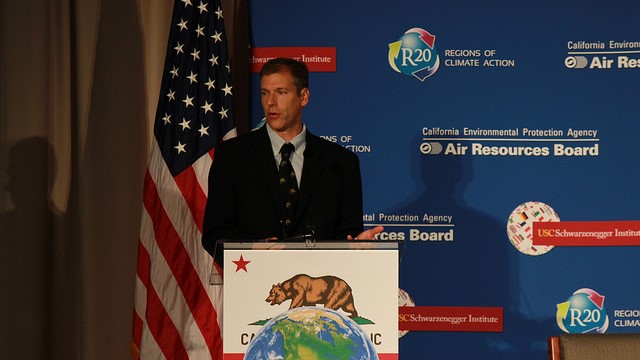
FLICKR, CALIFORNIA AIR RESOURCES BOARDDaniel Kammen, a science envoy to the US State Department, took to Twitter to announce his resignation today (August 23). In a page-long letter, the energy researcher at the University of California, Berkeley, criticized President Trump’s “attacks on core values of the United States,” becoming the latest scientist to resign from an advisory role to the Trump administration on partly ethical grounds.

“Acts and words matter,” Kammen writes in his letter. “To continue in my role under your administration would be inconsistent with the principles of the United States Oath of Allegiance to which I adhere.”

Citing the president’s response to events in Charlottesville and the administration’s decision to withdraw from the Paris Climate Accord, Kammen’s letter accuses Trump of harming “the quality of life in the United States, our standing abroad, and the sustainability of the planet.”

Like the resignation letter from members of the President’s Committee on the Arts and the Humanities last week, which spelled RESIST with the first letter of each paragraph, Kammen took the opportunity to send his own hidden message with each paragraph’s first letter: IMPEACH.

Andrew Rosenburg, head of the ...

Interested in reading more?

Become a Member of

The Scientist Logo
Receive full access to more than 35 years of archives, as well as TS Digest, digital editions of The Scientist, feature stories, and much more!
Already a member? Login Here

Related Topics

Meet the Author

  • After undergraduate research with spiders at the University of Oxford and graduate research with ants at Princeton University, Catherine left arthropods and academia to become a science journalist. She has worked in various guises at The Scientist since 2016. As Senior Editor, she wrote articles for the online and print publications, and edited the magazine’s Notebook, Careers, and Bio Business sections. She reports on subjects ranging from cellular and molecular biology to research misconduct and science policy. Find more of her work at her website.

    View Full Profile
Share
Image of a woman with her hands across her stomach. She has a look of discomfort on her face. There is a blown up image of her stomach next to her and it has colorful butterflies and gut bacteria all swarming within the gut.
November 2025, Issue 1

Why Do We Feel Butterflies in the Stomach?

These fluttering sensations are the brain’s reaction to certain emotions, which can be amplified or soothed by the gut’s own “bugs".

View this Issue
Olga Anczukow and Ryan Englander discuss how transcriptome splicing affects immune system function in lung cancer.

Long-Read RNA Sequencing Reveals a Regulatory Role for Splicing in Immunotherapy Responses

Pacific Biosciences logo
Research Roundtable: The Evolving World of Spatial Biology

Research Roundtable: The Evolving World of Spatial Biology

Conceptual cartoon image of gene editing technology

Exploring the State of the Art in Gene Editing Techniques

Bio-Rad
Conceptual image of a doctor holding a brain puzzle, representing Alzheimer's disease diagnosis.

Simplifying Early Alzheimer’s Disease Diagnosis with Blood Testing

fujirebio logo

Products

Labvantage Logo

LabVantage Solutions Awarded $22.3 Million U.S Customs and Border Protection Contract to Deliver Next-Generation Forensic LIMS

The Scientist Placeholder Image

Evosep Unveils Open Innovation Initiative to Expand Standardization in Proteomics

OGT logo

OGT expands MRD detection capabilities with new SureSeq Myeloid MRD Plus NGS Panel










