The Implant Melting Pot

Dutch company Orthometals recycles and melts down implants left behind after cremation.

Written byHannah Waters
| 1 min read

Register for free to listen to this article
Listen with Speechify
0:00
1:00
Share

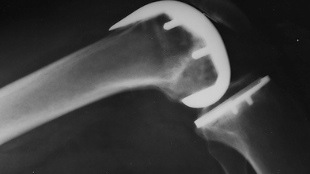
Knee replacementFLICKR, MIKE BAIRD

Medical implants, such as knee replacements, artificial hips, and titanium pins, have become increasingly common to help fix ailing joints and mend breaks. But what happens to those implants after patients have passed? Until recently, these metals were probably discarded. But Dutch company Orthometals is looking to change that.

It’s a bit macabre, but the owners collect discarded implants after cremation, melt them down, and recycle the metals by selling them as scrap. The company recycles more than 250 tons of metal annually. And, while cremations rates are higher in the Netherlands, the company isn’t alone.

"I know the existence of five or six competitors that we have, most of them in the United States," Orthometals cofounder Ruud Verberne told BBC News.

Stay tuned for ...

Interested in reading more?

Become a Member of

The Scientist Logo
Receive full access to more than 35 years of archives, as well as TS Digest, digital editions of The Scientist, feature stories, and much more!
Already a member? Login Here
Illustration of a developing fetus surrounded by a clear fluid with a subtle yellow tinge, representing amniotic fluid.
January 2026, Issue 1

What Is the Amniotic Fluid Composed of?

The liquid world of fetal development provides a rich source of nutrition and protection tailored to meet the needs of the growing fetus.

View this Issue
Skip the Wait for Protein Stability Data with Aunty

Skip the Wait for Protein Stability Data with Aunty

Unchained Labs
Graphic of three DNA helices in various colors

An Automated DNA-to-Data Framework for Production-Scale Sequencing

illumina
Exploring Cellular Organization with Spatial Proteomics

Exploring Cellular Organization with Spatial Proteomics

Abstract illustration of spheres with multiple layers, representing endoderm, ectoderm, and mesoderm derived organoids

Organoid Origins and How to Grow Them

Thermo Fisher Logo

Products

Brandtech Logo

BRANDTECH Scientific Introduces the Transferpette® pro Micropipette: A New Twist on Comfort and Control

Biotium Logo

Biotium Launches GlycoLiner™ Cell Surface Glycoprotein Labeling Kits for Rapid and Selective Cell Surface Imaging

Colorful abstract spiral dot pattern on a black background

Thermo Scientific X and S Series General Purpose Centrifuges

Thermo Fisher Logo
Abstract background with red and blue laser lights

VANTAstar Flexible microplate reader with simplified workflows

BMG LABTECH










