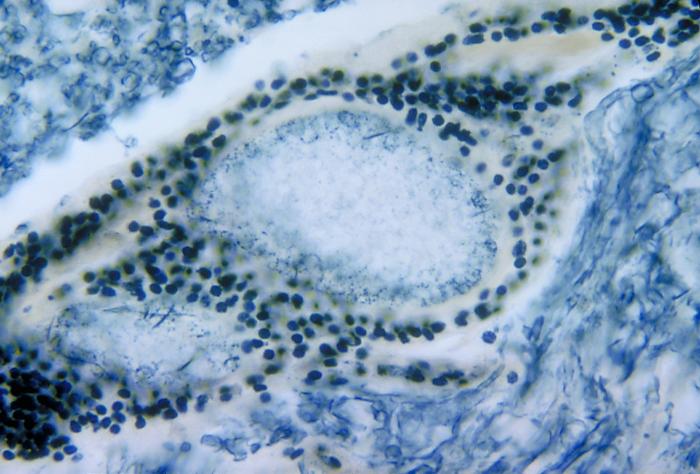
 A cross section of the spinal cord showing demyelination and inflammationCDC, DR. KARP, EMORY UNIVERSITYZika virus has now been linked to yet another neurological problem, in addition to microcephaly and Guillain-Barré syndrome (GBS). Two patients who tested positive for the virus have been diagnosed with the autoimmune disorder acute disseminated encephalomyelitis (ADEM), according to a small study presented this week at a meeting of the American Academy of Neurology in Vancouver, British Columbia.
“Though our study is small, it may provide evidence that in this case the virus has different effects on the brain than those identified in current studies,” study coauthor Maria Lucia Brito Ferreira of the Restoration Hospital in Recife, Brazil, said in a statement. However, “much more research will need to be done to explore whether there is a causal link between Zika and these brain problems,” Ferreira added.
According to Newsweek, the six patients in the study were admitted to a hospital in Brazil; all six experienced symptoms of Zika virus infection, including fever, rash, and—in some cases—muscle and joint pain, extreme itching, and red eyes. The patients subsequently tested positive for the virus.
Either immediately or within two weeks of becoming infected with ...