The Scientist - Home

A pill is shown on a blue technical background. One half of the pill has a DNA helix on it, and the other half has a depiction of a computer chip, representing the role of artificial intelligence in drug development.
| 3 min read
2026 will be the year that artificial intelligence accelerates multiple aspects of the drug discovery and development pipeline, industry leaders predict.

Latest

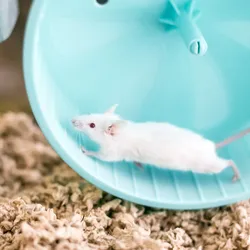
Mouse running on exercise wheel.

Gut Microbes Can Make Mice Lazy

A picture of Umar Sheikh, a postdoc at the University of Wisconsin–Madison.

Postdoc Portrait: Umar Sheikh

A picture of Pierre Kawak, a postdoc at the University of South Florida.

Postdoc Portrait: Pierre Kawak

A landscape shot of Rainbow Valley, southwest of Alice Springs, in Australia’s Northern Territory. Spectacular red and yellow cliffs sit behind a stretch of red ground.

A Long-Neglected Virus Might Finally Surrender to New Therapies

A brown dog stares at a spoon of peanut butter in front of its face with wide eyes.

Why Do Dogs Love Peanut Butter?

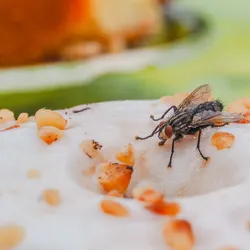
A close-up image of a fly landing on a dessert

What Happens When a Fly Lands on Your Food? 

Red and green small tomatoes. A new genetic engineering approach helped gene-edited plants grow faster.

Gene-Edited Crops Grow Faster with a Little Help from Bacteria

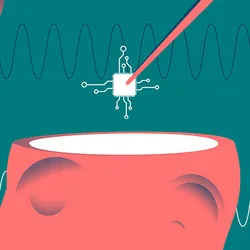
Vector illustration of implanting of brain chips into human head.

Cell-Electronic Hybrid Chips Could Enable Surgery-Free Brain Implants

A picture of Ruth Isenberg, a postdoc at the University of Minnesota.

Postdoc Portrait: Ruth Isenberg

Several miniature brain models, representing human neural organoids, often colloquially called minibrains, are laid out on a light blue surface. The pattern of these organoids seem arrow-like, indicating the future directions of the field that neuroscientists and ethicists envision.

Human Neural Organoid Research Needs Better Regulation

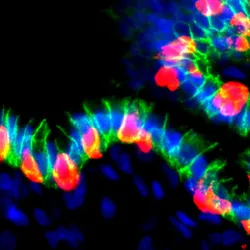
Blue, green, and red dots make a worm-like shape against a black background, signifying human organoids grafted in mice that secreted insulin.

Reprogrammed Human Stomach Organoids Secrete Insulin

Hands collect gear in a puzzle against the sky in the sunset, representing academia-industry partnership.

A Guide to Build Impactful Academia-Industry Partnerships

Image of a man in a laboratory looking frustrated with his failed experiment.
February 2026

A Stubborn Gene, a Failed Experiment, and a New Path

When experiments refuse to cooperate, you try again and again. For Rafael Najmanovich, the setbacks ultimately pushed him in a new direction.

View this Issue

Human-Relevant In Vitro Models Enable Predictive Drug Discovery

Advancing Drug Discovery with Complex Human In Vitro Models

Stemcell Technologies
Redefining Immunology Through Advanced Technologies

Redefining Immunology Through Advanced Technologies

Ensuring Regulatory Compliance in AAV Manufacturing with Analytical Ultracentrifugation

Ensuring Regulatory Compliance in AAV Manufacturing with Analytical Ultracentrifugation

Beckman Coulter logo
Conceptual multicolored vector image of cancer research, depicting various biomedical approaches to cancer therapy

Maximizing Cancer Research Model Systems

bioxcell

Products

Sino Biological Logo

Sino Biological Pioneers Life Sciences Innovation with High-Quality Bioreagents on Inside Business Today with Bill and Guiliana Rancic

Sino Biological Logo

Sino Biological Expands Research Reagent Portfolio to Support Global Nipah Virus Vaccine and Diagnostic Development

Beckman Coulter

Beckman Coulter Life Sciences Partners with Automata to Accelerate AI-Ready Laboratory Automation

Refeyn logo

Refeyn named in the Sunday Times 100 Tech list of the UK’s fastest-growing technology companies