Discoverer of Lysosomes Dies

Christian de Duve chose to be euthanized at home in Belgium at age 95.

Written byKate Yandell
| 2 min read

Register for free to listen to this article
Listen with Speechify
0:00
2:00
Share

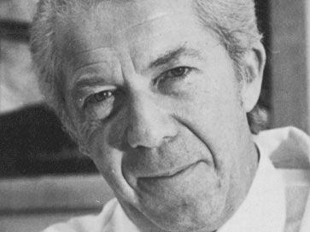
THE NOBEL FOUNDATIONThe Belgian biochemist Christian de Duve died at home on Saturday (May 4) of euthanasia. He won the 1974 Nobel Prize in Physiology or Medicine for discovering lysosomes, organelles that digest cellular waste.

The 95-year-old scientist spent the final weeks of his life writing to friends explaining his decision to be euthanized, according to The New York Times. Euthanasia has been legal in Belgium since 2002. Günter Blobel, a colleague at The Rockefeller University in New York, told the newspaper that the biochemist had “a number of health problems,” including cancer, and that he had suffered a recent fall.

According to his autobiography on Nobelprize.org, de Duve was born in 1917 in England, where his parents had gone to escape World War I, but he spent much of his childhood in Antwerp, Belgium. Though he loved literature and the humanities, de Duve decided to train in medicine and received his MD in 1941. He served as a medic ...

Interested in reading more?

Become a Member of

The Scientist Logo
Receive full access to more than 35 years of archives, as well as TS Digest, digital editions of The Scientist, feature stories, and much more!
Already a member? Login Here

Related Topics

Meet the Author

Share
December digest cover image of a wooden sculpture comprised of multiple wooden neurons that form a seahorse.
December 2025, Issue 1

Wooden Neurons: An Artistic Vision of the Brain

A neurobiologist, who loves the morphology of cells, turns these shapes into works of art made from wood.

View this Issue
Stacks of cell culture dishes, plates, and flasks with pink cell culture medium on a white background.

Driving Innovation with Cell Culture Essentials

Merck
Stacks of cell culture dishes, plates, and flasks with pink cell culture medium on a white background.

Driving Innovation with Cell Culture Essentials

MilliporeSigma purple logo
Abstract wireframe sphere with colorful dots and connecting lines representing the complex cellular and molecular interactions within the tumor microenvironment.

Exploring the Inflammatory Tumor Microenvironment 

Cellecta logo
An image of a DNA sequencing spectrum with a radial blur filter applied.

A Comprehensive Guide to Next-Generation Sequencing

Integra Logo

Products

brandtech logo

BRANDTECH® Scientific Announces Strategic Partnership with Copia Scientific to Strengthen Sales and Service of the BRAND® Liquid Handling Station (LHS) 

Top Innovations 2026 Contest Image

Enter Our 2026 Top Innovations Contest

Biotium Logo

Biotium Expands Tyramide Signal Amplification Portfolio with Brighter and More Stable Dyes for Enhanced Spatial Imaging

Labvantage Logo

LabVantage Solutions Awarded $22.3 Million U.S Customs and Border Protection Contract to Deliver Next-Generation Forensic LIMS