


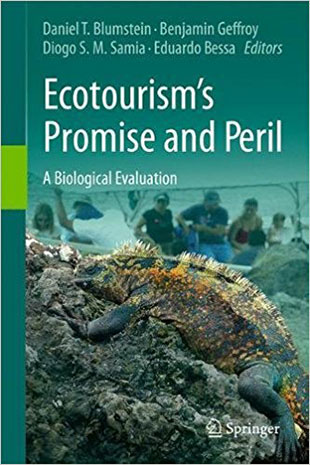
 SPRINGER, AUGUST 2017This summer while you’re enjoying your favorite natural setting—snorkeling, hiking, bird-watching, or exploring tide pools—pause and ponder the cumulative impact of what you’re doing. Nature-based tourism is huge. A recent study suggested that there are more than 8 billion visitors per year to terrestrial protected areas the world over. Stated bluntly, there are more visits to natural areas than there are people on the Earth! This estimate does not incorporate data from small reserves, so the real extent of people interacting with wildlife and visiting natural areas is even larger. Such high numbers cannot occur without creating ecological impacts.
In Ecotourism’s Promise and Peril: A Biological Evaluation, we and our contributors systematically review the evidence for biological impacts that result from nature-based tourism. Focusing on tourism involving fish, marine mammals, terrestrial animals, and penguins, we describe how interacting with even well-intentioned humans may physiologically stress animals, and how stressors may or may not be mirrored in their behavioral responses to humans. And we describe the variety of ecological and evolutionary consequences that may result from humans encountering wildlife.
Ecological impacts must be viewed in the context of evaluating the cumulative effects of the pollution of Earth, humanity’s insatiable demand for natural resources, climate change, and a wide variety of other types of damage humans wreak. From this perspective, even relatively small impacts from nature ...












