

Around his second birthday, Uri Manor’s parents realized that their son had severe hearing loss. Manor, who is now an imaging scientist and organelle researcher at the University of California, San Diego (UCSD), studies the cellular and molecular mechanisms that drive hearing loss to develop new treatments for it. But his own experience with hearing loss is not what inspired him to study the topic.

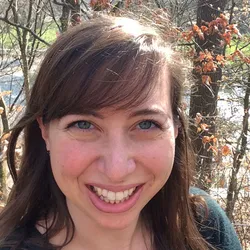
Uri Manor studies how hearing loss may be the first sign of neurodegeneration.
Maya Manor
It was not, ‘Oh, woe is me. I have hearing loss. I need to work on this,’” he said. “Maybe if I didn't have hearing loss, I wouldn't have been as intrigued, [but] it's definitely a weird kind of vibe of destiny.”
Manor’s scientific journey has taken him from a fascination with how organisms sense and respond to the Earth’s magnetic field to how hearing loss may be an early indicator of neurodegeneration. Through the development of new imaging technologies and model systems, Manor hopes to better understand both age-related and inherited hearing loss disorders and to find ways to reverse them.
From Magnetoreception to Mechanosensation
When Manor got to college, he changed his major four times. “I originally thought I wanted to study philosophy and psychology. Because in my heart of hearts, what I think is one of the most interesting questions is why are we the way we are?” he said.
But soon enough, he got frustrated with both topics, realizing that a lot of their hypotheses couldn’t be tested. His father, being an engineer, had instilled in him an appreciation for science and the laws of physics, so he decided to study physics to see if he could use physical principles to explain biology.
“Of course, that's a very difficult thing to do, and biology is insanely complicated—way more complicated—but I ended up falling in love with biology, and the rest is history.”
The hair cells of the inner ear are some of the most exquisite mechanosensors of the biological kingdom.
—Uri Manor, University of California, San Diego
The first biological phenomenon that caught his eye was magnetoreception: how animals sense the Earth’s magnetic field.
“It's a really fascinating physics problem because the magnetic field is insanely weak, so you need really specialized molecular or cellular structures to be able to detect forces that are that weak,” he said.
Manor began looking for a researcher that would let him study magnetoreception for his PhD research, but he couldn’t find any takers.
“But someone told me that some of the models for how magnetoreception might work are actually kind of similar to how the inner ear works,” he said. “The sensory hair cells of the inner ear are also remarkably sensitive and sophisticated, and some of the models for magnetoreception involve converting magnetic forces into mechanical forces. The hair cells of the inner ear are some of the most exquisite mechanosensors of the biological kingdom.”
With this connection in mind, Manor met with Bechara Kachar, an expert in inner ear hair cells at the National Institutes of Health (NIH), who showed him images of stereocilia that line the surfaces of the hair cells. These tiny structures—that are just tens of micrometers long—detect the mechanical pressure from sound waves and convert them into electrical signals that eventually reach the brain, which organisms interpret as sound.
“It was the first instance where I saw a microscope image of a biological system really illustrate how this system works. It was a great example of structure [and] function, and I immediately fell in love with both microscopy and the inner ear and decided that I wanted to study this.”

Stereocilia on inner ear hair cells detect sound as it enters the ear.
Yuzuru Ninoyu and Uri Manor
After graduate school and a postdoctoral research appointment at the NIH, Manor accepted a position at the Salk Institute in 2016 where he ran the Waitt Advanced Biophotonics Center. As the director of the core facility, he both collaborated with numerous researchers on multiple different projects and performed his own research while not yet having his own lab. In 2019, Cara Schiavon joined his team as a postdoctoral researcher being co-mentored by Manor and mitochondria biologist Gerald Shadel. She had been eager to get more experience with high resolution and cutting-edge imaging techniques.
“I really like working for Uri,” she said. “He's overcome a lot with his hearing loss and all that, so I genuinely am very impressed by him—both his work and his intelligence, but also his kindness.”
While still directing the core, Manor established his independent research lab at the Salk Institute in 2021. There, he made advances in the organelle dynamics and inner ear hair cell biology fields.1,2 He also developed a highly sensitive probe to follow actin within a cell and developed a deep learning tool to enhance low quality microscope images.3,4
Arshad Desai, a cell and developmental biologist at UCSD as well as Manor’s now faculty mentor, agreed, saying, “It was incredibly impressive that even though he was running this core, he had managed to set up a really robust independent research program and obtain funding, and he had established a lab that was working on these different projects. I think that's just a testament to his sheer drive and energy.”

Desai and his colleagues recruited Manor to join them at UCSD in July 2023, where he now leads the Goeddel Family Technology Sandbox, an instrumentation and collaborative center, as well as his own research group.
Schiavon, who is now an Assistant Project Scientist in Manor’s lab, added, “He's also super intelligent, super smart, has all kinds of really cool ideas. So, we're never short on ideas—Uri, the idea man.”
Hearing Loss May Be an Early Sign of Neurodegeneration
One of those ideas is proving that hearing loss may be the very first sign that something is going wrong in the nervous system.

Uri Manor develops innovative imaging tools to study organelle dynamics in a cell as well as hearing loss and neurodegeneration.
Dyche Mullins
“Everyone has some sort of global rate of aging, or neurodegeneration to be more specific, and that means that over time, all of your neurons are starting to deteriorate at some rate,” said Manor.
However, each inner ear hair cell only makes about 15 synapses with downstream neurons which eventually send signals to the brain that people perceive as sound.
“Compare that to neurons in the brain, which may have thousands of synapses. Now, imagine if you're losing a certain number of synapses over time, it's going to be noticeable in the ear long before it is in the brain,” Manor explained.
The brain also has the capacity to compensate if one part becomes damaged. After a stroke, for example, even if some brain tissue dies, people can relearn how to walk or speak again. That level of redundancy isn’t present in the ear. Once one of those 15 synapses is gone, it’s gone for good. Similarly, there are some genetic mutations that lead to the production of mutant proteins in all cells in the body, but the only place those mutant proteins cause a problem is in the inner ear where they lead to hearing loss.
For those reasons, Manor explained, “The ear is the canary in the coal mine for neurodegeneration.” He added, “Often in cases with noise and with age, hearing loss is one of the first steps in the loss of synapses, so we've been exploring different ways to slow down the loss of synapses.”
I see myself as an evangelist for inner ear research. I want the rest of the research community to recognize the power of the cochlea as a model system for cell biology, for neuroscience, for aging research.
—Uri Manor, University of California, San Diego
In a mouse model of age-related hearing loss, Manor and his team found that nicotinamide riboside, which is a form of vitamin B3 found in food, improved synaptic connectivity in the inner ear hair cells to downstream neurons.2 They also found that mouse models of Alzheimer’s disease had hearing loss and found evidence that this was likely due to DNA damage and impaired mitochondrial function in the cochlea.3 More recently, Manor and his team reported at the 2025 Association for Research in Otolaryngology’s annual meeting that psychedelics can lead to the formation of new synapses.
His group is also developing new light-controlled mouse models as a way to non-invasively induce therapeutic gene expression changes in vivo. “We'll be able to control gene expression of any number of different types of gene expressions with spatiotemporal control in the inner ear,” he said. “That's under active development in the lab, and we're really excited about that too.”
The Inner Ear as a Model for Cell Biology, Aging, and More
According to Manor, the inner ear has the potential to reveal secrets about biology far beyond hearing loss.
“I see myself as an evangelist for inner ear research,” he said. “I want the rest of the research community to recognize the power of the cochlea as a model system for cell biology, for neuroscience, for aging research.” While he acknowledged that there are some challenges to studying the cochlea—it’s small and surrounded by bone—with some guidance, “there are things you can do with cochlear research that are extremely difficult to do in any other aspect of neuroscience or cell biology.”
The cochlea’s precisely organized spiral structure is similar between different animals, making it easy to do quantitative comparative analyses on the tissues. It’s also possible to measure cochlear function in a live animal.
Once you see those cells—anybody who likes cell biology will get excited about them because they just seem out of this world.
—Arshad Desai, University of California, San Diego
“It's one of the best systems for studying aging and neurodegeneration, and I think it should be supported not just by hearing researchers, but by people who are more broadly interested in the mysteries of biology and neurodegeneration and aging,” Manor said.
He has certainly convinced his colleague Desai, who remembered hearing Manor give a presentation of his research explaining all of the things that the inner ear hair cells can do.
“Once you see those cells—anybody who likes cell biology will get excited about them because they just seem out of this world,” Desai said.
It is Manor’s passion for his work that inspires his lab members and coworkers. “He's a little bit—well, not a little bit—he's a lot kind of scatterbrained…partly because he's just got so much enthusiasm for the science and the projects, and it's nice to be around enthusiasm,” Schiavon said.
Desai added, “He just loves imaging…He's always thinking about how one could see something, and I'm a firm believer that the real advances in science come from just new ways of seeing things. When we come up with new ways of seeing, then we learn a whole lot that we just didn't appreciate before. I think he's really somebody who wholeheartedly embodies that.”
- Chu Q, et al. Regulation of the ER stress response by a mitochondrial microprotein. Nat Commun. 2019;10:4883.
- Jeng, JY, et al. AAV-mediated rescue of Eps8 expression in vivo restores hair-cell function in a mouse model of recessive deafness. Mol Ther Methods Clin Dev. 2022;26:355-370.
- Schiavon CR, et al. Actin chromobody imaging reveals sub-organellar actin dynamics. Nat Methods. 2020;17:917–921.
- Fang, L, et al. Deep learning-based point-scanning super-resolution imaging. Nat Methods. 2021;18:406–416.
- Okur MN, et al. Long-term NAD+ supplementation prevents the progression of age-related hearing loss in mice. Aging Cell. 2023;22(9):e13909.
- Park JH, et al. Early-onset hearing loss in mouse models of Alzheimer's disease and increased DNA damage in the cochlea. Aging Biol. 2024;1:e20240025.