


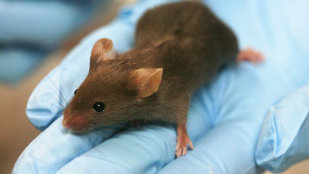
 WIKIMEDIA, RAMAReactivating expression of the RNA-binding protein Lin28a in mice leads to improved regrowth of hair follicles, as well as of cartilage, bone, and mesenchyme after ear and digit injuries, according to a study published in Cell last week (November 7). Harvard Medical School’s George Daley and his colleagues have shown in several models of tissue injury that “Lin28a enhances tissue repair in some adult tissues by reprogramming cellular bioenergetics,” as they wrote in their paper.
“It sounds like science fiction, but Lin28a could be part of a healing cocktail that gives adults the superior tissue repair seen in juveniles,” Daley said in a statement.
However, not every tissue injury model showed improved healing with increased expression of Lin28a. “The fact that it doesn't work sometimes is even more interesting because it raises the question why,” the University of Michigan’s Daniel Goldman, who was not a part of the study, told Nature.
Study coauthor Shyh-Chang Ng added that the perceived renewing effects of Lin28a are particularly interesting because of the RNA-binding protein’s prevalence. “Most biologists would think that you need a special factor to generate the healing pathway, but this is a thing that every cell has,” Ng told Nature.












