Macchiarini May Face Involuntary Manslaughter Charges

The embattled stem cell researcher faces a new investigation exploring his culpability in the deaths of two patients he treated.

Written byBob Grant
| 1 min read

Register for free to listen to this article
Listen with Speechify
0:00
1:00

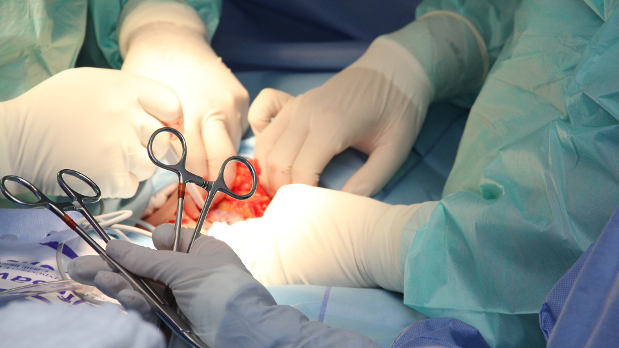
PIXABAY, DEBORABALVESThe artificial organ researcher who was fired from Sweden’s Karolinska Institute earlier this year has been charged with involuntary manslaughter for the deaths of two of his patients, upon whom he performed artificial trachea transplants, according to Swedish prosecutors. After years of ethical inquiries into his research and clinical practice, Paolo Macchiarini was informed last week of the criminal investigation that may end in formal charges of involuntary manslaughter. The investigation will likely center on two patients Macchiarini treated in the U.S.: one a 2-year-old girl who died in 2013, several months after the procedure; the other, an adult male in Baltimore, who died in 2011, three months after his surgery.

“Of course with the accusations that were made against me last year the prosecutor has to investigate, and I have been very happy to give them any information that they need for that investigation,” Macchiarini told the Associated Press in an email.

If Macchiarini is charged with aggravated involuntary manslaughter, he could face between six months and six years in prison.

Interested in reading more?

Become a Member of

The Scientist Logo
Receive full access to more than 35 years of archives, as well as TS Digest, digital editions of The Scientist, feature stories, and much more!
Already a member?
Add The Scientist as a preferred source on Google

Add The Scientist as a preferred Google source to see more of our trusted coverage.

Meet the Author

  • From 2017 to 2022, Bob Grant was Editor in Chief of The Scientist, where he started in 2007 as a Staff Writer. Before joining the team, he worked as a reporter at Audubon and earned a master’s degree in science journalism from New York University. In his previous life, he pursued a career in science, getting a bachelor’s degree in wildlife biology from Montana State University and a master’s degree in marine biology from the College of Charleston in South Carolina. Bob edited Reading Frames and other sections of the magazine.

    View Full Profile

Related Topics

Related articles background image
The Scientist Digest cover September 2026
September 2026

Multiplex Microscopy Becomes Easier with Encoded Antibodies

A new system that enables researchers to uniquely tag monoclonal antibodies for use in microscopy could help simplify complex imaging studies.

View this Issue
Rethinking ALS Biomarkers: From Discovery to Clinical Impact

Rethinking ALS Biomarkers: From Discovery to Clinical Impact

Alamar Biosciences logo
Best Practices for qPCR Assay Design and Optimization

Best Practices for qPCR Assay Design and Optimization

Bio-Rad
Beyond the Basics: Strategies for Single-Cell and Spatial Transcriptomics Analysis

Beyond the Basics: Strategies for Single-Cell and Spatial Transcriptomics Analysis

bioxcell
Scientist reviewing cellular and molecular data on a computer in a laboratory.

Building Translation-Ready Biomarkers with Connected Workflows

Danaher Logo

Products

Closeup image of a multi channel pipette dispensing pink liquid into a 96-well plate.

The ASSIST PLUS pipetting robot for affordable workflow automation

Integra Logo
Single cells in suspension

Rapidly isolate primary cells and make uniform single-cell suspensions with Corning® Cell Strainers

Corning logo
Abstract image representing cell membranes linked together.

CellBrite® Steady Membrane Stain: Cell surface staining built for real-time imaging

Biotium
sino biological logo

Monod Bio Licenses AI-designed Protein Technologies to SignalChem Biotech for Custom Discovery Assays










