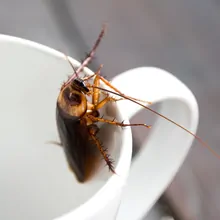
The hard, protective egg cases of some insects, such as the cockroach Blatella germanica, makes it impossible to perform conventional CRISPR gene editing, as the components must be injected into the embryo. However, an international team of researchers has developed a method to edit insect genes by injecting Cas9 ribonucleoproteins and guide RNA directly into the hemolymph—circulating fluid akin to blood—of the mother instead of the embryo. With this technique, named “direct parental” CRISPR (or DIPA-CRISPR), the researchers were, for the first time, able to edit genes in cockroaches, as reported in a study first published online May 16 in Cell Reports Methods.
Injection of CRISPR components into adult insects to edit their offspring has been achieved before in Aedes aegypti mosquitoes, but the previously developed method, called Receptor-Mediated Ovary Transduction of Cargo (ReMOT), fuses the Cas9 protein to a species-specific ligand, which improves the efficiency of the edits by ...